Interfaith Service of Remembrance and Hope Honours the Life of Ruth Tetlow

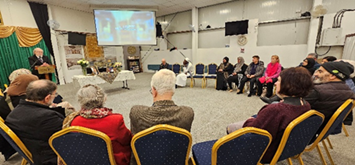
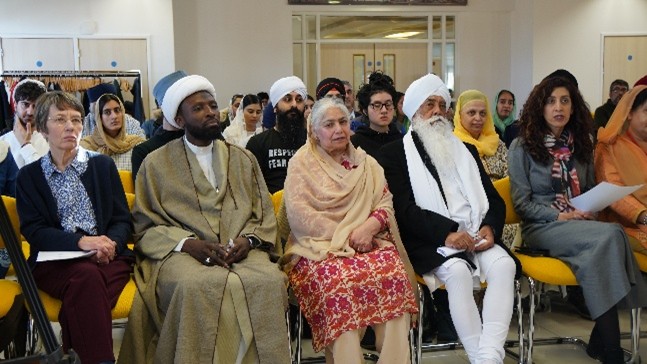
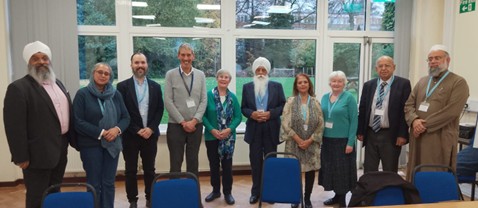
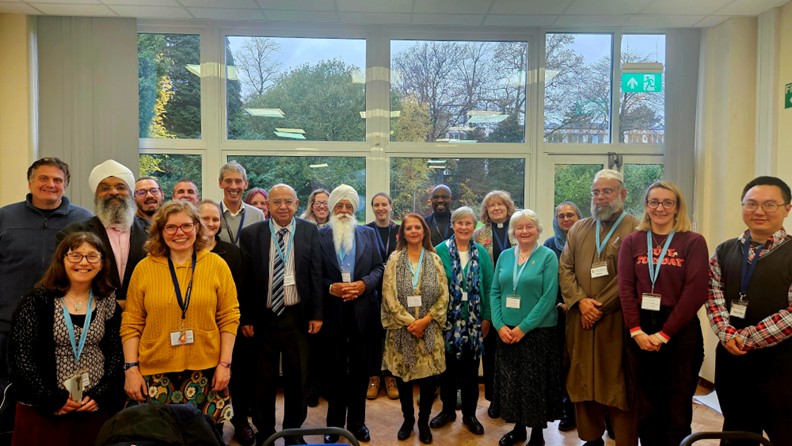
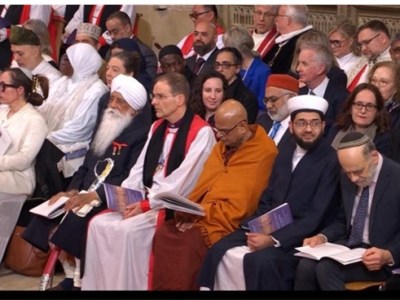
An Interfaith Service of Remembrance and Hope was held on 2nd February 2026 at the Al Abbas Islamic Centre on Clifton Road, bringing together faith leaders, family members, and community representatives to honour the life and legacy of Ruth Tetlow.

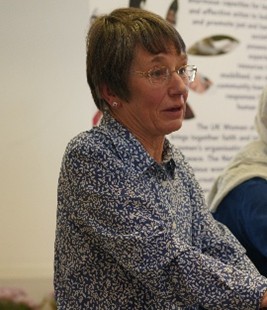
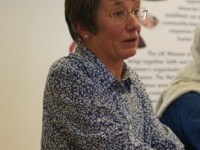
Ruth speaking in 2020 at the Nishkam Centre

Hosted within Birmingham’s rich interfaith context, the gathering invited attendees to come together in prayer, reflection, and shared remembrance. The service offered a space to honour Ruth’s life, hold her memory with love, and find comfort and hope in one another’s presence – values that defined Ruth’s longstanding commitment to interfaith understanding.

Ruth Tetlow was a deeply respected interfaith practitioner and collaborator, known for her thoughtful engagement, humility, and unwavering belief in the power of dialogue. Through her involvement with the Faith Guides programme and wider interfaith initiatives, Ruth worked closely alongside interfaith partners, contributing to spaces rooted in compassion, service, and mutual respect. She was a regular contributor and supporter of Nishkam activities.

The Interfaith Service Al Abbas Islamic Centre, Clifton Road

The service featured reflections from faith leaders and those who knew Ruth personally. Sheikh Nuru, from KSIMC Birmingham, reflected on Ruth’s sincere engagement with communities, describing her as someone who approached interfaith work with reverence, patience, and a genuine willingness to listen. He applauded her commitment and authenticity.

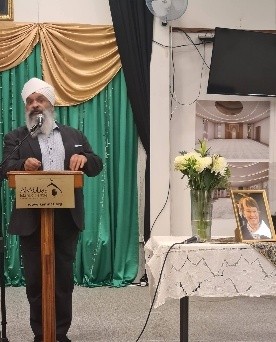
Amrick Singh Ubhi, Nishkam Group of Organisations, shared reflections grounded in the Sikh principle of seva (selfless service), highlighting Ruth’s quiet but consistent commitment to serving others across faith and cultural boundaries. He spoke about her dedication and comitment to peacebuilding and the environment. “Ruth was a deeply respected member of Birmingham’s interfaith community and a cherished participant in the Faith Encounter project, she leaves a legacy of compassion, curiosity, and quiet leadership.”

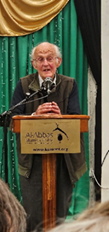
Richard Tetlow speaks to gathered guests

Dr Peter Rookes spoke of Ruth’s intellectual generosity and moral clarity, noting that she believed hope was sustained through long-term relationships, not quick solutions. Mauricio Silva recited a beautiful poem, especially written, capturing Ruth’s great contributions and dedication in interfaith, peacebuilding and engagement work. Finally, Ruth’s husband, Richard, offered a personal reflection on her life, speaking movingly of her love for family, her curiosity, and her belief that faith – in all its expressions – should always lead to kindness and care for others. He said he was not surprised by what he had heard in all the reflections, because he already knew.  

Amrick Singh offers a moving reflection

After the event Amrick Singh said, “Ruth embodied the spirit of interfaith engagement that Nishkam seeks to nurture – grounded in humility, service, and a deep respect for difference. She did not seek recognition, but her presence strengthened every space she entered. Her legacy continues to guide our shared work for peace, understanding, and hope.”

The choice of the Al Abbas Islamic Centre as the venue was a reflection of the breadth of relationships Ruth cultivated across Birmingham’s faith communities.

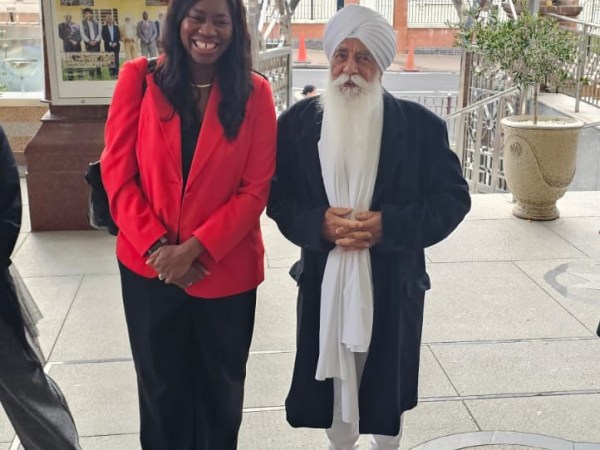
Ruth with dignitaries at the International Women’s Day event – ‘Protecting Mother Earth’ in 2020

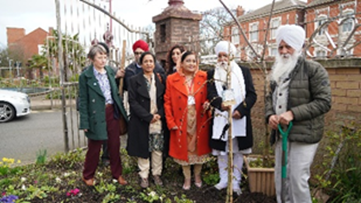
One of the last visits Ruth made to the Nishkam Campus was in 2020 to mark International Women’s Day on the theme of ‘Protecting Mother Earth’. Topics very dear to Ruth and she was always an amazing advocate, mentor, champion and leader. The event in 2020 included speakers from Sikh, Muslim and Hindu faiths, and Footsteps’ chair, Ruth Tetlow, spoke on behalf of the Christian faith. The afternoon concluded with the planting of a tree as an example of the need to plant many more trees to help absorb carbon dioxide. The Woodland Trust made trees available free of charge.

The Interfaith Service of Remembrance and Hope concluded with shared prayers and a collective commitment to continue the work Ruth held so dearly – building bridges, deepening understanding, and sustaining hope even in times of loss.

Leaders planting a tree outside the Nishkam Centre

Ruth Tetlow is remembered by the Nishkam famiy as a trusted companion on the interfaith journey –  someone whose life demonstrated that lasting change is shaped through listening, relationship, dialogue and love. Our condolences to her beloved husband Richard, family, friends, and colleagues. May she rest in peace, and may her life of service inspire generations to come.

ENDS

Notes to Editors

About Nishkam Civic Association

    The Nishkam Civic Association (NCA) is a UK-based civic and community organisation rooted in the Sikh principle of Nishkam Sewa — selfless service. Working across faith, cultural and civic boundaries, the Association is committed to promoting social cohesion, equality, human dignity and peaceful coexistence.

    Footsteps: Faiths for a Low Carbon Future

    Footsteps brings together faith groups in Birmingham to respond to the challenge of moving to a low carbon future – https://www.cofebirmingham.com/everyday-faith/caring-for-the-environment/footsteps/

    Greek Orthodox Cathedral of Apostolos Andreas hosts Nishkam colleagues at Ordination of Adam Georgiou to the Holy Diaconate

    On Wednesday, 21st January 2026, on the Feast of Saint Maximos the Confessor, His Grace Bishop Maximos of Melitene celebrated his Name Day. His Grace also presided at the Divine Liturgy at the Cathedral, during which he ordained Mr Adam Georgiou to the Holy Diaconate.

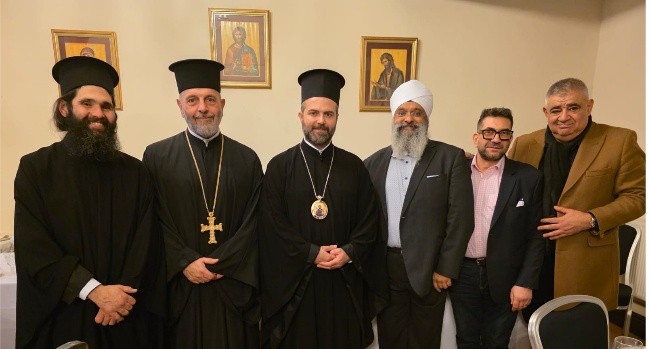
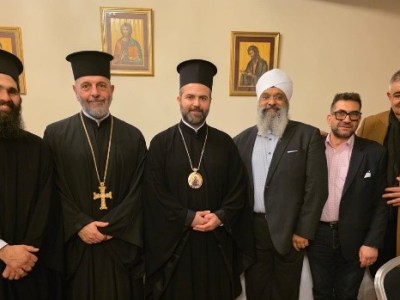
    Bishop Maximos with members of the Greek community and Amrick Singh

    Amrick Singh Ubhi, Director of Civic Engagement and Partnerships, Nishkam Group, was privileged to attend The Greek Orthodox Cathedral of Apostolos Andreas, located in the heart of Birmingham’s Jewellery Quarter, to be an honoured guest to witness the ordination of Adam Georgiou to the Holy Diaconate, a sacred milestone in his lifelong journey of faith and service.

    The ordination took place during the Divine Liturgy celebrated by His Grace Bishop Maximos of Melitene, a beloved hierarch whose tireless pastoral ministry continues to strengthen Orthodox communities across the United Kingdom. Bishop Maximos, known for his deep commitment to spiritual formation and community outreach, presided over the sacred service with reverence and grace.

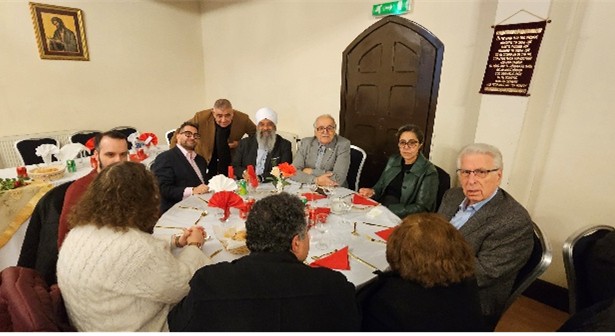
    Distinguished guests sit down for lunch

    The celebration was especially poignant, as it coincided with the Feast of Saint Maximos the Confessor, one of the great theologians and defenders of Orthodox faith, commemorated in the Byzantine liturgical calendar on January 21. Saint Maximos is remembered for his profound theological witness and steadfast confession of Christ, virtues that the newly ordained Deacon Adam Georgiou aspires to emulate in his ministry.

    Following the divine worship, the parishioners and clergy gathered for a festive community lunch that brought together families, friends, and faithful from across the cathedral’s vibrant congregation. The joyful fellowship underscored the shared commitment to supporting the cathedral’s ongoing mission of worship, service, and outreach.

    After the event, Amrick Singh commented, “It was an honour to witness the ordination of Adam today. It was a pleasure to see his family and friends come together and recognise his dedication to service. I hope he continues to serve with the same values of compassion, humility, and a genuine love for all. This ordination enriches not only the Greek Orthodox community but the wider spiritual life of Birmingham.”

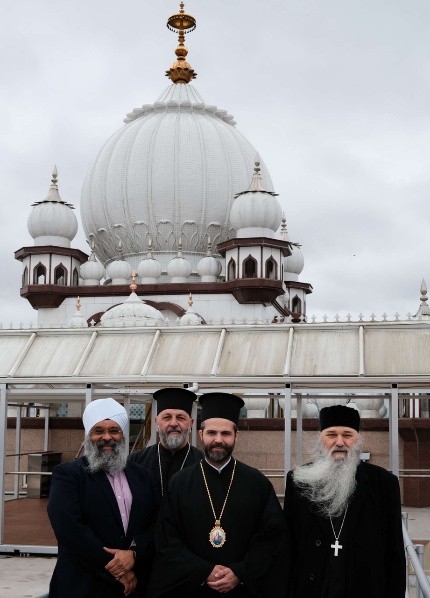
    Bishop of Melitene during a visit to the Gurudwara and Nishkam Campus in 2022

    Amrick Singh was invited to the auspicious ceremony by Petro Nicolaides, long-standing parish council member and Chair of the Greek Orthodox School in Birmingham. Petro added, “Adam’s commitment to Christ and to our community inspires us all. We are proud to witness his ordination on such a meaningful feast day, surrounded by family and friends. Bishop Maximos’ presence and leadership have been a blessing to this cathedral and beyond. We wish him every success and pray from Adam and his family”.

    The Greek Orthodox Cathedral of Apostolos Andreas continues to serve as a central place of worship and cultural heritage for Orthodox Christians throughout the Midlands, offering regular liturgies, educational programs, and opportunities for spiritual growth and community engagement. The building was formerly a Catholic Apostolic church. It was designed in 1873 by J A Chatwin, who worked on many of Birmingham’s churches, including St Philip’s Cathedral, Birmingham.

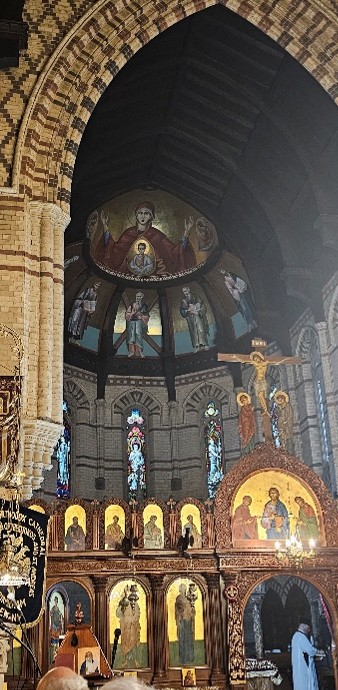
    Beautiful interior of the Cathedral

    Petro took Amrick Singh on a site tour of the Cathedral, the School, and developments in progress that will be coming online in years ahead to serve the diverse communities of Birmingham. Amrick Singh was amazed at what the Greek community is doing in Birmingham. The old Cathedral, the Greek School, the plans for future development were inspiring and would enrich the fabric of society. He congratulated them all and encouraged them to take a long-term perspective on regeneration of the area and make best use of the land it wished to develop.   

    Mr Nicolaides was thrilled to welcome and introduce Amrick Singh to the congregation and leaders present at the service. “It has been an honour to have my friend Amrick Singh, from the Nishkam Group and Deputy Lieutenant here to today. I think what Nishkam do is inspiring and I hope other communities can emulate that and we should all look to see how we can do more for our own communities and the broader society we live in. I had the pleasure to meet the Honourable Bhai Sahib, Mohinder Singh OBE KSG earlier this week during a visit to the Nishkam Campus and was in awe of the great man. I can see where the inspiration and visionary leadership comes from.”

    “It was also nice to invite Bhai Sahib Ji to the cathedral in the near future for a meeting with His Grace, the Bishop, who had visited the Gurudwara and Nishkam Centre in 2022 but unfortunately Bhai Sahib Ji had to go on an overseas trip.”  

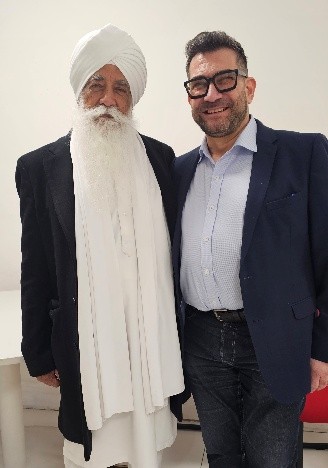
    Bhai Sahib Ji with Petro Nicolaides at the Nishkam Centre

    ENDS

    Notes to Editors

    • Nishkam Civic Association works at the intersection of faith, civic responsibility, and social cohesion, supporting dialogue between communities and public institutions.
    • Greek Orthodox Cathedral of Apostolos Andreas, 8 Arthur Place, Summer Hill Terrace, Birmingham B1 3DA, United Kingdom,
    • Email: gocbirmingham@gmail.com
    • Facebook: Greek Orthodox Cathedral Birmingham

    Nishkam Healthcare Trust honoured with the 2025 King’s Award for Voluntary Service – The MBE for Volunteer Groups

    Nishkam Healthcare Trust (NHT), based at 21-23 Soho Road, Handsworth, is a beacon of compassion and community services. It has received the King’s Award for Voluntary Service 2025, the highest accolade given to volunteer-led groups across the United Kingdom, and equivalent to an MBE.

    King’s Award emblem

    This prestigious award recognises over a decade of selfless, values-led healthcare service by Nishkam volunteers who have dedicated their skills, time, and resources to improving health and wellbeing for individuals and families from all backgrounds and faiths. During the COVID-19 pandemic, 14 doctors – alongside a team of 160 volunteers – worked over 10,000 hours, delivering over 50,000 vaccines for the community.

    NHT was envisioned by Bhai Sahib (Prof) Mohinder Singh OBE KSG, and created by Guru Nanak Nishkam Sewak Jatha (GNNSJ). NHT embodies the Sikh principle of Nishkam Sewa – selfless service for the welfare of humanity. Using the concept of kar sewa (through voluntary donations, self-help and community participation), GNNSJ volunteers restored and made fit for purpose an 1880 Victorian building into fully operational medical centre. Its services span two healthy living pharmacies, and a volunteer-run dental service which operates on a ‘pay what you can afford’ basis. There is also a Mental and Emotional Wellbeing Service, which has supported over 500 service users since 2021, achieving more than a 50% improvement in depression and anxiety scores. Its pioneering Start of Life Care initiative, supports mothers and fathers through pregnancy and early parenthood, nurturing good health and empowering them to take on the responsibilities through a values-based approach. The team also regularly offer cardiovascular health screening and patient education, which are pivotal to help reduce some of the health inequalities locally.
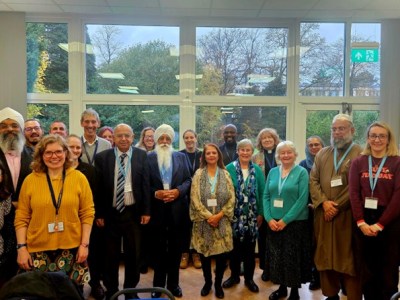

    “This award is a tribute to every volunteer, clinician, and supporter who has given selflessly to help others. From pharmacists to counsellors, dentists to midwives, our volunteers embody love in action. Their work reflects our shared belief that health is not just the absence of illness, it includes the presence of sacrifice, care, compassion, and community participation.”

    — Dr. Manvir Kaur Kalirai, Chair of Nishkam Healthcare Trust


    The services delivered by the Healthcare Trust exemplify Nishkam’s holistic and faith-inspired person-centric approach, with emphasis on early disease prevention, and on seamlessly addressing spiritual, health and social care needs in an organic community setting.

    “Guru Nanak Dev Ji teaches us that the light of the Divine dwells in every being. Thus, as Sikhs we are mandated to go beyond ourselves to serve all of humanity as our kith and kin. Nishkam Healthcare Trust was born from this teaching: that through selfless Nishkam Sewa, we can help uplift humanity, heal communities, and promote harmony through compassion. We are honoured to receive this award and would like to thank His Majesty The King, the West Midlands Lieutenancy, and the wider awards team for their kind acknowledgement of our humble Nishkam community.”

    — Bhai Sahib (Prof) Mohinder Singh OBE KSG, Nishkam Healthcare Trust


    The work emerging from Nishkam Healthcare Trust is strongly aligned with the NHS 10-year plan, with emphasis on early prevention, and delivering care in the community. The Nishkam Healthcare Centre was built by volunteers and offers a bespoke state-of-the art facility to deliver further healthcare in the heart of a bustling community. The team is committed to collaborating with healthcare stakeholders to improve care for all in this neighbourhood. Through volunteering, for every £1 invested, the output is significantly more.

    “Volunteering at Nishkam is more than giving time, it’s about giving of yourself. Every patient I meet reminds me that kindness and compassion can heal in ways medicine alone cannot. The friendships, learning, and love we share are life-changing.”
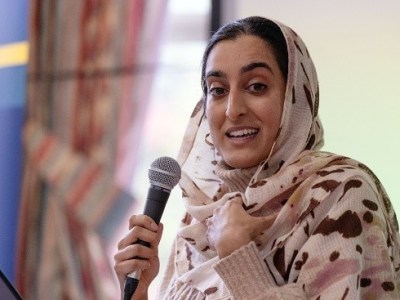
    — Jaypal Singh, Volunteer Clinical Pharmacist


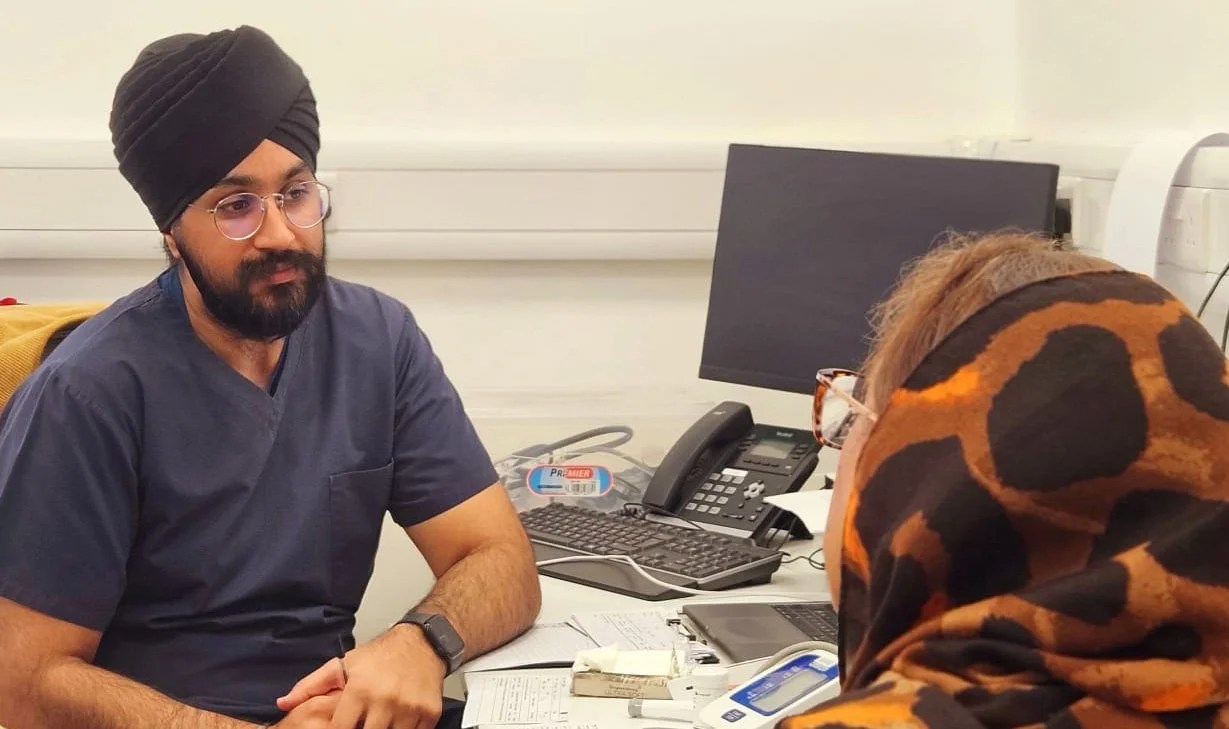
    Jaypal Singh, Volunteer Clinical Pharmacist with patient at health screening

    Jaypal Singh, Volunteer Clinical Pharmacist with patient at health screening

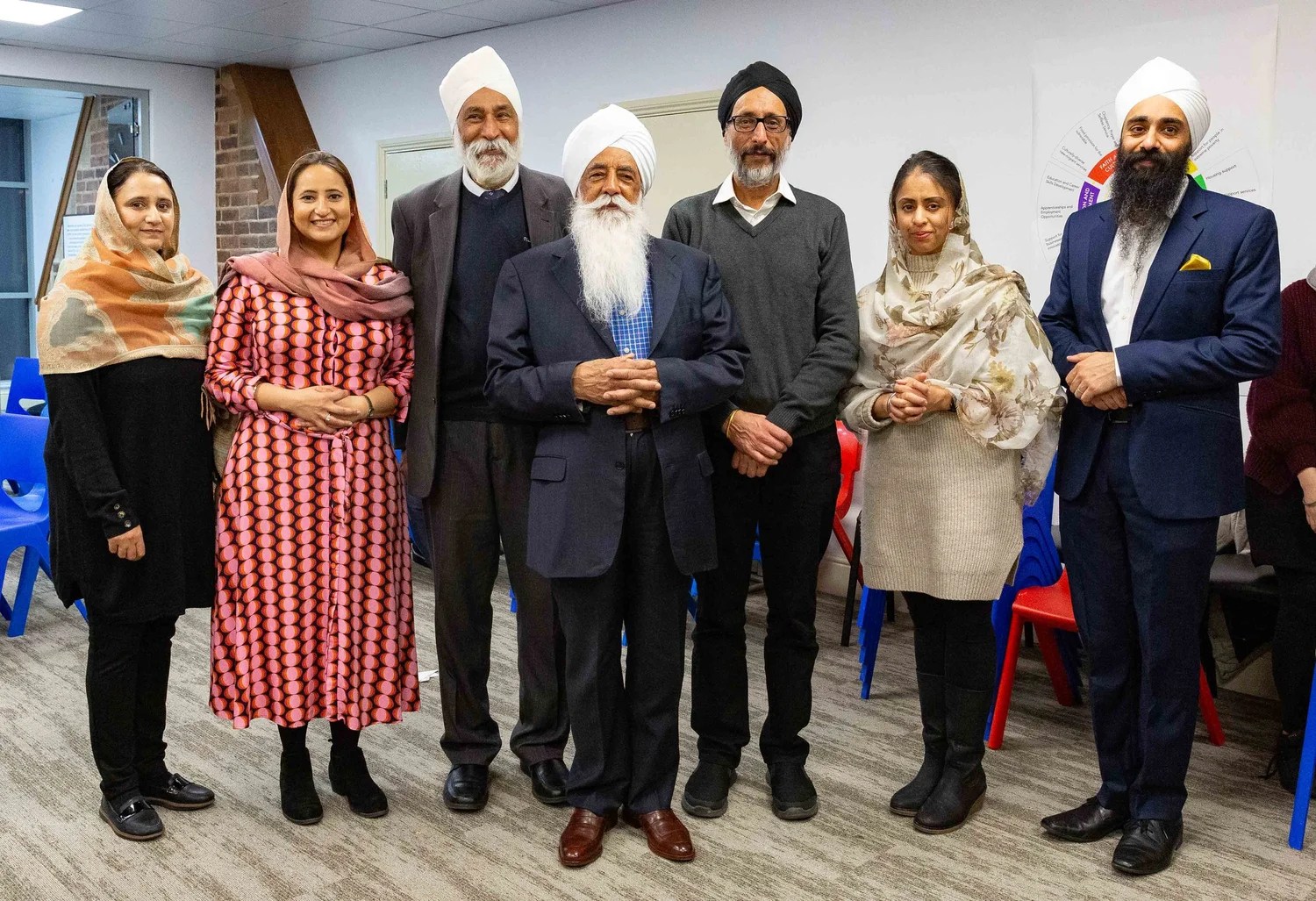
    Bhai Sahib Ji (centre) with volunteers and staff at NHT
    Nishkam Healthcare Centre building on Soho Road, Handsworth

    Patients frequently praise the dedication of staff and volunteers. One recent service user described the Centre as offering “a level of personalised service focused on individual wellbeing that is unparalleled,” and expressed gratitude for the “support and dedication provided by the Centre.”


    “We dedicate this honour to our trustees, staff, professional volunteers, and community members who have walked with us on this sacred path. This award belongs to them — and to every person who believes in the power of selfless service.”

    — Dr Manvir Kaur Kalirai


    Nishkam Healthcare Trust continues to expand its mission to make healthcare more humane, holistic, and inclusive, guided by the belief that when we serve others, we serve the Creator.

    Birmingham Faith Leaders’ Group gather at Queen’s Foundation to meet students and tutors during Interfaith Week

    Faith leaders from across Birmingham gathered on the 11th November 2025 at the Queen’s Foundation for the latest meeting of the Birmingham Faith Leaders’ Group (BFLG).

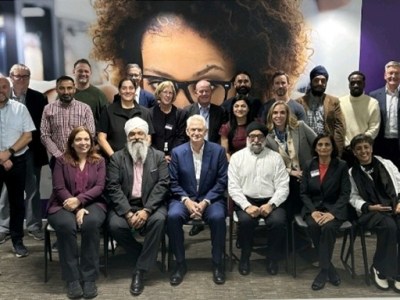
    MembMembers of the Birmingham Faith Leaders Group – L-R Amrick Singh Ubhi, Dr Gopinder Kaur Sagoo, Rabbi Jacobs, Dr Andrew Smith, Pat Whitney, Bhai Sahib Prof. Mohinder Singh, Anjana Shelat, Yvonne Stollard, Muhammad Afzal, Imam Mohammad Asad (absent colleagues include Archbishop Bernard Longley, Bishop Michael Volland, Dr Ottara Nyana, Dinesh Chauhan)

    Held during National Interfaith Week 2025, the gathering offered a rare opportunity for dialogue between Birmingham’s senior faith leaders and students preparing for ministry and community leadership. Together, they reflected on the roots, purpose, and future of the BFLG, a group that, for over two decades, has embodied the city’s commitment to peace and understanding. Founded in the aftermath of the 9/11 attacks, the Birmingham Faith Leaders’ Group has served for over two decades as a moral and civic voice for peacebuilding and unity – born out of tragedy, but sustained by hope, to ensure that the voices of faith in Birmingham would always be a force for unity, not division. The Group has stood together to denounce violence, promote compassion, and issue joint statements following incidents of terrorism, antisemitism, Islamophobia, and community division.

    Bishop Anne Hollinghurst, former member of the BFLG and now Principal at the Queen’s Foundation host of the meeting, welcomed faith leaders, students, and tutors together. The meeting brought together representatives from Birmingham’s diverse faith communities, alongside theology students and tutors, to discuss the importance of interfaith collaboration, the origins and purpose of the BFLG, and how faith leadership can continue to build peace and solidarity across the city. It was unfortunate that other members of the BFLG, Archbishop Bernard Longley, Bishop Michael Volland, Dr Ottara Nyana and Dinesh Chauhan could not join the event.

    Members of the BFLG with students and tutors from the Queen’s Foundation

    Pat Whitney, Chair of the BFLG, commented; “During the meeting, leaders shared reflections on the theme of Festivals and Feast Days, exploring how diverse traditions mark moments of joy and renewal, and how such observances can foster deeper understanding across communities. It is important for us to wok together, celebrate together and be there for each other during troubled time”.

    Examples of peacebuilding over the years were shared by leaders and references made to the development of the Peace Charter, which seeks to embed peacebuilding practices in civic and community life, and explored ways to inspire the next generation of faith and community leaders. The question-and-answer session with the students enabled deeper understanding and significance of interfaith collaboration and solidarity.

    Amrick Singh Ubhi, Director of Civic Engagement and Partnerships and past Chair of the BFLG said: “For more than twenty years, Birmingham’s faith leaders have stood shoulder to shoulder. Our shared commitment to peacebuilding, justice, and solidarity continues to guide how we respond to the challenges of our time, and how we prepare the next generation to lead with compassion.”

    As the meeting concluded, one theme resonated deeply, the importance of developing the next generation of faith and community leaders who will carry forward this mission of peacebuilding, dialogue, and solidarity.
    The Birmingham Faith Leaders’ Group will continue its regular meetings, deepening collaboration across the city’s faith communities and contributing to a shared vision of peace.

    ENDS

    Birmingham unites in celebration of National Interfaith Week Launch 2025

    Birmingham marked the launch of National Interfaith Week 2025 with a vibrant and inspiring event held at the Council House, Victoria Square, on Friday 7th November 2025. The gathering brought together faith leaders, civic representatives, and community organisations to celebrate Birmingham’s rich diversity and shared commitment to peace, understanding and social justice.

    Hosted by the Birmingham Council of Faiths (BCF), the afternoon programme included readings, music, reflections, and a ceremonial lighting of candles and faith flags — symbolising unity across traditions. During his opening address, the Chair of BCF, Jimmy Suratia, welcomed and acknowledged the presence of the Lord Mayor, the High Sheriff and Amrick Singh Ubhi DL. 

    Opening the event, Cllr Zafar Iqbal, the Lord Mayor of Birmingham, welcomed attendees and reflected on how Birmingham had always been a city of many faiths and cultures living side by side. Interfaith Week reminds us of the power of understanding and dialogue in building a more cohesive, compassionate city.

    Amrick Singh Ubhi DL, Director of Civic Engagement & Partnerships at the Nishkam Group of Organisations, reflected on the event and commented, “Interfaith Week is about more than dialogue, it’s about shared action, respect and love. The presence of so many partners at the launch event demonstrates Birmingham’s ongoing commitment to unity in diversity and the belief that together, we can nurture peace and wellbeing for all.”

    Speakers at the launch event included Dr Peter Rookes of the Birmingham Council of Faiths, Deepak Naik MBE (Chair, United Religions Initiative UK), and Cllr Jamie Tennant, Cabinet Member for Social Justice, Community Safety and Equalities. Cllr Tennant gave a very personal view of his own faith.  His perspective on peace and the crucial element that faith has in the work bridging interfaith communities and those of no faith was eloquently made. He also made it clear that the road ahead had challenges to come.

    The programme also featured a reading of Rumi’s ‘One Song’ by Shreen Mahmood, music by Emine Betul Kilinc, and reflections from Dr Andrew Goldstein on peace and hope.

    There were many organisations in attendance including representatives from across the city’s faith and civic networks, including the Dialogue Society, Faith & Belief Forum, Near Neighbours, United Religions Initiative, City of Sanctuary, The Lunar Society, Church of England Birmingham, Nishkam Centre, Girlguiding Birmingham, Birmingham Scouts, Father Hudson’s Care, and NHS University Hospitals Birmingham, Mosques, Hindu Temples, Gurudwaras, faith groups.

    The event highlighted how faith communities continue to play a vital role in promoting inclusion, service and wellbeing across Birmingham, a city proud of its interfaith heritage and leadership.

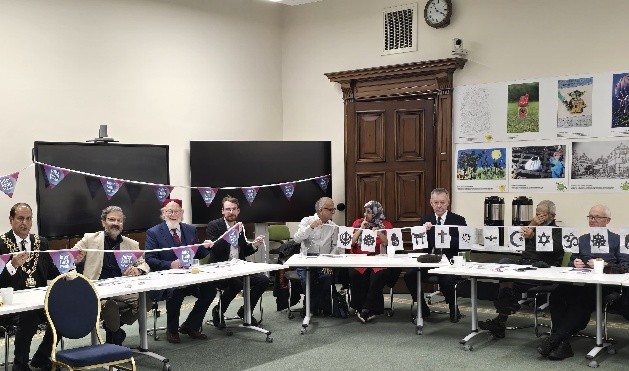
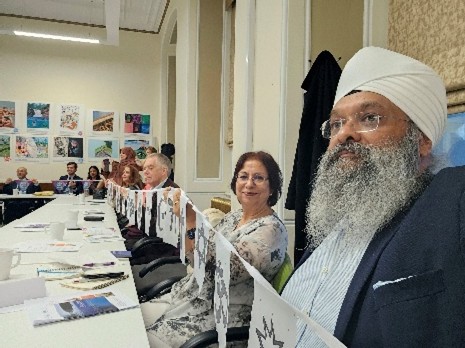
    The meeting ended with the lighting of a candle by Mr Goldstein, BCF, and a symbolic holding of a ring of flags each depicting a symbol from a different faith / religion.

    ENDS

    Faith communities highlight priceless perspectives in NationalInterfaith Discussion on End-of-Life Care

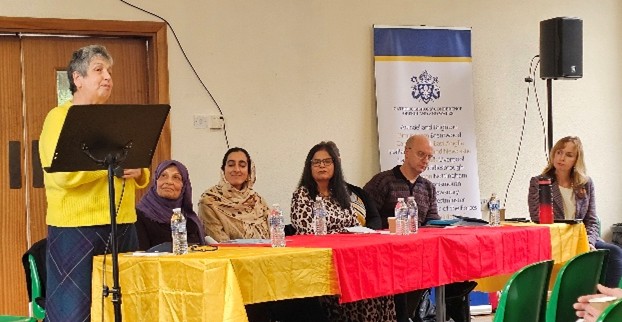
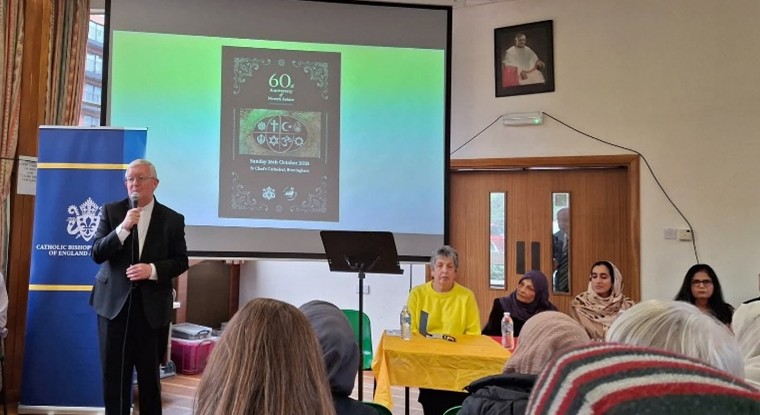
    The Nishkam Centre, team were honoured to participate in a national Interfaith Panel Discussion on End-of-Life Care hosted by the Catholic Bishops’ Conference of England and Wales at St Chad’s Cathedral 26th October 2025. The event was especially arranged to coincide with the marking of the 60th anniversary of Nostra Aetate.

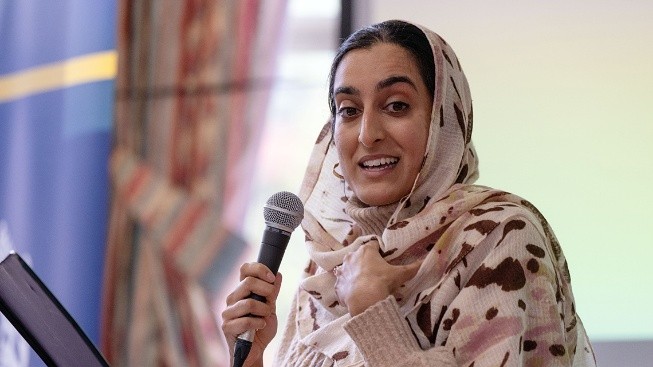
    Harr-Joht Kaur eloquently shared the Sikh dharam (faith) perspective on end-of-life commitments

    Representing the Sikh faith, Harr-Joht Kaur, a community researcher and Trustee / volunteer at the Nishkam Centre, spoke about how the Sikh dharam (faith) regards life and death as integral parts of the Divine order. She shared the Sikh view on death, dignity, and compassion in a humble and passionate way.

    “In the Sikh dharam, death is not something to fear,” said Harr-Joht Kaur. “It is part of Hukam – the natural will of the Creator. Our duty is to live with truth, compassion and remembrance of God until our final breath. End-of-life care should help people do exactly that – live and die with dignity and love.”

    The event formed part of “Dying to Live”, marking the 60th anniversary of Nostra Aetate, the Vatican declaration on inter-religious dialogue. Representatives from six faith traditions – Sikh dharam, Christianity, Judaism, Islam, Hinduism and Buddhism – shared how their beliefs shape end-of-life understanding and care. The panel members offered personal reflections included Ruth Jacobs, Shamim Merali, Shobha Sharma, Simon Romer, Harr-Joht Kaur, and Christina Ronayne.

    His Grace, the Archbishop of Birmingham, Bernard Longley, reflected on the discussions and thanked the multifaith audience for their attendance and engagement during the questions and answers session with the panel.

    After the event, Amrick Singh Ubhi, Director, Civic Engagement & Partnerships, Nishkam Group of Organisations, who was honoured to attend, said: “We believe true care must honour each person’s faith and humanity. Collaboration between communities and health professionals is essential if we are to deliver compassionate, inclusive care for all. Only then can we fulfil ‘sarbat da bhala’ – working for the welfare and wellbeing of everyone.”

    The Nishkam Centre continues to promote community wellbeing, interfaith understanding and social responsibility through the Sikh principles of Nishkam Seva (selfless service), Naam Simran (remembrance of God) and Sarbat da Bhala (the welfare and wellbeing of everyone).

    Notes to Editors

    • The full podcast of Dying to Live is available at: cbcew.org.uk/podcast/interfaith-panel-discussion-on-end-of-life-care
    • The Nishkam Centre is a registered charity based on Soho Road, Birmingham – part of the Nishkam Group of Organisations. It works to advance education, health, civic participation and interfaith dialogue inspired by Sikh teachings.

    A Call to Forgiveness and Reconciliation for Lasting Peace in Gaza

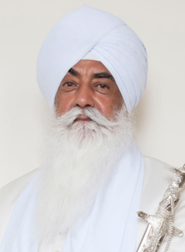
    Bhai Sahib (Professor) Mohinder Singh Ahluwalia OBE KSG

    Statement from Bhai Sahib (Professor) Mohinder Singh Ahluwalia OBE KSG

    As President Donald Trump, Israeli and Palestinian leaders, Prime Minister Sir Keir Starmer, and leaders from more than 20 other nations gather in Egypt for the Peace Summit on the Middle East, the eyes of humanity turn toward Sharm El-Sheikh in search of hope. This summit represents a pivotal opportunity, not only to halt the horrendous violence, but to lay the foundation for enduring peace.

    I wholeheartedly welcome this diplomatic initiative and the courageous efforts behind it. Yet, these steps, while essential, will not be sufficient unless they are rooted in the deeper ethical, moral and spiritual ground of forgiveness and reconciliation.

    From decades of experience in peacebuilding and reconciliation, including the creation of the Peace Charter for Forgiveness and Reconciliation in 2019, which promotes clemency to pave the way for global peace, offers this profound conviction:

    “There can be no sustainable peace without forgiveness. And no healing without reconciliation.”

    Desmond Tutu believed deeply that forgiveness and reconciliation are not optional niceties, but essential foundations for any true peace.

    Across many faiths and traditions, forgiveness is upheld as a moral force that liberates both the wounded and the wrongdoer. It is not weakness, nor forgetfulness. It is a deliberate act of courage – a path out of the prison of past pain. He emphasised:

    “Forgiveness does not mean forgetting but choosing not to be held hostage by the past. True reconciliation requires courage from all sides. Peace agreements without forgiveness collapse under the weight of unhealed wounds.”

    The vision of the Peace Charter for Forgiveness and Reconciliation is that the process of forgiving is vital if healing and reconciliation are to take place, as part of our collective efforts to seek justice, harmony and sustainable peace.

    I am reminded of President Nelson Mandela, who after 27 years of unjust imprisonment declared:

    “As I walked out the door toward the gate that would lead to my freedom, I knew if I didn’t leave my bitterness and hatred behind, I’d still be in prison.”

    Forgiveness, Mandela taught the world, is the bridge between pain and peace.

    Today, I humbly call upon all leaders present at the Egypt Summit to consider two bold moral steps:

    1. Please consider moving beyond ceasefires and negotiations to something more profound.
    2. Please explore whether all parties involved can sign a Pact of Forgiveness – a formal commitment to release the grievances of the past and build a future on reconciliation rather than retribution.

    The eyes of the world are upon you. The people of Gaza and Israel, and indeed all of humanity, are yearning not just for a pause in violence, but for a lasting peace that their children and grandchildren can inherit and emulate.

    Let Egypt, cradle of ancient civilisation, now give birth to a new model of peace, one founded on forgiveness, reconciliation, and our shared humanity.

    May this Summit not only end conflict but begin healing.

    With profound respect and hope,

    Bhai Sahib (Professor) Mohinder Singh Ahluwalia OBE KSG
    Architect of the Peace Charter for Forgiveness and Reconciliation
    Knight of the Order of St. Gregory the Great (Vatican)
    Recipient of the title of Bhai Sahib from the Akal Takhat and SGPC, Amritsar
    Recipient of the 2023 Moran of the Order of the Golden Heart (MGH), conferred by President William Samoei Ruto of Kenya for distinguished service to the nation.

    Related links

    Sikh delegate from Birmingham meets Pope Leo XIV – BBC News

    Birmingham Sikh charity leader recognised for selfless service – BBC News

    End

    Notes

    Bhai Sahib, Professor Mohinder Singh Ahluwalia is a globally recognised pioneer in peacebuilding and in mobilising innovative partnerships for shared human flourishing. He serves as the third spiritual leader of Guru Nanak Nishkam Sewak Jatha (GNNSJ), a prominent Sikh, volunteer-led organisation headquartered in Birmingham, UK. Under his leadership, GNNSJ has significantly expanded its

    international presence and impact. Bhai Sahib Ji also chairs the Nishkam Group of Organisations, which is known for its values-driven work in education, healthcare, community regeneration, civic engagement, and heritage conservation – all rooted in the Sikh ethos of Nishkam sewa (selfless service). Before his spiritual leadership, Bhai Sahib Ji had a distinguished 27-year career as a Civil and Structural Engineer, working across three continents in town planning, housing development, and policy formation.

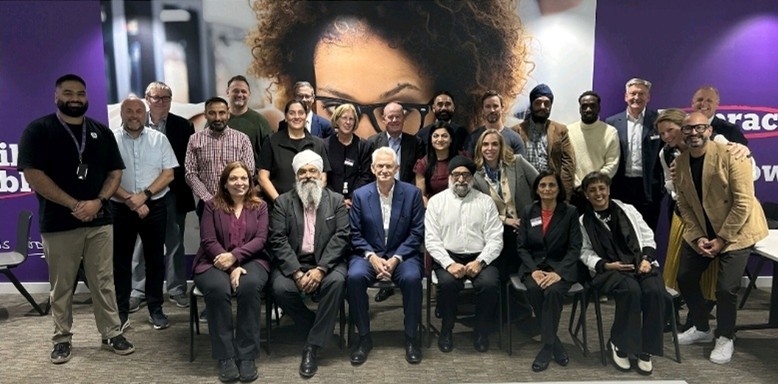
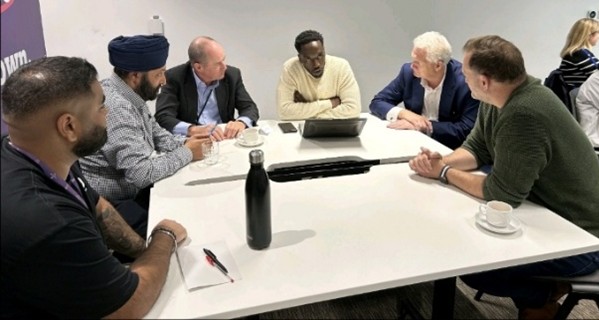
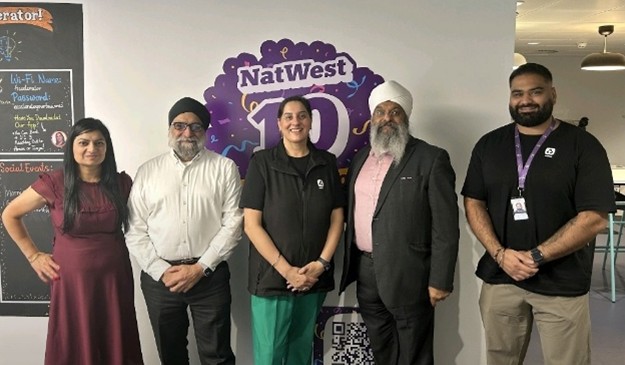
    NatWest Accelerator and Nishkam Group collaborate on values-led Leadership Programme to empower future business leaders

    NatWest Accelerator has partnered with the Nishkam Group of Organisations offering an Executive Senior Leadership Programme to entrepreneurs and senior managers equipping them with values-based leadership skills and strategic insight to drive sustainable growth.

    The programme, rooted in Nishkam’s principle of selfless service to humanity, will be delivered through the Nishkam Civic Association (NCA) Apprenticeship team, supported by NatWest’s extensive Accelerator network.

    Speaking at the leadership awareness session, Amrick Singh Ubhi DL, Director of Civic Engagement and Partnerships at Nishkam Group, said: “Our mission has always been rooted in service for the benefit of all. By joining forces with the NatWest Accelerator team, we are developing a generation of leaders equipped not only for business growth but also to create lasting social impact. The added bonus was having the NatWest Chairman and Board members in the room for the leadership discussion.”

    Pam Sheemar, Regional Accelerator Director, Midlands Southwest and Wales at NatWest Group, added: “Partnerships with community anchor organisations like Nishkam are vital in helping us reach and support founders from diverse sectors and backgrounds.

    Entrepreneurs and charity leaders are not only wealth and job creators in our cities but also agents of social transformation. Through the NatWest Accelerator’s leadership development strand, and by working with trusted partners such as Nishkam, we can provide the tools, networks, and confidence for leaders to thrive, creating sustainable businesses, resilient charities, and stronger communities.”

    The event brought together 15–20 entrepreneurs from the Accelerator alongside 11 NatWest Group Board Directors, creating a unique platform for dialogue, collaboration, and future growth.

    Key Features of the Level 7 Senior Leadership Programme

    • Postgraduate-level qualification (Level 7) – Equivalent to Master’s, with progression options to MBA or EMBA.
    • Practical, work-based learning – “Live” business challenges act as case studies.
    • Chartered Manager status – Professional accreditation with CMI membership included.
    • Values at the core – Integrity, accountability, respect, humility, courage, and transparency embedded throughout.
    • Funding support – 95–100% Government-funded, making it highly accessible to SMEs, charities, and larger employers.
    • Programme schedule – Induction on 13th November 2025; programme begins 27th November 2025.

    Professor Upkar S. Pardesi OBE, Executive Chair of NCA and former Dean of Birmingham City University Business School, added: “This programme is about more than leadership. It is about preparing principled, visionary leaders who can transform organisations while serving communities with integrity. With Government funding for Level 7 Apprenticeships ending in December 2025, this is the final opportunity for entrepreneurs and employers to secure fully funded places.”

    The Nishkam Team gave a heartfelt thank you to the NatWest Accelerator team, especially Pam Sheemar and Harinder Kunor (Accelerator Community Manager), for convening such a high-impact audience.

    Enquiries

    Employers and aspiring leaders are invited to register interest now.

    Contact:
    Prof. Upkar S. Pardesi OBE
    upkar.pardesi@ncauk.org  

     Nishkam Apprenticeships Enquiry Form

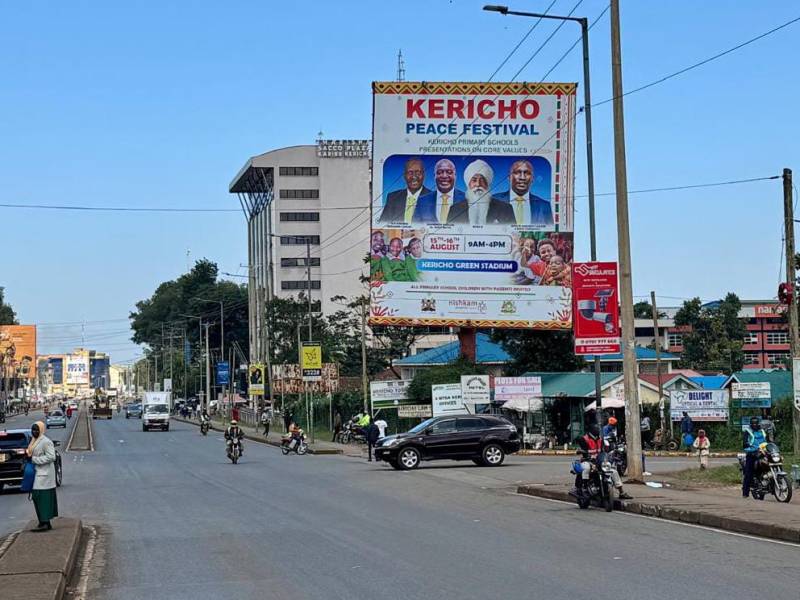
    Celebrating 100 Years of Kericho Wagon Works

    GNNSJ volunteers gather for the ribbon cutting ceremony.

    Kericho, Kenya – 12/08/2025 – The historic Kericho Wagon Works, first established in 1925 by the revered Sikh saint Sant Baba Puran Singh Ji, celebrated its 100th anniversary with a landmark relaunch at its original workshop on Isaac Salat Road (formerly Garage Road).

    Kericho Wagon Works, originally established to build timber wagons for the tea industry, remains a landmark of cultural, industrial, and spiritual heritage. Today, it stands poised to continue its legacy by equipping local people with skills, creating pathways to employment, and contributing to Kenya’s wider economic ambitions. It stands as a multifaceted symbol, an industrial workshop, a museum, and a spiritual monument, rooted in the legacy of Sant Baba Puran Singh Ji. It reflects his commitment to service, heritage, skill-building, and community development.

    The relaunch event was led by Dr Bhai Sahib Bhai Mohinder Singh Ji OBE KSG, Chairman of the Guru Nanak Nishkam Sewak Jatha (GNNSJ), an international faith-based organisation inspired by the teachings of Sikhism and the legacy of Sant Baba Puran Singh Ji, which also celebrated its Goden Jubilee, now serves as custodian of the Kericho Wagon Works site and continues its mission of selfless service, skills development, and community regeneration.

    Demonstration of an early wagon created by the workshop.

    Attended by local residents, workers, and members of the Sikh congregation from across the UK, USA, India, Canada, and Africa, celebrations included the singing of sacred hymns, a ribbon-cutting ceremony, and warm exchanges between visitors and the local community.

    The restored workshop will not only preserve an important piece of Kenya’s industrial and cultural heritage but will also actively contribute to national development priorities. Its revitalisation is expected to create local employment, provide vocational skills training, stimulate small-scale manufacturing, and boost Kericho’s profile as a heritage tourism destination.

    Local Kericho community gather for 100 years celebration.

    These goals are in direct alignment with the Government of Kenya’s Vision 2030 blueprint, which emphasises industrial growth, job creation, and cultural preservation as key drivers of economic transformation. By blending heritage preservation with modern vocational training, Kericho Wagon Works aims to become a model for values-led, sustainable economic regeneration.

    Speaking about the event, Bhai Sahib Bhai Mohinder Singh Ji reaffirmed the workshop’s commitment to the faith-inspired principles laid down by Sant Baba Puran Singh Ji a century ago, principles rooted in Nishkam sewa (selfless service), craftsmanship, and community upliftment.

    100 years later, Kericho Wagon Works on Isaac Salat Road, continues to be a pillar of the Kericho community.

    A special commemorative coin was issued to mark the centenary, inscribed with “100th Anniversary of Kericho Wagon Works, 1925–2025.” The reverse carried the timeless message “Simran, Seva, Keertan” (prayer, service, and singing of divine hymns), symbolising the enduring spirit of faith, selfless service, and devotion that shaped the workshop’s founding ethos. The coin now stands as a lasting keepsake, honouring both the legacy of Kericho Wagon Works and the values that continue to inspire future generations.

    Special commemorative coin was issued to mark the centenary.

    ENDS

    Notes to Editors

    • Kericho Wagon
      Founded in 1925 by Sant Baba Puran Singh Ji, the workshop originally produced wooden wagons to transport freshly picked tea leaves from farms to processing factories. It quickly became an industrial hub and a source of skilled employment for the local community.

      Beyond manufacturing, Sant Baba Puran Singh Ji’s vision extended to education, healthcare, and public welfare projects in Kericho. His guiding philosophy of Nishkam Sewa (selfless service) shaped the Wagon Works’ values. The Wagon Works site was incorporated into the Gurdwara Guru Nanak Nishkam Sewak Jatha complex and declared a national monument under Kenya’s Antiquities & Monuments Act in 1997.

    Botswana Parliament Adopts Peace Charter, Honours Global Faith Leader

    Gaborone, Botswana – 8 August 2025:


    In a landmark moment for values-led leadership and international peacebuilding, the Peace Charter for Forgiveness and Reconciliation was officially adopted by the Parliament of Botswana on Thursday 7 August 2025. The signing ceremony, held in Gaborone, was witnessed by Members of Parliament from both the ruling and opposition parties, including the Vice President, Hon. Ndaba Nkosinathi Gaolathe, and the Speaker of the National Assembly, Hon. Dithapelo L. Keorapetse.

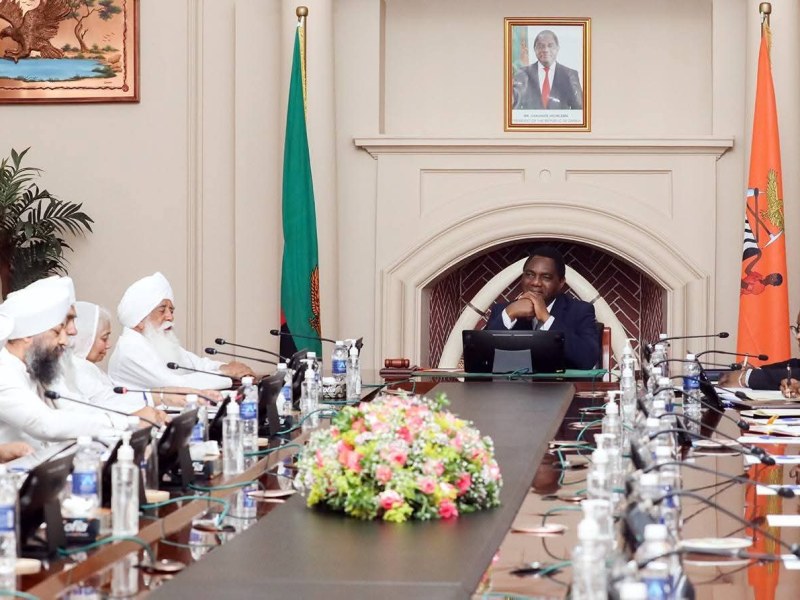
    The Charter was formally presented by Bhai Sahib Professor Mohinder Singh Ahluwalia OBE, KSG, MGH, Spiritual Leader and Chairman of Guru Nanak Nishkam Sewak Jatha (GNNSJ), United Kingdom. In recognition of his extraordinary lifelong contributions to interfaith dialogue, education, and global peacebuilding, Bhai Sahib Ji was presented with the prestigious Botswana Parliamentary Award of Recognition by the Speaker.

    The adoption followed a high-level courtesy visit on Wednesday 6 August, when the GNNSJ delegation met with the Speaker at Parliament. Discussions focused on the urgent need for values-led education, the power of forgiveness in reconciliation processes, and the significance of embedding spiritual principles within national leadership. The Speaker affirmed the timeliness of the visit:

    “The delegation’s visit is timely, as Botswana recognises the importance of religious and spiritual teachings in instilling peace, forgiveness, and reconciliation among national leaders, who can then share those values with their communities.”

    On Thursday, during the official presentation, Bhai Sahib Ji shared the foundational vision of the Charter:

    “The Peace Charter recognises that forgiveness is vital if healing and reconciliation are to take place. It is a sacred human capacity that can liberate people from being imprisoned in their pasts. Practised genuinely, it becomes a powerful antidote to hate, vengeance, and the endless cycle of conflict.”

    The Peace Charter for Forgiveness and Reconciliation, first launched in the UK Parliament, is now endorsed in Botswana, one of Africa’s most peaceful democracies. The Charter invites governments, faith leaders, educators, and citizens alike to embed forgiveness, humility, compassion, and justice at the heart of their relationships, policies, and institutions. It promotes peace not as a passive state, but as a dynamic and courageous commitment to transformation, healing and unity.

    The Speaker, Hon. Keorapetse, paid tribute to Botswana’s enduring commitment to democracy and peace:

    “Despite having been governed by a single political party for 58 years, Botswana has witnessed neither retribution nor political persecution following the transition of power. This reflects our President’s unwavering message of unity and healing.”

    Vice President Hon. Ndaba Gaolathe, in his engagement with the delegation, reaffirmed the Government’s commitment to promoting a society rooted in justice, inclusion, and shared responsibility.

    Clerk of the National Assembly, Dr. Gabriel G. G. Malebang, connected the Charter’s message with Botswana’s heritage:

    “The concept of peace is deeply embedded in our Setswana expression ‘Kagisano’- building together in harmony. Peace is not self-sustaining; it must be nurtured continuously.”
    He highlighted the importance of traditional systems such as the Kgotla in enabling inclusive dialogue and peaceful governance.

    Bhai Sahib Ji offered an appeal to Parliamentarians and all world leaders:

    “If there was ever an international currency for peace and prosperity, one that every person could access – it would be the currency of values sacred to us as humans: compassion, integrity, humility, and loving responsibility. Let us invest in these values for generations to come.”

    Hon. Keorapetse and Bhai Sahib ji sign the Peace Charter and Bhai Sahib Ji being presented with the Parliamentary Award of Recognition

    The Charter also addresses modern-day challenges, gender-based violence, youth conflict, environmental degradation, and spiritual disconnection, offering a deeply ethical and actionable framework for restoring inner and outer peace.

    The delegation concluded their visit by encouraging Botswana to become a continental champion for forgiveness and reconciliation in Africa, inspiring other nations to adopt similar frameworks grounded in moral courage and spiritual strength.

    The adoption of the Peace Charter and the honouring of Bhai Sahib Ji marks a profound milestone in Botswana’s democratic journey, strengthening its role as a beacon of principled governance, dialogue, and peace on the global stage.

    ENDS

    Notes for Editors:

    1. Guru Nanak Nishkam Sewak Jatha (GNNSJ) is a faith-based organisation headquartered in Birmingham, UK, with global outreach through its work in spiritual development, education, healthcare, interfaith dialogue, and civic engagement. It operates Gurudwaras (Sikh places of worship), educational institutions, and social impact programmes in the UK, Kenya, and India.
    2. Bhai Sahib Bhai (Prof.) Mohinder Singh is the Spiritual Leader and Chairman of GNNSJ. He is recognised globally for his leadership in interfaith collaboration, reconciliation, and peacebuilding.
    3. He was awarded the Pontifical Order of Knighthood of St Gregory the Great by His Holiness Pope Benedict XVI in 2012 – the first Sikh to ever receive this honour.
    4. He has also been awarded the Officer of the Order of the British Empire (OBE) for services to faith communities and interfaith relations in the UK and globally.
    5. Bhai Sahib Ji is a founding member of the European Council of Religious Leaders, President of Religions for Peace UK, and Co-President of Religions for Peace International.
    6. The Peace Charter for Forgiveness and Reconciliation, championed by Bhai Sahib Ji, promotes healing, reconciliation, and peacebuilding across divides. It draws from the teachings of many religious and spiritual traditions, including those of Jesus Christ, the Prophet Muhammad (PBUH), Guru Nanak Dev Ji, Mahatma Gandhi, and Martin Luther King Jr.