Faith leaders from across Birmingham gathered on the 11th November 2025 at the Queen’s Foundation for the latest meeting of the Birmingham Faith Leaders’ Group (BFLG).
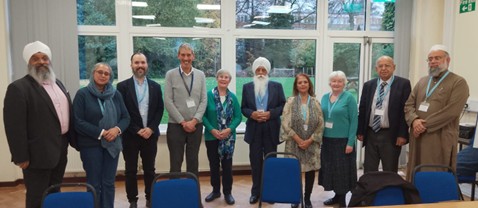
Held during National Interfaith Week 2025, the gathering offered a rare opportunity for dialogue between Birmingham’s senior faith leaders and students preparing for ministry and community leadership. Together, they reflected on the roots, purpose, and future of the BFLG, a group that, for over two decades, has embodied the city’s commitment to peace and understanding. Founded in the aftermath of the 9/11 attacks, the Birmingham Faith Leaders’ Group has served for over two decades as a moral and civic voice for peacebuilding and unity – born out of tragedy, but sustained by hope, to ensure that the voices of faith in Birmingham would always be a force for unity, not division. The Group has stood together to denounce violence, promote compassion, and issue joint statements following incidents of terrorism, antisemitism, Islamophobia, and community division.
Bishop Anne Hollinghurst, former member of the BFLG and now Principal at the Queen’s Foundation host of the meeting, welcomed faith leaders, students, and tutors together. The meeting brought together representatives from Birmingham’s diverse faith communities, alongside theology students and tutors, to discuss the importance of interfaith collaboration, the origins and purpose of the BFLG, and how faith leadership can continue to build peace and solidarity across the city. It was unfortunate that other members of the BFLG, Archbishop Bernard Longley, Bishop Michael Volland, Dr Ottara Nyana and Dinesh Chauhan could not join the event.
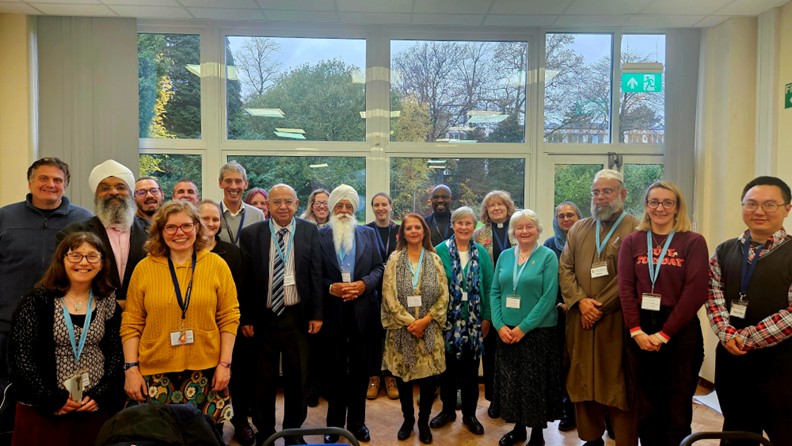
Pat Whitney, Chair of the BFLG, commented; “During the meeting, leaders shared reflections on the theme of Festivals and Feast Days, exploring how diverse traditions mark moments of joy and renewal, and how such observances can foster deeper understanding across communities. It is important for us to wok together, celebrate together and be there for each other during troubled time”.
Examples of peacebuilding over the years were shared by leaders and references made to the development of the Peace Charter, which seeks to embed peacebuilding practices in civic and community life, and explored ways to inspire the next generation of faith and community leaders. The question-and-answer session with the students enabled deeper understanding and significance of interfaith collaboration and solidarity.
Amrick Singh Ubhi, Director of Civic Engagement and Partnerships and past Chair of the BFLG said: “For more than twenty years, Birmingham’s faith leaders have stood shoulder to shoulder. Our shared commitment to peacebuilding, justice, and solidarity continues to guide how we respond to the challenges of our time, and how we prepare the next generation to lead with compassion.”
As the meeting concluded, one theme resonated deeply, the importance of developing the next generation of faith and community leaders who will carry forward this mission of peacebuilding, dialogue, and solidarity.
The Birmingham Faith Leaders’ Group will continue its regular meetings, deepening collaboration across the city’s faith communities and contributing to a shared vision of peace.
ENDS

