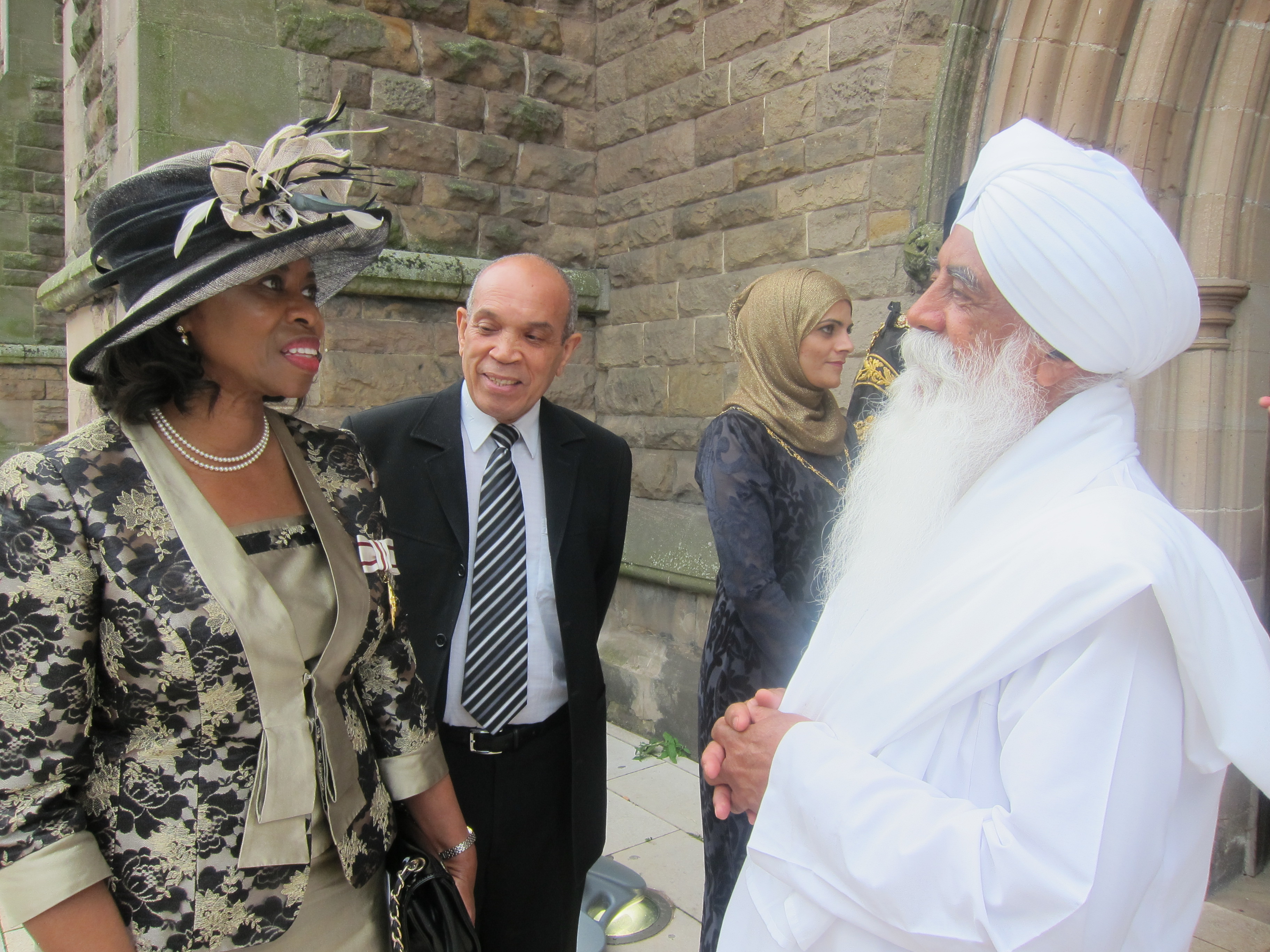
West Midlands Faith Forum “No Place Like Home” launches Interfaith Week

Faith communities listen to Adoption & Fostering

Faith communities listen to Adoption & Fostering

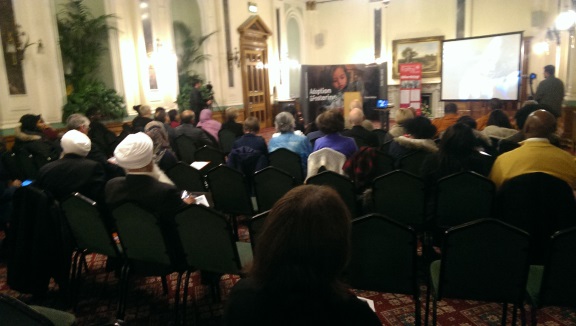
The  West Midlands Faith Forum (WMFF) adoption and fostering services event, “No Place Like Home”, marked the launch of Interfaith Week 2014 in Birmingham. The event was well attended by people from many of the faith traditions and none across the city. Birmingham’s faith communities, during discussions at the Birmingham Faith Round Table, have declared the whole year as a year of Interfaith engagement and activities in keeping with the ethos of Interfaith Week.

WMFF, in partnership with Birmingham City Council’s Fostering and Adoption Service, put on the event at the City Council’s Banqueting Suite. The overall objective being to address a very pressing need in the City for foster care. The event looked at the concept of family and family values; Faith community support for families as a key building block for society; opportunities to build families through fostering and / or adoption.

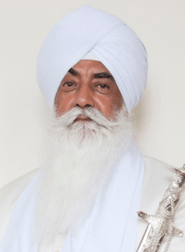
Bhai Sahib Bhai Mohinder Singh, Chairman of Guru Nanank Nishkam Sewak Jatha (GNNSJ), WMFF
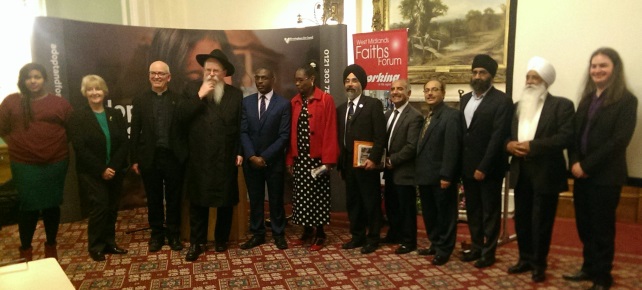
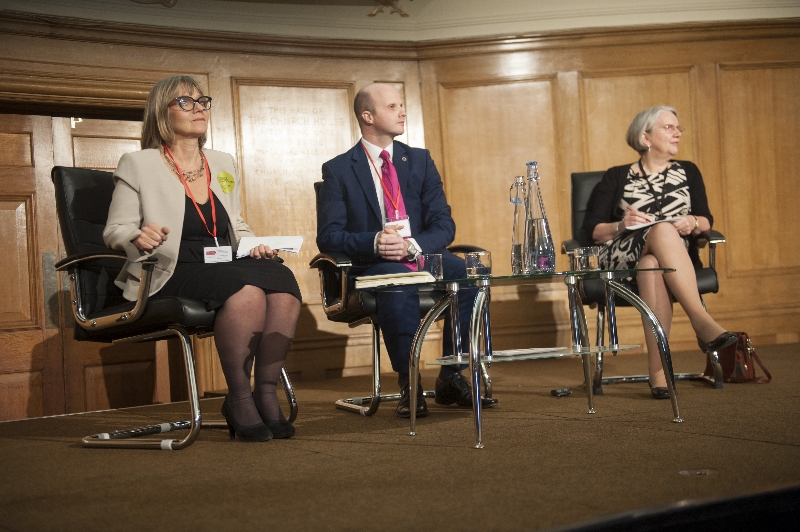
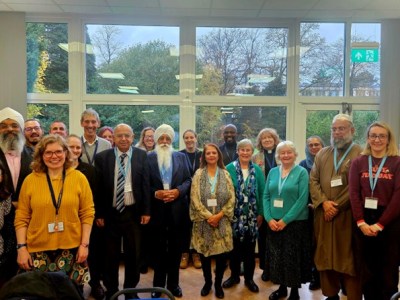
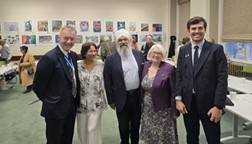
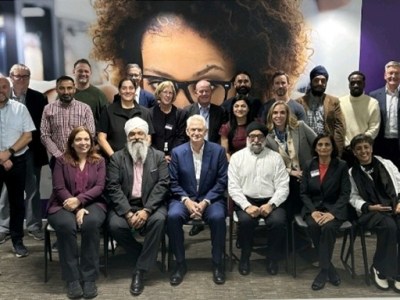
Speakers and distinguished guests at the event

Speakers and distinguished guests at the event

Executive Board member and Chairman of Nishkam Civic Association attented the event and was accompanied by Mr Sewa Singh Mandla and the Nishkam Centre Director, Amrick Singh. The rationale to attend was quite simple; to support the WMFF iniative and to see how the whole issue of fostering and adoption could be addressed within the faith communities in  Birmingham.

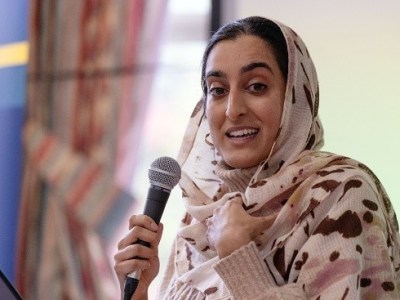
The event was hosted by Gerald Nembhard, Chair of WMFF, and included a series of distinguished speakers from the faith communities and those either providing, or having received, adoption / fostering services.

Bhai Sahib Bhai Mohinder Singh, commented on how important such interfaith dialogue was on topics as such as fostering and adoption. “We must all work together to create individuals with values, this will create stronger families and, only then, will we see a stronger society. Children are God’s gift to us – we must nurture them, love them and provide them with education and values so that they too become great ambassadors of humanity”.All the speakers shared the need for faith communities understanding the importance of supporting the initative and providing life-changing opportunities to children facing challenging futures. It was also evident that those who had adopted or fostered children of all ages had found the experience very rewarding and humbling. Dr Pyara Singh Bhogal, Chairman of the Council of Sikh Gurudwaras Birmingham, shared some very poigniant messages from Guru Granth Sahib Ji to show how important it is to look after those in society that are entrusted to us. He explained that a child’s first Guru and second Guru are the mother and father and this demonstrates the importance of having loving parents in a child’s life.

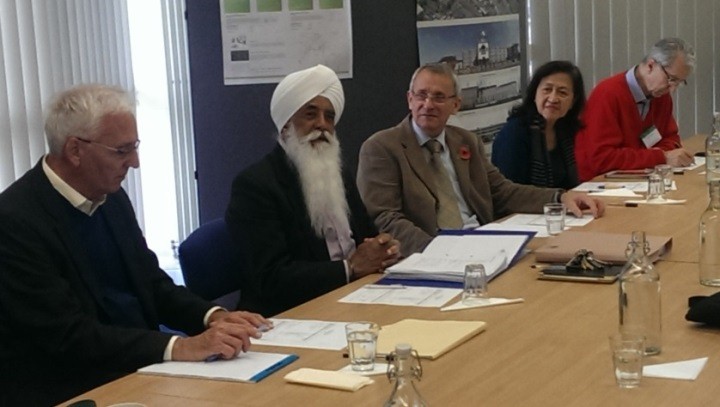
Rabbi Shmuel Arkush & Bhai Sahib Bhai Mohinder Singh

Rabbi Shmuel Arkush & Bhai Sahib Bhai Mohinder Singh

The programme clearly showed the significance of the faith communities at the event and set a challenge to ensure the messages went to the masses. It was apparent from the event that the message that children are the future and a real need to invest in them was important. They needed stable families to enable them to flourish and to have the values that equipped them to be good citizens.

The faith communities recognised that there was more work to be done to take messages from the event back to respective communities to ensure a step change. This point was clearly enunciated by Rabbi Shmuel Arkush from the Progressive Synagogue, who spoke emphatically about the importance of providing children conducive envirionments to grow and develop. He was passionate about expressing the importance of values and education, at which point he spoke about the work the Standing Advisory Council on Religious Education (SACRE) had achieved in the city by working with the faith communities. “We must understand the importance of the 24 Moral and Spiritual Dispositions that have been rolled out by Birmingham City Council, SACRE and the faith leaders – this is a unique and fantastic development. The Nishkam School uses these dispositions in it’s school in a very successful way” he went on to say.

Rabbi Shmuel Arkush and Bhai Sahib Bhai Mohinder Singh met at the end of the event and discussed futher opportunities for dialogue and collaboration.  Bhai Sahib Ji later commented that he was moved by the Rabbi’s words about the importance of values, education and the family structure.

ENDS

Notes to Editors:

For more information:


Nishkam Centre’s Birmingham Community Advice Services Event challenges current provision and paves the way forward

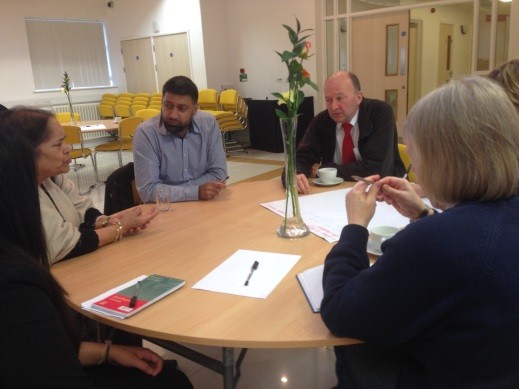
An opportunity for attendees to share experiences during the workshop

An opportunity for attendees to share experiences during the workshop

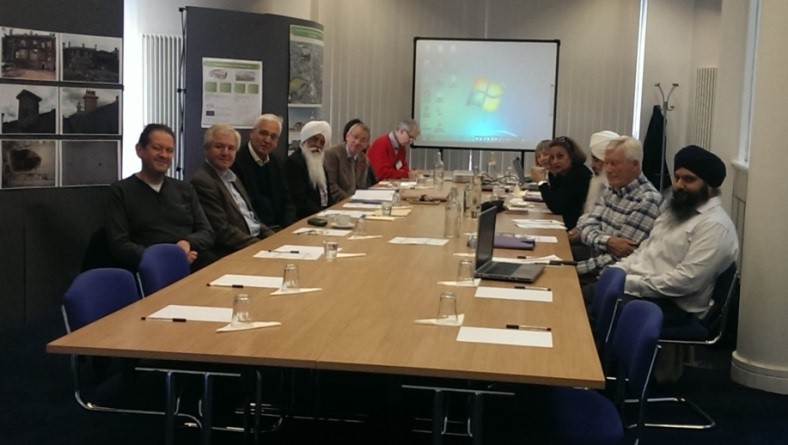
As the Birmingham Community Advice (BCA) project continues to offer much needed advice and guidance across the City, the consortia held a consultation event with strategic partners and opinion formers. The event attracted interest from across the City and was well attended by service providers and those with an affinity to such services.  

The aim of the day was to understand the current landscape of IAG services and looking at future planning to sustain provision. All fifteen partners where asked to look at the past year with the austerity measures and cutbacks that effect the clients served and to explore any gaps in the services. The partners were also asked to think about services that were being delivered and where there was duplication and scope for further provision. The event provided an opportunity to mark the achievements of the BCA project with the support of all the partners to highlight what had been achieved in a short period. Mrs Abrol from UKAWC one of the strategic partners on the BCA Project said, “This project and event has brought so many organisations together under one roof to have a collective input on service delivery, really useful project”.The consultation event was held to map Information Advice & Guidance (IAG) services in Birmingham, to see what was working well and what more needed to be done. Birmingham Community Advice (BCA) led by the Nishkam Centre and funded by Big Lottery’s Advice Services Transition Fund, is an outreach programme with a difference. BCA works with partners to provide Debt, Housing, Employment Rights and Welfare advice and advocacy services, and capacity build service providers and

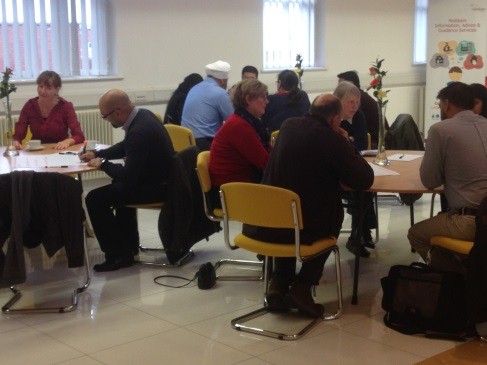
All the attendees work on a group exercise

All the attendees work on a group exercise

volunteers. Trevor Allsopp from the Birmingham Peoples Centre reiterated how employment specialist advice was a niche and how privileged he felt to work with a handful of organisations and the contributions BCA had made in its first year.

The event saw some of the partners do presentations on the day and give a flavour of partnership working with the BCA team and how working together had seen a change to their service delivery within community settings. All of the partners who spoke informed the listeners of the value added services received and how the partnership to support and advise their clients had been so positive and fruitful. Anita Duggal from Soho and Rookery Children Centre spoke passionately about the ease of accessibility to the BCA team to refer clients who needed an array of support that her team were unable to offer.The BCA project team has helped / supported about 721 people. They also outlined how the project, with the team’s expertise, has secured benefits through appeals and benefit applications in the region of £400,000. It was shown how the project has reached out to different communities and how people have been encouraged to learn about their rights in five different community languages. The BCA Project Coordinator, Gulbag Singh said, “The fact that over £40,000 had been secured through our employment specialist who negotiated at tribunals and through ACAS mediation is an accolade to the great work being undertaken. The work with welfare benefits is a substantial amount of money that has been secured for some of the most vulnerable people in our community.” Yousef, a debt specialist with Free at Last expressed his gratitude to the BCA project for the support offered to take on clients for advice and the ongoing support provided.

There are partners who refer into to the BCA team on a regular basis and they highlighted how beneficial it had been for their current remit to have an additional arm to support people in times of crises and need.

The consultation had no surprises other than a consensus of how little there was in Birmingham for people in terms of free advice and guidance and the lack of awareness of services.  A discussion took place about how everyone needed to be aware of what was available when supporting clients who may need a service that they did not provide. The buzzwords for the day were seamless working; transparency; commitment; partnerships and sustainability. All the attendees agreed and committed to the fact that what had been started at the event required their long-term commitment to ensure that the City had a collective and uniform approach for IAG services. Ajmal Khan from BARC said, “We are grateful this event took place, we got to meet similar organisations to share ideas and see how to progress in the future.”

Colleagues from Refugee Action were also present and work with the Nishkam team where opportunities present themselves for partnership working. Dawn Murray from Refugee Action reflected on the year since the launch of the project that she attended and noted that the BCA Project had flourished to become a great success.  Recognition of how the third sector is raising its game to support the ever-increasing IAG needs is evident and this is with little or no support from national and local government. The lack of funding was recognised as a major a concern on the day and all present were asked to provide tangible outcomes that could be shared to support future funding bids. With Birmingham City Council facing huge cuts, it was imperative to identify a new way of working to enable the provision of services in the future.

The diverse communities the BCA project has served to date was visible for all to see and acknowledged thanks to the concise data captured on age gender, ethnicity and religion. The BCA team shared with all the partners the key achievements and milestones, whilst crediting all present for making it all possible with their commitment and trust in the project and genuine partnership working.

ENDS

Notes to Editors:

For more information:

Over 200 faith groups, MPs and government policy leads agree- Faith is Too Significant to Ignore!

7ef3adc7-b0de-448f-9768-bb6f6659c8fbWednesday the 19th November, was a significant day for FaithAction and faith groups across the country.

As we gathered in the beautiful Assembly Hall in Church House Westminster, Amrick Singh (Director of Nishkam Centre and part of the FaithAction advisory group) starting proceedings with a warm welcome.

Amrick started with that all important question- ‘Why is Faith too significant to Ignore?’- and asked us to look at faith’s part in our communities and neighbourhoods. He talked about the fact that in history, faith has been on the fringes, but that as we approach 2015, faith is coming to the table, because of faith communities and the work they are doing. He focused on people of faith not doing things for recognition but because it’s ‘the right thing to do’.

More information here


Museum of World Religions AGM and project development meeting hosted in Birmingham

engagementThe Guru Nanak Nishkam Sewak Jatha (GNNSJ) Gurudwara and Nishkam Centre were honoured to host the Museum of World Religions (MWR) Working Committee for a marathon two day gathering and Annual General Meeting this week.

The Museum of World Religions (MWR) will provide an opportunity for people of different backgrounds to get to know, understand, respect, and learn from each other. It will create an atmosphere that stimulates spiritual awareness and a sense of humility. The project was inspired and initiated by the Dharma Master Hsin Tao who founded the first Museum of World Religions located in Taiwan. The Working Committee is looking at the planning and coordination to establish a Museum of World Religions in Birmingham. The Museum is intended to be a shared space for dialogue and understanding between people from different faith communities as well as for people of no religious or faith affiliations. It is envisaged that it will serve as an educational resource for learners of all ages and provide an opportunity for individuals to explore the part that religion plays in contemporary life.

The Museum will be a twenty-first-century state-of-the-art spacious building to allow visitors a sense of freedom in exploring the exhibitions. The Museum will encourage respect for religion by introducing visitors to the core values, wisdom, and practices of all the major world religions, and in this manner illustrate the need for religion in an increasingly secular and environmentally threatened world.

Bhai Sahib Bhai Mohinder Singh who had just returned from an interfaith trip to Amritsar, India where he hosted the Birmingham Faith Leaders to ascertain a better understanding of the Sikh Dharam (faith), said “The meeting hasmeeting been very productive; the passion of the working committee to ensure the project is thought through and planned meticulously is enlightening. As human beings we need a better understanting of the other; fear, hostility, anger and resentment are a result of a lack of understanding. We must empower people with knowledge of other faith traditions so that we can build a more cohesive society. I am honoured to be part of this Working Group, this is a landmark project that will become a focal point for faith literacy in this hemisphere in years to come”.

The team that met this week included:

  • Josef Boehle, Coordinator of the UNESCO Chair in Interfaith Studies, University of Birmingham;
  • Rodney Dodds, Reader Emeritus, Church of England;
  • Marius Felderhof, former Senior Lecturer, Dept. Theology and Religion, University of Birmingham;
  • Maria Reis Habito, International Programme Director, Museum of World Religions, Taiwan;
  • Farida Hashem, Senior Consultant, Felixia Associates;
  • Sharif Horthy, President, Guerrand-Hermès Foundation for Peace, Brighton;
  • Tuti Horthy, Trustee, Guerrand-Hermès Foundation for Peace, Brighton;
  • Kurt Schreiber, Advisor, Museum of World Religions, Taiwan;
  • Bhai Sahib Mohinder Singh, Chairman, GNNSJ, Birmingham;
  • Sukhbir Singh, GNNSJ, Birmingham

The Museum will look at the central importance of religion in human life and create a common space for the many religious communities in Birmingham. It is envisioned that the project would have an educational value for the general public and would be the first of its kind in Europe, possibly the first outside Taiwan. It will celebrate the role and relevance of religion, both for individuals and for society. Furthermore, it will stimulate constructive and critical reflection on the role of religion in our global society. When we consider the misrepresentation, the hijacking, and the mis-use of faith to serve personal agendas, the need for such a museum is exceptionally timely. In today’s increasingly globalised and fractured world, members of different faith communities and ethnicities find themselves sharing a common space. At the same time, humanity is facing unprecedented challenges––environmental degradation, poverty, war, violence between groups and communities, uneven distribution of material wealth, social disparity, injustice, alienation, and many other problems. The proposed Museum is intended to provide information and resources for individuals to reflect on the meaning and role of religion amidst these challenges, and how religion can indeed be a positive force for global healing, social transformation, and personal growth in the twenty-first century.

By encouraging the recognition of the importance of inter-religious dialogue and religious education as vehicles contributing to social stability and world peace the museum will build powerful bridges. It will serve as a major educational resource for teachers and students of theology and Religious Education in Britain, Europe, and beyond.

Amrick Singh, Centre Director commented, “It is always a pleasure to host and serve such distinguished guests working on projects that will be for the benefit of all. The rich diversity of this team illustrates how vibrant the final outcome will be. The guests were really overwhelmed by the hospitality they received by Bhai Sahib Ji and the team and we are pleased we were able to contribute in a small way by hosting such a significant meeting”.

ENDS

Notes to Editors:

For more information:

Nishkam Media Centre – www.nishkammediacentre.com

Battle of Saragarhi brings British Army to Birmingham Gurudwara

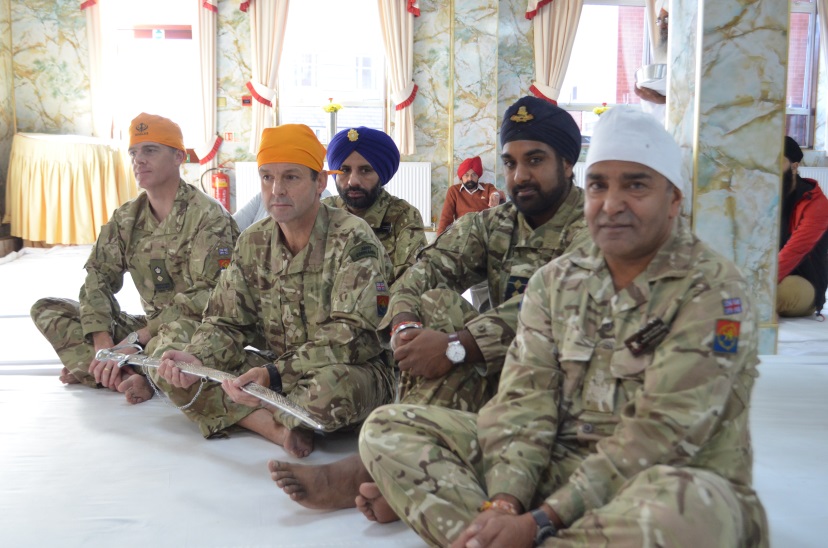
Delegation gracefully listens to Guru Granth Sahib Ji’s message in the Gurudwara

Delegation gracefully listens to Guru Granth Sahib Ji’s message in the Gurudwara

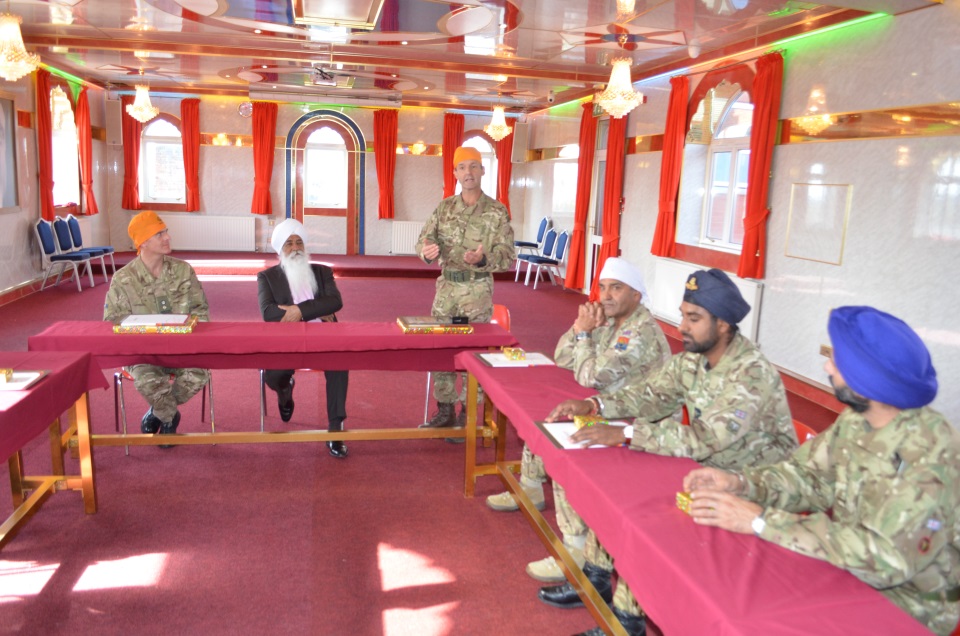
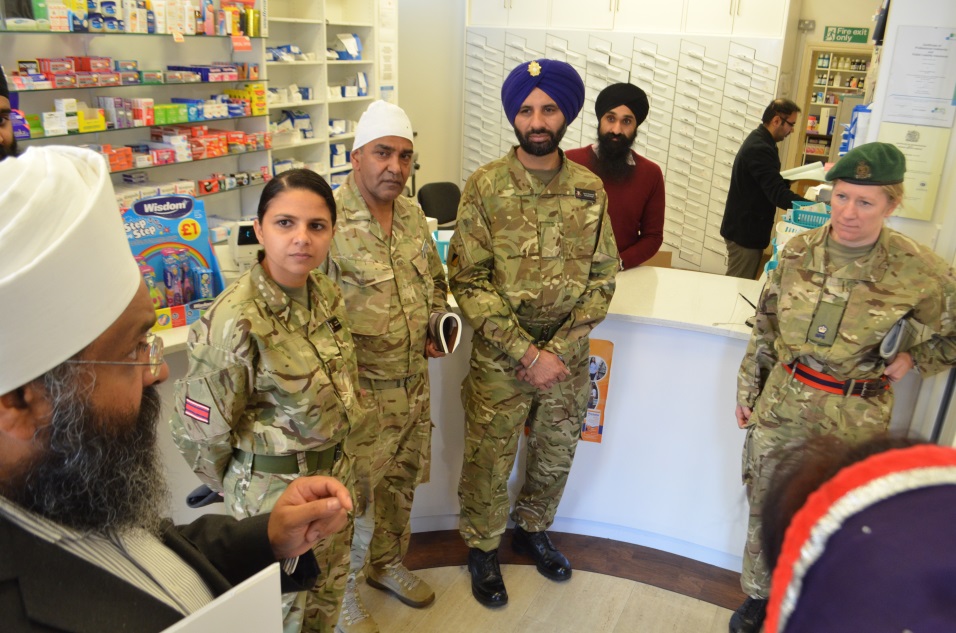
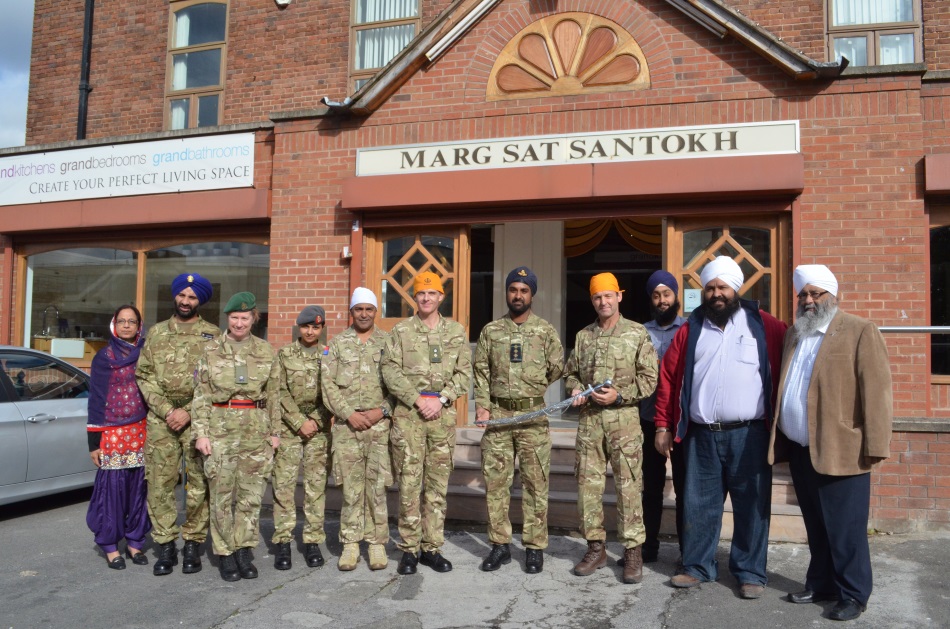
Brigadier Abraham accompanied by colleagues from the British Army visited the Guru Nanak Nishkam Sewak Jatha (GNNSJ) Gurudwara and Nishkam complex as part of the high profile commemorations of the Battle of Saragarhi.

Bhai Sahib Bhai Mohinder Singh, Chairman of GNNSJ, who manages the selfless services of the Gurudwara on Soho Road and Chairman of the Nishkam Civic Association welcomed and hosted the Army Delegation.

The Battle of Saragarhi is considered by some military historians as one of history’s great last-stands. Sikh military personnel and Sikh civilians commemorate the battle every year on 12th  September as Saragarhi Day; the battle was given the honour of a regimental holiday.  The Battle of Saragarhi was fought on 12th September 1897 between 21 Sikhs of the 36th Sikhs of British India, defending an army post, and 10,000 Afghan and Orakzai tribesmen. The battle occurred in the North-West Frontier Province, which formed part of British India. It is now named the Khyber-Pakhtunkhwa and is part of Pakistan. The contingent of the 21 Sikhs from the 36th Sikhs led by Havildar Ishar Singh all chose to fight to the death to protect the army post.Brigadier Mark Abraham OBE, who recently received a Kirpan from the Akaal  Takht Jathedar Giani Gurbachan Singh at Sri Harimandir Sahib in Amritsar (often called the ‘Golden Temple’) visited Bhai Sahib Bhai Mohinder Singh and the Nishkam complex as part of the Saragarhi commemorations.

Nishkam Centre Director and guests pay respects to Guru Granth Sahib Ji in the                      Gumbad (Dome) Darbar

Nishkam Centre Director and guests pay respects to Guru Granth Sahib Ji in the Gumbad (Dome) Darbar

All the 21 Sikhs who laid down their lives in the Battle of Saragarhi were posthumously awarded the Indian Order of Merit, the highest gallantry award of that time, which an Indian soldier could receive by the hands of the British crown, the corresponding gallantry award being the Victoria Cross. This last stand has inspired generations of Sikhs with an epic recollection of valour seldom matched.

Brigadier Abraham, part of a seven strong contingent of British Army Officers and Soldiers, visited the five centre of excellence; the Gurudwara, Nishkam Centre, Nishkam Schools, Nishkam Health Centre and Nishkam Community Cooperative and better understood the Sikh way of life and how “making work worship” brings spirituality and secularity together seamlessly in reality.

Recalling the receiving of the Kirpan, Brig Abraham said: “It was a great honour for the British Army to receive this [proudly holding up the 3 foot Kirpan] from the Akaal Takht Jathedar Giani Gurbachan Singh”.

Brigadier Abraham thanks Bhai Sahib Ji for hosting the British Army

Brigadier Abraham thanks Bhai Sahib Ji for hosting the British Army

During the visit to GNNSJ there were ongoing discussions about the importance of values, education and standards. This was done in the spirit of strengthening understanding and links between Sikhs and the British Army.

Brigadier Abraham went on to say, “ Our Sikh officers and soldiers are a crucial part of our organisation and seeing the 5 Centres of Excellence here today reinforces the community role and spirit that the Sikhs have”.

The delegation were in awe of what they saw at the Nishkam complex and were overwhelmed by the community spirit to serve humanity and society selflessly. The conversations with the 6th form students at Nishkam High School further reiterated the values that were clearly being developed to prepare good natured, values inspired and morally attuned humble individuals.In conversation with the delegation Bhai Sahib Mohinder Singh shared his work on an International Charter for Forgiveness and Reconciliation. “The practice of forgiving can transform legacies and memories of injustice, conflicts and wars. It can liberate people from being imprisoned in their past and themselves, and allow the grace of the Divine to restore peace and harmony amongst individuals and communities” he iterated.  Bhai Sahib Mohinder Singh aslo shared many sacred recollections from Sikh history to illustrate the importance of unity, partnerships, collaboration, peace, good human values, sacrifice and education. The significance of the Panj Kakar (or 5 K’s) and importance of the Dastaar (Turban) were discussed and their prominence to an Amritari (baptised Sikh / Khalsa) outlined.

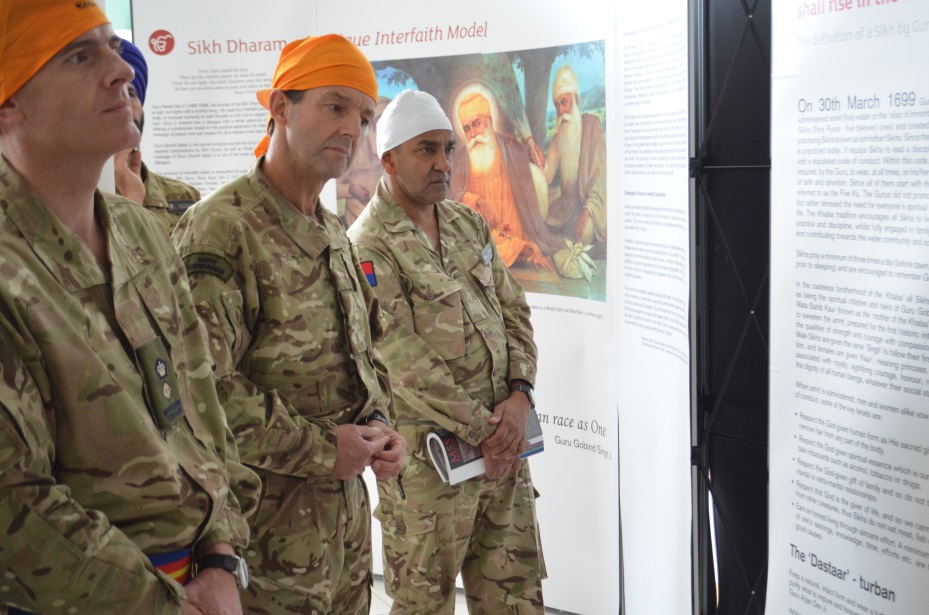
Army learns about the Sikh Dharam (faith) in the Nishkam Anglo-Sikh             Heritage Centre

Army learns about the Sikh Dharam (faith) in the Nishkam Anglo-Sikh Heritage Centre

After the visit Amrick Singh, Nishkam Centre Director, recalled, “Today was an interesting visit from the British Army. The underlying message of The Battle of Saragarhi is one of great pride for the Sikhs and I’m glad to hear from the British Army that it is for them too. Today was about understanding, listening and exchanging viewpoints. Bhai Sahib Ji iterated the importance of Sikhs needing a justifyable cause, an opportunity to stand up for righteousness and those persecuted, whilst remaining compassionate, forgiving, peace-loving and humble. The concept of Sant-Sipihi (Saint-Solider) was discussed, where one must have Godly traits, be spiritually inspired and infused and then be prepared to give the ultimate sacrifice to protect and uphold the honour and dignity of others. Today was a learning for many during this visit”.

Guests listen intently to the ethos and values driving the Nishkam Health Centre

Guests listen intently to the ethos and values driving the Nishkam Health Centre

Nishkam Community Cooperative, MSS, welcomes Army guests

Nishkam Community Cooperative, MSS, welcomes Army guests

Birmingham Faith Leaders Group host Annual Interfaith Service for Peace at the St Thomas Peace Garden

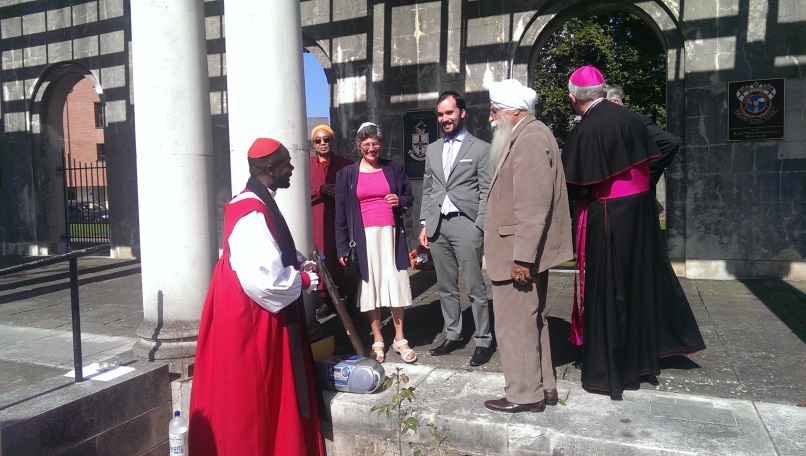
Bishop Wolliston (Connecticut, USA) meets with Faith Leaders

Bishop Wolliston (Connecticut, USA) meets with Faith Leaders

A multi-faith Peace Service was held at the Peace Gardens in Birmingham with the aim of bringing the city’s major religions even closer together. The Birmingham Faith Leaders group, which was created in the wake of the 9/11 atrocities, held its annual Inter Faith Service for Peace at the St Thomas Peace Garden in Bath Row. It was the fourth time the group came together for the service which originally began in response to hate attacks against Muslims following Twin Towers attacks.

As a renowned structure which embodies peace and promotes harmony on a global scale, St. Thomas’ Peace Gardens, a small obscured park near Birmingham City Centre, seemed the ideal setting to mark the 13th anniversary of the Birmingham Faith Leaders Group.

The event and the park welcomes and values people from all walks of life, attracting individuals from various religious, cultural and social backgrounds. This resonates strongly with one of the Nishkam Centre’s fundamental considerations, accepting and respecting those of another faith; promoting interfaith.

The park itself is a tribute to those who have come to pass during times of unrest, who have suffered loss through terrorism, conflict and social upheaval. We have all experienced loss at some point in our lives and will continue to do so. Though grief is inevitable, it is important to remember those who have perished and to celebrate new life. This concept was clearly represented in the symbolic watering of a rose bush the Faith Leaders had planted in commemoration of the victims of the 9/11 attack. The coming together of humanity to prosper in troubling times and to triumph over strife in hopeful aspiration of the future was the integral message projected by Archbishop Bernard Longley of the Roman Catholic Church, who led the sermon.  Grief is identified as having the power to break us, but together it binds, strengthens and shapes us.

Starting with a call to prayer for the six major religions, a number or prayers were said before the Peace Rose was blessed with sprinkles of water. Faith leaders and attendees then pinned their own short prayers and messages on to the prayer board.

Jonathan Gurling, Executive Secretary of the Faith Leaders Group, said: “We try to keep the event very simple and short so more people will attend and stay for it. The Faith Leaders Group was formed when the then Chief Minister at Singers Hill Synagogue, Rabbi Tann, was so incensed by the attacks on Muslims, he telephoned Dr Naseem, the then Chairman of the Central Mosque, and asked to visit on September 12 when community prayers were being held. He was joined by Christian and Sikh leaders and the Faith Leaders Group grew out of this simple act of brotherhood”.

At a time when racial tensions around the world have been running high the event was even more poignant and the super-diversity of the City was marked by this celebration of Birmingham’s mixed cultures.

Mr Sewa Singh Mandla, Trustee of the Nishkam Centre and member of the Faith Leaders Group said, “The faith leaders have a very good working relationship and we are proud that we are able to come together in unity to show that Birmingham’s faith traditions are stronger together”.

Amrick Singh, Nishkam Centre Director, noted, “This year was just as important as previous years to show a powerful message of togetherness. Whilst this is a great opportunity to take time out of our extremely busy schedules, it was also demonstrative of the strength of the communities here in Birmingham.”  He went on to say, “This year’s event was honored to welcome Bishop Dr Neville Wolliston, Bishop of the Lord’s Church in Hartford, Connecticut, USA. I have had the pleasure to spend some time with the Bishop who is a local Handsworth born and bred lad whose family moved to America over 30 years ago. He came back to visit and talk about his faith and youth work with various groups”.

It was clear that a real community spirit could be felt among the congregation, especially through the participation during collaboratively read prayers and with the handwritten contributions fastened to the prayer board. It featured messages which avidly requested greater love, happiness and peace to be spread around the world. Patricia Earle of the Woman’s Federation of World Peace labelled the occasion as nice and beautiful in its effective simple and symbolic approach in honouring those who have passed.

Mr Mandla went on to share with us that this year was a very special time for the Faith Leaders Group as Bhai Sahib Dr Mohinder Singh, Chairman of Guru Nanak Nishkam Sewak Jatha and Nishkam Civic Association, was going to be hosting the leaders in a unique meeting in Amritsar, India. Bhai Sahib will host the faith leaders and their partners in the most sacred city of Amritsar where Harmandir Sahib Gurudwara (or the Golden Temple) is located – one of the most sacred places for the 26 million Sikhs worldwide.  The Nishkam International Centre will be home for the guests in Amritsar to share moments of reflections and to learn about the Sikh Dharam whilst taking time out to discuss faith based issues.


The Third GCGI Award is to be presented to Bhai Sahib Bhai Dr. Mohinder Singh Ahluwalia

The Third Baba-Ji-240x240Globalisation for the Common Good Initiative (GCGI) Award for Public Service in the Interest of the Common Good

In current days of spiritual hunger, when the world of knowledge and competence is in a constant state of flux, the Guru Nanak Nishkam Sewak Jatha, under Bhai Sahib’s visionary leadership has become a beacon of hope for a better, fairer and wiser world.

In his national and international work, Bhai Sahib has provided the leadership to galvanise all around him into a life of selfless service and prayer and has worked selflessly to preserve places of worship, encouraging intra- and interfaith dialogue and understanding, promoting peace and justice globally. Bhai Sahib has embraced the concept of education for the common good, by building schools and colleges essential for a sustainable world.

He continues to encourage and empower others to discover their own potential for change and to evoke their hidden strengths to bring more goodness into the world.

The Award will be presented at a special ceremony during the Globalisation for the Common Good Initiative’s 12th Anniversary Gala Dinner hosted at Harris Manchester College, University of Oxford, (History – Harris Manchester College) on the evening of Wednesday 3 September 2014.

Prof. Kamran Mofid, Founder, Globalisation for the Common Good Initiative (GCGI)

*The first GCGI Award for Public Service in the Interest of the Common Good was presented to Dr. Vladimir Ivanovich Yakunin, Founding President of the World Public Forum, “Dialogue of Civilisations” (WPFDC) at the 10th Annual GCGI Gala Dinner at Corpus Christi College, University of Oxford, on 4 September 2012:

Dr. Yakunin Receives First Globalisation for the Common Good Initiative (GCGI) Award

*The second GCGI Award for Public Service in the Interest of the Common Good was presented to the School of Economic Science, London, at the 11th Annual GCGI Gala Dinner at Maison des Polytechniciens, Paris, on 27 August 2013:

School of Economic Science, London, Receives Second Globalisation for the Common Good Initiative (GCGI) Award

Source:

Uplifting and spiritually infused Civic Service paves the way forward

IMG_6295The Civic Service held at St Martin’s Church in the Bull Ring provided a serene setting to officially mark the welcome of the new Lord Mayor of Birmingham, Councillor Shafique Shah. The opportunity to renew commitments to public service for Birmingham and its citizens and to ask God for his blessing set the scene for the next term of office.

The Annual Service at St Martin’s Church in the Bull Ring on Sunday evening 20th July 2014, was a moving and inspiring service that all the guests and visitors seemed to enjoy. Led by Revd Elisie Blair-Chappell the service proclaimed the greatness of the City of Birmingham and the power of faith and spirituality to guide and inspire our civic leaders.   The event saw former First Citizens, their partners, distinguished guests from all walks of life at the Church service. Following the service at the Church the hosts and guests made their way on a beautiful summer evening to the Banqueting Suite at the Council House for refreshments.

The duty of Lord Mayor is a challenging one and requires time, commitment and dedication to balance all the diary commitments and still manage one’s own affairs. Despite all this Lord Mayor, Shafique Shah, has previously described being appointed Lord Mayor of Birmingham as one of the most special events of his life. Father-of-five Shafique Shah, who has represented Bordesley Green since 2005, accepted the Chain of Office at the City Council’s Annual Meeting. He said at the time: “This is one of the most special moments of my life and also one of the most nerve-wracking. The nerve wracking I should be used to, after all I am a Blues supporter.”

At the Civic Service and reception, The Lord Mayor was accompanied by his wife Sadia Shafique, the new Lady Mayoress, and two of IMG_6273their young daughters. They were introduced to Bhai Sahib, Dr Mohinder Singh, Chairman of the Guru Nanak Nishkam Sewak Jatha which manages the activities of the Gurudwara on Soho Road and Chairman of the Nishkam Civic Association, who congratulated the Lord Mayor on his appointment and the great church service. The Lord Mayor was impressed to hear from Bhai Sahib Dr Mohinder Singh about the Museum of World’s Religions being created here in Birmingham and the international Charter on Forgiveness and Reconciliation that Bhai Sahib is leading on.

The selection of hymns and the order they were recited was very poignant and befitting. Following the welcome and greeting from Revd Elisie Blair-Chappell the congregation was absorbed in the spirit of the evening. The sermon was delivered by Cannon Stewart Jones, which emphasised how great the city of Birmingham was. He then shared the fact that Church leaders get together regularly, “We pray for the City to get God’s blessings”. He went on, “We do not need more technology, more bureaucracy, more structures – we need

to work more on having God in a hearts when we work. First and foremost we must be people of God”. Cannon Jones iterated the importance of humility, love, unity and justice: ”We must work together to build a city that stands up for justice; a place that cares for all. Respect for one and other must be lived out”. And let me say this, if it works in Birmingham, it will work in the World because the World is in Birmingham – a city without walls.”

IMG_6274Cannon Jones concluded with: “We are the stewards to make Birmingham an even better City than it is, a city to be proud of”. Similar sentiments were mentioned by the new Lord Mayor at another event when he said: “I have, as yet, not found any city as welcoming and warm as my home of Birmingham. I always feel proud to say I am a Brummie. I will work hard as an ambassador for our great city to show the world all the positive aspects Birmingham and its citizens have to offer.”

Bhai Sahib, Dr Mohinder Singh, commented on how pertinent and important the service was. “The fusion of spirituality and secularity is crucial. Our civic leaders empowered with faith virtues will always make the right decision for the common good and in the interests of the whole city. They need to operate from a values foundation; principally if they recognise the significance and importance of spirituality they will do well”. On leaving the Church, Bhai Sahib, Dr Mohinder Singh complimented both Revd Elisie Blair-Chappell and Cannon Jones on their contribution to the service and invited them to visit the Gurudwara and Nishkam Centre on Soho Road.

The four privileged charities the Lord Mayor will be supporting throughout the year are

  • The Queen Elizabeth Hospital
  • Birmingham Children’s Hospital
  • SIFA Fireside, a Digbeth based charity which works to tackle homelessness and alcohol dependency
  • Birmingham Focus a sight loss charity.


ENDS 

Notes to Editors:

For more information:

Sikhs honoured to have displayed floral arrangement at St Chad’s Cathedral Annual Flower Festival

ik onkarSikhs from the Nishkam Centre and the parent organisation, Guru Nanak Nishkam Sewak Jatha (GNNSJ) were privileged and honoured to be invited to participate in St Chads’ Cathedral Flower Festival in Birmingham which took place on the 20-22 June 2014. Organised by the St Chads Cathedral Association the event was a resounding success at bringing together beautiful floral arrangements and encouraging people of all faith to participate. GNNSJ and the Nishkam Centre were pleased to have been invited and are always keen to work with other faiths and communities.

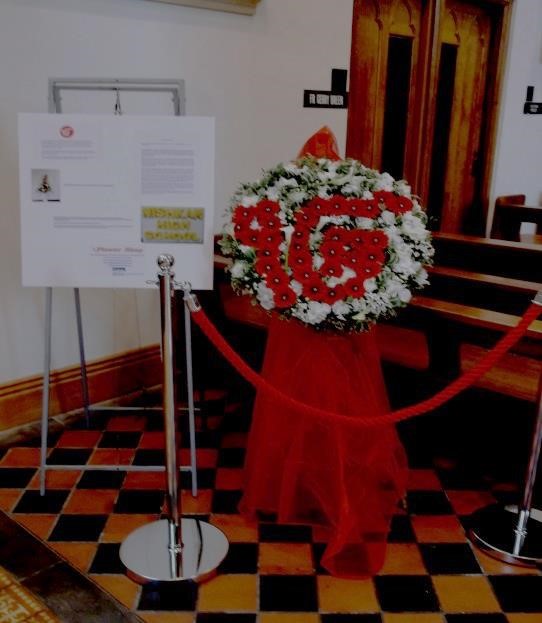
The Sikh floral arrangement showing ‘EkOnkar’ is the symbol that represents the “One Supreme Reality” or “One God”. Prepared by the Flower Shop Birmingham – a business that forms part of the Nishkam village and started by husband and wife team Ranjit Singh and Hardip Kaur, the floral arrangement stood proud and seemingly not a bit out of place within the great Cathedral. Hardip Kaur said that “it was an honor and privilege to be invited to take part in such a wonderful event”.

The annual event hosted at the picturesque St Chad’s Cathedral which was designed by Augustus Welby Pugin (1812-1852) and completed in 1841 was a fitting venue. The standard of the flower arrangements was quite incredible and each could have been a winner in its own particular way. There were about 400 people at the final concert and at least 1,500 people visited the Cathedral over the whole weekend. They included, the Church of England, the Polish Community, the Caribbean Community as well as many Catholics Parishes and Schools and of course the Sikh Community.

The Judges had their work cut out as the flowers were so impressive. The flower festival involved teams from across the city. The winning design, was by Minh Lane, who works at the Cathedral and produced the display called, “Will these Dry bones Live?” It was the display set up on a sand base representing the desert with drift wood as the dry bones. It had two snakes made of fir cones and the seeds of the cones represented new life. The green Chrysanthemums were the beginning of new life. She got her idea from a book of the bible called Ezekiel. As the Archishop, Bernard Longley, had been called away, the prizes were presented by Cathedral Dean, Canon Gerald Breen.

The Flower Festival 2014 as usual invited people from all walks of life to participate and attend to contribute to its great success. The festival concluded with an Orchestral Concert followed by canapés. The soloist this year was Prof David Saint who played with the orchestra and some organ pieces of his own. Anne Symonds, one of the key organisers is noted to have said, “We set out to give our flower festival as strong an ecumenical flavour as possible. This year were hoping to spread our net even wider and attract yet more ecumenical friends”.

Anne concluded with, “Next year will be a very special year for the Flower Festival and we hope the Sikh community will think about taking part again and this might encourage even more faiths to

Launch of Creative English course tackles deep rooted issues

The Creative English Course launched nationally by FaithAction and delivered locally by the Nishkam Centre is set to tackle many of the community’s concerns and issues. On 13th November 2013, FaithAction won the funding to deliver Creative English, a new programme that uses unique and innovative ideas to teach English. The programme is funded by the Department of Communities and Local Government as part of its £6 million investment in teaching English to the most isolated groups in England. 

FaithAction has worked with Queen Mary University to design and research unique and innovative ways of teaching English, creating a programme that uses interactive ‘soap opera’ style sessions to develop English language abilities that can empower its beneficiaries and prove effective in real-life situations. In contrast to traditional approaches, Creative English is delivered by trained volunteers that come from local faith communities and groups, who can quickly establish a rapport with their audience.

The programme will reach 1,200 individuals, equipping them with the English language skills they need, as well as supporting them on their journey to social action or further education. The Nishkam Centre as an anchor organisation is fortunate to be helping all the communities to engage together and build an understanding to break down barriers. This programme provides a fun way to do that.

The course is developed for people from all communities especially where language and fear of the unknown can create divisions between groups. The goal is to provide all students with confidence and improve their self-esteem while speaking in real life situation in a fun way.

The Nishkam Centre has had volunteers trained who deliver the course consisting of 12 sessions which lasts for 2 days a week over a six week period.  The Centre is currently running the course on a Thursday and a Friday. FaithAction created the course to enable and engage people from all communities to participate and address barriers especially those unable to speak English. Those who have enrolled on the course have already shown:

  • An increase in self-confidence
  • Improved interaction with those of other communities
  • The ability to communicate in English, when shopping, filling out forms, speaking to people
  • Confidence in getting to know each other better in a group, improving  skills which were transferable
  • Improved people skills

The Nishkam Centre is targeting to trained 60 people who will no doubt be nervous, lacking self-belief and confidence, not able to hold their own in public to a more confident person, happy and pleased with their progress and new found skills.

“It was important that learners are exposed to a friendly atmosphere and are part of a group of people who have a similar drive to learn” commented Narinder Kaur, one of the trainers. “By getting everyone to share experiences we find learning is made easier and people are keen to converse and build a relationship” she went on.

“To break the ice we play games to relax the students and to encourage them to come up with different exercises” commented Sia Grover, the other volunteer trainer. “we must give people the opportunity to learn English so they can play a more active role in society and as we know, we can all add value in one way or another”.


ENDS