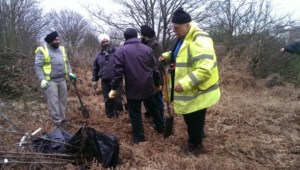
Sikh Environmental Day marked by planting 70 trees along Canal

Volunteers eagerly work on planting trees

Volunteers eagerly work on planting trees

The 14th March not only marked the beginning of the Sikh New Year, the Gurtagaddi Diwas (enthronement day) of 7th Sikh Guru, Guru Har Rai Ji, it also is now celebrated as Sikh Environment Day. Members of the Sikh community from across Birmingham, Wolverhampton and the Black Country came together to join regular volunteers overseen by the Canal and River Trust, to collaborate on environmental projects.  

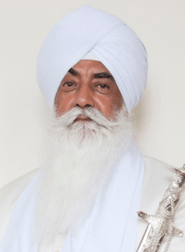
When Bhai Sahib Bhai Mohinder Singh, Chairman of Guru Nanak Nishkam Sewak Jatha and Nishkam Civic Association, was contacted by EcoSikh’s Ravneet Singh to see if he would assist with a project in Smethwick planting trees along the canal embankment, the response was an emphatic and resounding ‘yes’.

Following a short bout of campaigning to raise the awareness of
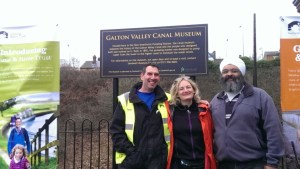
Steve Lambert, Canal and River Trust, Victoria Finlay, Alliance of Religions and Conservation and Amrick Singh, Nishkam Centre

Steve Lambert, Canal and River Trust, Victoria Finlay, Alliance of Religions and Conservation and Amrick Singh, Nishkam Centre

Sikh Environment day, the interest was phenomenal. Unfortunately, on the day it would appear that many of our Sikh brothers and sisters that had pledged to be there were there in spirit but not in body – it was understandable many had favoured other indoor sewa as opposed to being outdoors.

“These people are doing some great work with Mother Earth and as every Sikh knows, we are compelled to look after it since we recite daily in our prayers ‘Pavan Guru, pani pita, mata dharat mahat’: Air is Guru, Water is Father, and Great Earth the Mother’. This calls on us to tenderly love and respect the elements like the irreplaceable personalities in our life who nurture, guide, sustain and lovingly sacrifice themselves for us”.Nishkam Centre Director, Amrick Singh, said, “The interest in the day has been overwhelming, although we did get many apologies that people could not join us due to other commitments the interest has been raised. I am glad that we had the pleasure of being introduced to Steve Lambert, from the Canal and River Trust, and Victoria Finlay, from the Alliance of Religions and Conservation, by Ravneet Singh from EcoSikh.

Guru Nanak Gurdwara Smethwick President Malkit Singh, distributes pizza and chips Langar to all volunteers

Guru Nanak Gurdwara Smethwick President Malkit Singh, distributes pizza and chips Langar to all volunteers

EcoSikh has been leading and coordinating the celebration of the Sikh Environment Day since 2011 throughout India and around the globe and has popularised the day with the goal of creating environmental awareness amongst the Sikh masses and engaging them to take action on nature preservation.
As per Sikh tradition, God established this earth as a ‘dharamsal’ – a place where spirituality should be practised with responsibility towards God’s creation and today we saw this in the faces of those who turned out to lovingly serve His creation. Guru Har Rai is remembered in Sikh history for his deep sensitivity to nature and its preservation.Malkit Singh, President of Guru Nanak Gurudwara Smethwick said “It’s our local area and we should all help look after it and be proud to be part of a clean and green Smethwick.”

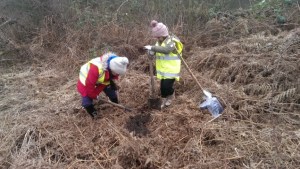
Two little girls who were not shy to talk, Gurpreet Kaur and children servingAmarpreet Kaur both said thay had a fantastic day planting fruit trees and looked forward to coming back to pick fruit. They then both went off to feed the geese. One volunter, Deljit Singh, travelled from Wolverhampton to join the volunteering mission. Deljit, who is an ardent carer of the environment, even travelled to the tree planting session by a ‘green vehicle’ he owns.
ENDS

Notes to Editors:

For more information:

Former head of the Pontifical Council for Interreligious Dialogue visits Gurudwara and Nishkam Centre

Guest oudside Gurudwara Sahib

Guests oudside Gurudwara Sahib

On Tuesday 10th November, Archbishop Michael Fitzgerald visited the Gurudwara served by Guru Nanak Nishkam Sewak Jatha (GNNSJ) and the Nishkam Centre as part of his trip to Birmingham. The visit was a session following the Archbishop’s first visit to the Nishkam Group of Organisations in 2000.  

Archbishop Fitzgerald, believes the impetus for interreligious dialogue in the Catholic Church stems from the Second Vatican Council, in particular the declaration Nostra Aetate (‘In our Time’) on relations with other religions. For the first time, the declaration Nostra Aetate, made a positive assessment of other religious traditions, emphasising dialogue between people rather than systems. The fact that this year represents the 50th Anniversary of Nostra Aetate was also poignant and relevant to the Archbishop’s

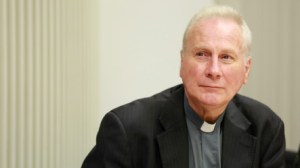
Archbishop Fitzgerald

Archbishop Fitzgerald

visit. The Archbishop was welcomed on behalf of Bhai Sahib Bhai Mohinder Singh by a delegation from the Nishkam Education Trust and Nishkam Centre. Local members of the Focolare Movement were also invited because of creative partnership working they were developing with the Nishkam Education Trust. Until his retirement in 2012 the Archbishop was the Papal Nuncio to Egypt (envoy or permanent diplomatic representative of the Holy See to a state or international organisation) and delegate to the Arab League. A strong advocate of interreligious dialogue, he is widely considered the Catholic Church’s leading expert on Islam.

On the Monday evening preceding the visit, Archbishop Fitzgerald was welcomed by faith colleagues from various members of the city’s faith communities at St Chads. Archbishop Bernard Longley hosted the evening and Archbishop Fitzgerald had the opportunity to have informal conversations with all present. The Archbishop also gave an address to Catholic colleagues at St Chads.

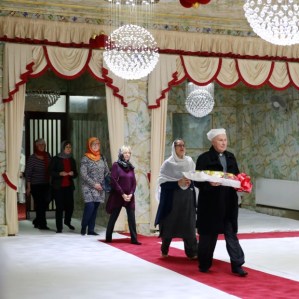
Archbishop in Main Darbar Sahib and about to present a bouquet of flowers to Guru Granth Sahib Ji

Archbishop in Main Darbar Sahib and about to present a bouquet of flowers to Guru Granth Sahib Ji

During talks the Archbishop said, “The more you understand a religion, the better it is. I think this helps to build relations”.  The Archbishop on arrival went to the Main Darbar Sahib and presented a bouquet of flowers to Guru Granth Sahib Ji. The entourage then proceeded to the rooftop Gumbad Darbar (Dome prayer room) and listened to the evening simran (prayers) being recited. On route to the rooftop Darbar the group walked past the Langar (free food prepared and served from the Guru’s Kitchen by volunteers). The Archbishop was struck by the amount of food that was prepared and served to people visiting the Gurudwara and also the Nishkam Help meals that go out to feed the homeless in Birmingham.

The guests then walked along Soho Road to be updated on development around the Nishkam Community Cooperative, the Retail outlets, Nishkam Health and Nishkam Schools before retreating to the  Nishkam Centre for refreshments and discussion. At the Nishkam Centre the Archbishop and guests saw videos and a presentation about the Sikh community activities around langar, education, civic engagement, health initiatives and generally interfaith dialogue projects. An insight of the Nishkam Group of Organisations’ work in the UK and internationally was shared. This included the vision behind education projects which involved taking a global view of child wellbeing and social responsibility to children. Also highlighted was the way in which inter-religious collaboration, in particular with Catholic / Jewish education bodies, had been of practical support to

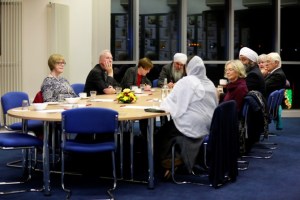
Archbishop Fitzgerald, Catholic and Sikh colleagues discuss progress to date and looking to the future for collaborative projects

Archbishop Fitzgerald, Catholic and Sikh colleagues discuss progress to date and looking to the future for collaborative projects

Nishkam Education Trust.
The Nishkam Centre Director, Amrick Singh, said ”We are delighted to welcome back the Archbishop; there was a lot to talk about since his last visit in 2000. He was extremely impressed with the progress that had been made to the infrastructure and from an engagement point of view.  There was a genuine heartfelt desire on the part of the guests to understand what we do and also how we could build on this in collaboration.”During discussions, William Ozanne, who is a big supporter of the work that GNNSJ undertakes and very influential within the Catholic community was keen to explore the idea of a 5th Sikh-Catholic Dialogue. This idea had been discussed previously between Bhai Sahib Ji and William with a view that it should be hosted in the Sikh’s

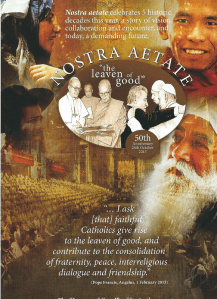
Nostra aetate, The ‘Leaven of Good’ - a film celebrating 5 historic decades; a story of vision, collaboration and encounter, and today, a demanding future. The film was shown during the conference and also contains an Interview

Nostra aetate, The ‘Leaven of Good’ – a film celebrating 5 historic decades; a story of vision, collaboration and encounter, and today, a demanding future. The film was shown during the conference and also contains an Interview

holiest city of Amritsar in Punjab (India). Whilst underlining that he was not directly responsible for enabling such developments Archbishop Fitzgerald said would welcome and support the opportunity for dialogue.

Amrick went on, “Unfortunately, Bhai Sahib Bhai (Dr) Mohinder Singh OBE could not be present to welcome and host the Archbishop in Birmingham due to a conference engagement at Lambeth Palace. However, Bhai Sahib and the Archbishop will have an opportunity for discussion tomorrow in London”.

END

Notes to Editors:

For more information:

Nishkam Media Centre – www.nishkammediacentre.co.uk

St Chads Cathedral vigil for Syria and refugees attracts cross community support

Some of the invited guests at the Vigil (Picture courtesy of St Chad’s Cathedral website)

Some of the invited guests at the Vigil (Picture courtesy of St Chad’s Cathedral website)

On Tuesday 6th October, Birmingham’s St Chad’s Cathedral hosted a vigil for all the refugees that were suffering across the world and in particular Syria. The event saw people from all walks of life and faith denominations come together to show solidarity with refugees.

The Vigil was open to all. Representatives of many faiths were invited and prayers and reflections were recited on the night. The aim of the event was to remember the thousands who had died escaping war and its consequences, to recognise the plight of those who have fled and now languished in refugee camps. The formal part of the evening started at 7pm and concluded at 8.15pm followed by refreshments and an opportunity to speak to some of the refugees present and those involved in providing essential services to them. The Archbishop of Birmingham, the Most Reverend Bernard Longley made the formal welcome to the Cathedral.

The Nishkam Centre Director, Amrick Singh, said ”We were glad to have been there amongst friends. The solidarity shown and the genuine heartfelt belief that together we must do something was good to see. To have talked to and heard the recollections from asylum seekers and refugees from Syria, the Ivory Coast Sudan, Eritrea, Iran and Nigeria was emotionally distressing and moving”.The essence of the prayers and hymns was to remember the refugees who had died seeking safety from conflict and those who were still suffering. The general feeling of many was they felt quite helpless yet turned to faith for solace and to pray for those affected. So far more than 2,600 migrants are known to have died crossing the Mediterranean Sea to reach Europe in 2015, according to the International Organisation for Migration.

Amrick went on to applaud the selfless service undertaken. ”The service provided across the City of Birmingham by those of faith and no faith is quite remarkable. St Chad’s Sanctuary in collaboration with the Salvation Army offers a hearty welcome and support to destitute refugees on a daily basis; the food banks providing essential supplies and the Nishkam Homeless Help project and Midland Langar Sewa providing hot vegetarian meals, is a show of that solidarity and humaneness that we desperately need to see more of. We are reminded by Dr John Sentamu, the Archbishop of York, who recently said that we should all remember, ‘I am not my brother’s keeper; I am my brother’s brother’. If we all remembered that lives of many would improve substantially.

It was evident that the refugee situation had affected people of all ages and this was evident by the diversity of ages represented at the vigil. Our very own Nishkam Primary School and Nishkam High School uniforms we clearly and proudly donned on the night.  At the beginning of the vigil the Most Reverend Bernard Longley announced to the congregation the presence of Guru Nanak Nishkam Sewak Jatha and Nishkam representatives and formally welcomed them. He later spoke passionately to the Nishkam School students and reminded them that St Chad’s was the Cathedral where Bhai Sahib Bhai Mohinder Singh OBE received his Papal Knighthood in 2014.

END

Notes to Editors:

For more information:

Sikhs visit historic Qur’an Sharif manuscript

Bhai Sahib Bhai Mohinder Singh OBE KSG, continues working for more faith solidarity and better interfaith relations

Bhai Sahib Bhai Mohinder Singh OBE KSG, continues working for more faith solidarity and better interfaith relations

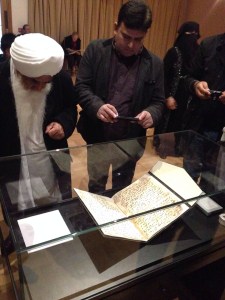
On Friday 23rd October Bhai Sahib Bhai Mohinder Singh, accompanied by an internationlly renowned photographer, academics and civil society represetatives visited Birmingham University where a Qur’an Sharif manuscript was showcased. Thanks to modern scientific methods, it is regarded as one of the oldest in the world. The visit was befitting as Bhai Sahib Ji had only a few days earlier presented a message of faith solidarity at the Parliament of World’s Religions event via a video message to thousands of delegates.

The Qur’an Sharif manuscript, believed to be one of the earliest copies of the Islamic holy book, has unprecedented significance to Muslim heritage and the study of Islam. It is believed that the parchment on which the text is written is from the period AD 568 and 645 (this is understood to be 95% accurate). That said, this would place the writing close to the time of the Prophet Muhammad who is generally thought to have lived between AD 570 and 632.

Having such a document conserved and available here in the heart of Birmingham, where super-

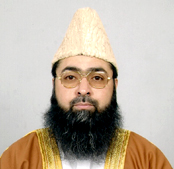
Imam Umer Ahmed Ilyasi, Chief Imam, All India Imam Organization shared powerful messages at the Parliament of World’s Religions in Salt Lake City

Imam Umer Ahmed Ilyasi, Chief Imam, All India Imam Organization shared powerful messages at the Parliament of World’s Religions in Salt Lake City

diversity is considerd the norm, is a matter of pride for the people of the city and faith people per se. Bhai Sahib Mohinder Singh said, “It was an honour to see such a precious antiquated scripture. We should remember that all sacred text are precious. The sanctity of places of worship and the text of each faith are the responsibility of all faiths. We should respect and preserve the rich heritage of all faith traditions in the World. We have a duty of care for looking after each other – we cannot love God if we cannot love his creation.”

Amrick Singh, Nishkam Centre Director, recalled how privileged he felt to have seen the sacred Qur’an Sharif. He also recalled meeting with Imam Umer Ahmed Ilyasi, Chief Imam, All India Imam Organization at the Parliament of World’s Religions (PWR) in Salt Lake City earlier this month who echoed his respect for interfaith work that Bhai Sahib Ji and GNNSJ were doing. The All India Imam Organization represents the voice of over half a million Imams of India who happen to be the religious and spiritual guide of two hundred million Indian Muslims. Amrick recalled how the Imam applauded and appreciated the interfaith leadership that was provided by Bhai Sahib Mohinder Singh.  The Imam was passionate that people of faith should create greater faith solidarity especially when one faith was being singled out and persecuted; he referred to the situation in Punjab and prayed to Allah for a peaceful resolution.“The Sikh’s tenth Guru, Guru Gobind Singh Ji clearly and emphatically stated that ‘saach keho sun laeho sabhay, jin praem keeo tin hee prabh paaeyo’ – ‘I speak the truth, listen everyone: Only the one who is absorbed in True Love shall attain the Lord’. Human beings must preserve the sanctity and sacredness of ALL religious texts. When we look around the world we see the desecreation of sacred shrines and scriptures across India, the Middle East and generally all over the World. This must stop. This cannot be in the name of faith or religion – these are barbaric acts of violence.”

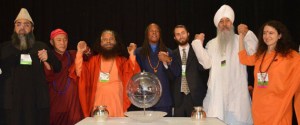
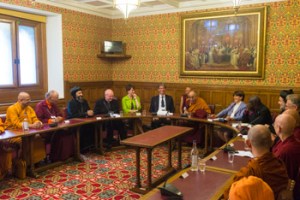
Faith leaders show solidarity at Parliament of World's Religions

Faith leaders show solidarity at Parliament of World’s Religions

Bhai Sahib Mohinder Singh reiterated, “We are all part of the Lord’s infinite plan, creation and design it is important that we understand each other. We all have multiple identities as individuals.  We are mothers, sisters, fathers, brothers, sons and daughters, we belong to certain professions and our passports are reminders that we have certain national identities.  Our absolute identity however, is that of a human being.  We must remember that we are here on earth as mere travellers, this is not our permanent domicile.  Remembering this will encourage us to change the way in which we engage with the world and think about life in general.  Sri Guru Granth Sahib Ji (the Sikh’s Eternal Guru) reminds us that the temple of Mecca is within your soul, if you try to realize it.

“Finally there is an increasing recognition that faith constitutes a vital part of our vibrant communities and that there is no singular secularism in our global world. The family of faiths, who are the backbone of civil society, must seriously reflect on their own traditions and collaborate with others to jointly harness spirituality and empower the mortal individual to achieve success in attaining a greater understanding of ‘the other’.

“Sikh tradition informs us that the foundation of any faith is daya, which can be translated as
IMG-20151023-WA0015compassion.  Our very existence on the planet is supported by daya, the bedrock of faith. Daya is not simply an obligation but an inherent quality of being. It is a powerful force that unfolds when we see the universal light of God in all creation. As humans, we walk upon the same earth, breathe the same air; share the same basic hopes and joys, whilst enduring the same suffering and pain. This acknowledgement demands a responsibility to share.
“We are facing a crisis of selfishness and spiritual poverty in the collective human psyche. Our secular efforts to achieve anything will remain impoverished unless and until we harness the spiritual power that remains latent within us. Together, the spiritual and the secular are the beacons that will ensure that we can serve the Creator and creation, making this a better world for all.

“Whilst I could not be present at the PWR event, I know that during the proceedings, many Sikhs at the event were conscious of the deteriorating state of relations in Punjab. I am pleased that in a show of faith solidarity, at the concluding day of the Parliament, the faith leaders like Swami Chidanand, Imam Ilyasi, Dharma Master, Bhai Sahib Satpal Singh and others come together to offer prayers for the current situation in Punjab. All leaders prayed for peace and harmony in Punjab – this is what we must all do”.

END

Notes to Editors:

For more information

Dalai Lama hosts interfaith meeting ‘The Preservation of Religious Culture and the Cohesion of Faiths’

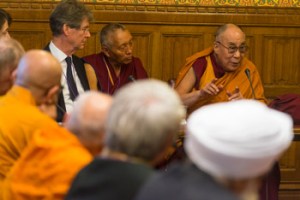
His Holiness the Dalai Lama and fellow participants during an interfaith meeting. Photo by Ian Cumming

His Holiness the Dalai Lama and fellow participants during an interfaith meeting. Photo by Ian Cumming

The 21st September 2015 saw dignitaries and distinguished guests invited to the House of Lords for a meeting organised by the Buddhist Society of which His Holiness the Dalai Lama is Patron. Bhai Sahib Bhai (Dr) Mohinder Singh OBE was the Sikh representative at the prestigious meeting entitled ‘The Preservation of Religious Culture and the Cohesion of Faiths’.

Bhai Sahib Bhai (Dr) Mohinder Singh, Chairman of Guru Nanak Nishkam Sewak Jatha and Nishkam Civic Association, was honoured to be part of the meeting. The meeting was followed by a Celebration Lunch to mark a double celebration firstly, the 80th birthday of His Holiness The Dalai Lama and also the Buddhist Society celebrating its 90th Anniversary.

On arrival to the House of Lords, Baroness Caroline Cox and Desmond Biddulph, the Buddhist Society’s

The Dalai Lama speaking at the House of Lords. Photo Ian Cumming

The Dalai Lama speaking at the House of Lords. Photo Ian Cumming

President, received the Dalai Lama. They escorted him through the grand halls to the meeting, which was attended by Christians, Muslims, Buddhists, Hindus and Bhai Sahib Ji, the Sikh representative. Prior to the event, the Dalai Lama gave an interview to Christiane Amanpour of CNN where he said, “What’s important is that all human beings, wherever they are, whether they are rich or poor, educated or uneducated, have a right to live a happy life. Many think that happiness is to be found outside ourselves in material things, but actually happiness is something that comes from within. So I try to present the importance of inner values not on the basis of religious quotations, but by taking a secular approach based on scientific findings and common sense.”

Sikhs understand the values that His Holiness referred to as Guru Granth Sahib Ji, The Sikhs eternal Living Guru has always said, ‘Man Jeetay Jag Jeet’ (by winning over your mind, you have won over the world).  For many years Bhai Sahib Mohinder Singh has worked on education and later with SACRE in Birmingham facilitated and developed the 24 Moral and Spiritual Dispositions (disposition in Punjabi is ‘bhavna’)

“Education is the answer to many of society’s problems. We must educate children with good values and virtues. Good role models enable them to be good human beings”, said Bhai Sahib Ji.

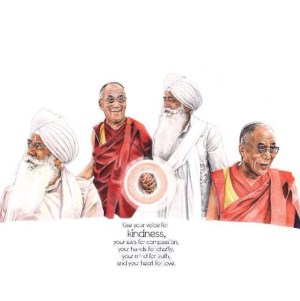
Bhai Sahib Bhai Mohinder Singh Ji & Dali Lama, “ Being happy is not a matter of destiny. It is a matter of options. "Take care of your thoughts because they become words, Take care of your words because they will become actions, Take care of your actions. Painting by GNNSJ volunteer, Charan Singh.

Bhai Sahib Bhai Mohinder Singh Ji & Dali Lama, “ Being happy is not a matter of destiny. It is a matter of options. “Take care of your thoughts because they become words, Take care of your words because they will become actions, Take care of your actions. Painting by GNNSJ volunteer, Charan Singh.

He went on, “The Dalai Lama is a very wise and humble man, he speaks from the heart and his message is delivered directly to the heart; that’s what makes it powerful. He is not saying anything alien or bizarre, he is giving us simple messages that all people of faith and those of no faith will recognise as good human values. That is the answer; good human values, not rhetoric but lived values, shared values, values that we are all proud of to embrace.”

His Holiness addressed the gathering of distinguished guests. He said it was a great honour for him to sit with spiritual brothers and sisters of various traditions. He went on, “In too many places today it seems religious and nationalistic feelings are giving rise to terrible conflicts. We have to find ways to bring peace. This is something that those of us who are religious have to do. Meetings like this are an opportunity to build and nurture friendship and trust among us. There is an impression in many people’s minds these days that Muslims are especially militant. However, we have to remember that there are militant Christians, Hindus, Sikhs, Jews and Buddhists too.”

“Muslim friends have told me that if you shed blood you are no longer a genuine Muslim and that Muslims have a commitment to respect all the creatures of Allah. They also tell me that the word ‘jihad’ is misunderstood. It doesn’t have anything to do with fighting other people, but refers to combating disturbing emotions within yourself.”

Dr John Sentamu, the Archbishop of York, recalled growing up in Uganda with two Muslim children from Zanzibar and concluded by saying that we should all remember, “I am not my brother’s keeper; I am my brother’s brother.”

Archbishop Kevin McDonald conveyed greetings to His Holiness and members of the gathering from Cardinal Vincent Nichols, leader of the Roman Catholic Church in the UK. He also recalled serving in the Vatican when Pope John Paul II convened the ground-breaking interfaith gathering in Assisi in 1986 that His Holiness had attended. Baroness Berridge, Chair of the All Party Group on International Religious Freedom, raised concerns for atrocities against Muslims and Christians in Burma and elsewhere. She eloquently said that those in public life had a responsibility to work for the rights of all. Her sentiments were taken further by the Bishop of Coventry, Christopher Cocksworth, who iterated that violence has never helped and religious leaders needed to make this clear to their various governments. He said there was still too great a sense that military force was the way to solve problems, but in fact in the long run words are more effective than bullets.

The Dalai Lama repeated that love and compassion are what bring people together, while anger and suspicion push them apart. He drew attention to three aspects of religious tradition. The religious aspect concerns the common practice of love and compassion, tolerance and self-discipline. While philosophical views may be quite different, they are all dedicated to the same goal of reinforcing the practice of love. However, he said, there may also be cultural aspects of religious tradition, like caste discrimination, which the Sikhs do not subscribe to, that are no longer relevant and should be changed. He said he encourages religious leaders to speak out about these things whenever they can. The meeting concluded with the guests making their way for lunch in the Strangers’ Dining Room of the House of Commons.


END

Notes to Editors:

For more information:

Faiths for Earth Campaign‏ – A message from Bhai Sahib, Bhai Mohinder Singh

Dear brothers and sisters of the global Sikh panth,

Waheguru ji ka Khalsa, Waheguru ji ki Fateh

As a co-leader and co-animator of the above campaign, I write to you concerning one of the greatest challenges that we all face today: the challenge of protecting the earth and its climate.  If we stay on our current course, we can expect increasingly devastating natural disasters, widening shortages of food and water, mass migration and threats to human health and security. These effects will hurt all of us, most especially those already struggling with extreme poverty.

Sri Guru Granth Sahib Ji, our highest, sublime spiritual authority, provides constant inspiration for us to demonstrate our care and indebtedness to the mother planet. Jap Ji Sahib requires us to revere it as a dharamsal – a sacred place of worship orbiting in the cosmos, with its cycle of days, nights and seasons – ‘Rati ruti thithi vaartis vich dharti thaap rakhi dharamsal’ (Sri Guru Granth Sahib, p. 7). 

Each day we also recite ‘Pavan Guru, pani pita, mata dharat mahat’, instilling feelings of deep gratitude towards kudrat or nature which, like a parent, selflessly and lovingly nurtures and sustains us.  Indeed, kudrat is to be revered as second only to God and to God’s Divine Name: ‘Aapinhai aap saajio, aapinhai rachio naou; dui kudrat saajiai, kar aasan dittho chhaou’ (Sri Guru Granth Sahib, p. 463).  We are urged to live responsibly in the world and to inspire others to do so.  This loving duty, in fact, is our dharam

As humans, the Creator has blessed us with the most exalted position out of the 8.4 million species of life – across the realms of matter, vegetation, animals and humans inhabiting this earth.  Gurbani informs us that we are honoured and privileged as sovereigns, with all of nature’s resources at our disposal – ‘Is dharti mai teri sikdari…’ (Sri Guru Granth Sahib, p. 374).  Beyond living by instinct alone, we have the power to reason and also the opportunity to kindle within us the latent spark of Waheguru by cultivating values, virtues and living with integrity.

As stewards and custodians, we have a responsibility to safeguard, heal, protect and facilitate the flourishing of all life – sarbat da bhalla.  Yet we are also prone to succumb to the negative traits which are part of human chemistry, such as lust, vengeance, greed, possessiveness and arrogance – kam, krodh, lobh, moh, ahankar.  The end result is that we become exploitative and destructive.

Bhai Gurdas Ji – the divinely blessed scribe of Sri Aad Granth and spiritual poet par excellence of the Panth – informs us that Guru Nanak Dev Ji’s advent in 1469 stemmed from a ‘pukaar’ – a cry of help from the world, anguishing under the strain of human vice, lack of gratitude and ignorance. Every facet of the Sikh dharam – from its visible markers the five kakaars anddastar, together with the spiritual emblems of Ik Oankar and the Khanda – goad and spur us to rise to the highest inside ourselves. We are alerted and warned about the effects of greed, exploitation and apathy in human affairs.

Today, once again the planet’s cry for help is real.  It is being felt and heard loud and clear around us.  More than technical solutions, transforming our mindsets and consciousness, first and foremost, is the vital key. Ultimately it is the human mind which is the driver for sustainable change and, in this, Gurbani is explicit – man tu jyot saroop hai, aapna mool pachhaan (Sri Guru Granth Sahib, p. 441).  The best legacy we mortals can leave behind is to ensure that our actions result in immediate and furthest-reaching effects, to be enjoyed by the generations that will follow us. 

As Sikhs who carry forward the legacy of our Gurus, we can do so much to support the Faiths for Earth campaign.  As a first step, could I ask you to sign the petition and spread it through your networks http://faithsforearth.org/

I also invite your further participation as the campaign progresses.  For details please see: http://www.religionsforpeace.org/what-we-do/protect-earth

Bhai Sahib, Bhai Mohinder Singh Ahluwalia

International Trustee and Co-president, Religions for Peace (RfP)

Chairman, Guru Nanak Nishkam Sewak Jatha (GNNSJ)

Local visionaries celebrated by launch of memorable new coins

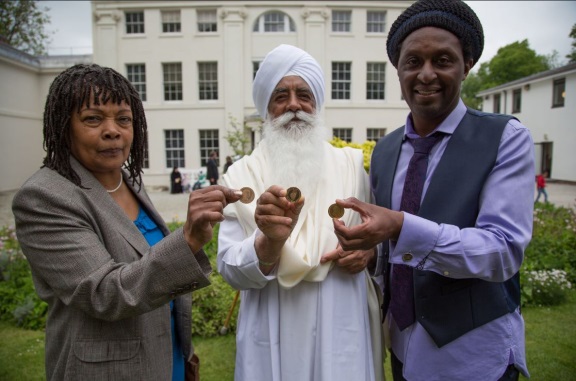
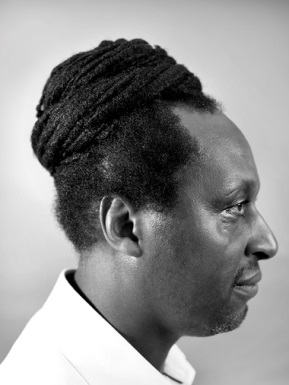
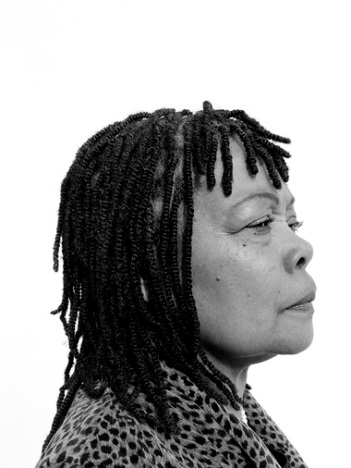
Merrise Crooks-Bishton, Bhai Sahib Bhai Mohinder Singh and Mykal Brown

Merrise Crooks-Bishton, Bhai Sahib Bhai Mohinder Singh and Mykal Brown

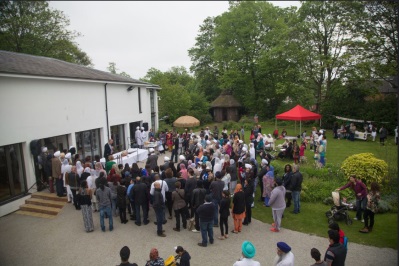
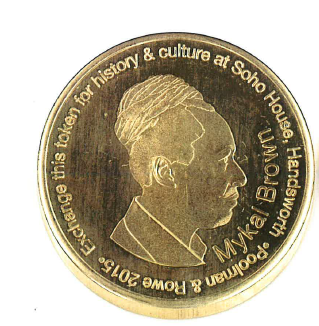
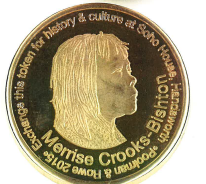
Inspired by the innovations and technical breakthroughs in coinage at Matthew Boulton’s Soho Mint in the 18th century, Birmingham Museums Trust, Soho House and artists Chris Poolman and Elizabeth Rowe launched ‘Good Money – A Currency Competition for Handsworth’. The launch event on Saturday 23rd of May attracted members of the community from all walks of life. The event saw Sikh, Christian, Afro-Caribbean, Muslim and many other traditions and denominations come together to celebrate the launch of three new coins.

Following a public vote, the three winners from a shortlist of 15 were selected. They included:

  • Bhai Sahib Bhai Mohinder Singh Ahluwalia OBE, Chair and Spiritual Leader of Guru Nanak Nishkam Sewak Jatha UK, who has added so much to interfaith, social justice, regeneration and creating harmony.
  • Mykal Brown, who has helped thousands of youngsters back into education through music;
  • Merrise Crooks-Bishton, who has worked in community education in Handsworth for more than 40 years,

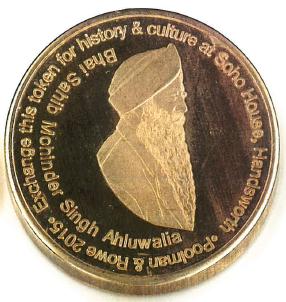
The artists worked with Soho House, the former residence of industrialist Matthew Boulton, and by drawing on the site’s history decided to produce a set of new Handsworth coins. The competition was to find local people to have their profiles cast on the coins and designs for the other side, a strategy that will write the local community into the history of the site. At the event the coins were handed out to the local community. For the tail side of the coins, 235 entries were submitted from the local Handsworth community including five local schools – Holyhead School, St. Theresa’s Catholic Primary School, Grove Primary School, Future First School and Handsworth Girls’ School.

Fun packed day at Soho HouseThe fun packed day at Soho House, in Handsworth, included speeches exhibitions and photo opportunities for people to celebrate the launch event. Handsworth is now a densely populated super-diverse area of Birmingham. Historically though, it was located in the county of Staffordshire and remained a small village from the 13th century to the 18th century. When Matthew Boulton lived at Soho House he set up the Soho Manufactory in 1764. The Soho Manufactory was the largest factory in the world. Handsworth today is regarded part of Birmingham and home to many cultures, identities, faiths, languages and traditions.

At the launch, 300 free coins were given away, and there was an opportunity to witness the handprint project archive and a Nishkam display, the Wassifa sound system and archive, the ‘Tails’ exhibition as well as enjoy live Kirtan – Sikh spiritual hymns. There was also plenty of food to sample and tempt people.

Whilst the coins are cherished by many they also have a ‘cultural value’. Visitors who bring one of the coins to the museum are entitled to half price entry until 1st November to Soho House. Furthermore, half price entry to four other heritage sites in Birmingham (Aston Hall, Blakesley Hall, Museum of the Jewellery Quarter, Sarehole Mill) until 1st November.

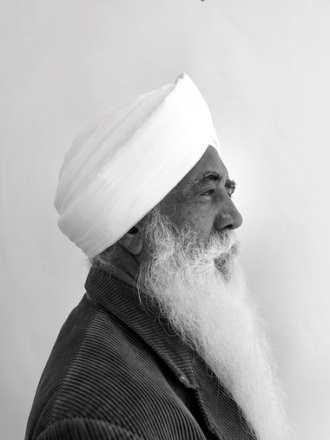
Bhai Sahib Bhai Mohinder Singh Ahluwalia OBE

Bhai Sahib Bhai Mohinder Singh Ahluwalia OBE coin

Bhai Sahib Bhai Mohinder Singh Ahluwalia OBE – Chairman of Nishkam Group of Organisations

Mykal Brown

Mykal Brown  coin

Mykal Brown – founder of Wassifa Sound System

Merrise Crooks-Bishton

Merrise Crooks-Bishton  coin

Merrise Crooks-Bishton – Soho Road Handprint project

Oliver Buckley, Curator Manager at Soho House said: “New Expressions 3 is about uniting heritage sites, their local communities and contemporary artists – unlocking creative potential, and placing museums at the heart of their local areas. Chris Poolman and Elizabeth Rowe enticed local people to find out more and participate in events celebrating local heroes and the history of Soho House. What more fitting a way to celebrate this creative exchange than a special series of coins, minted in Birmingham, the ‘workshop of the world’, to be used as tokens symbolising local achievement and entitlement.”

Notes to Editors:

For more information:

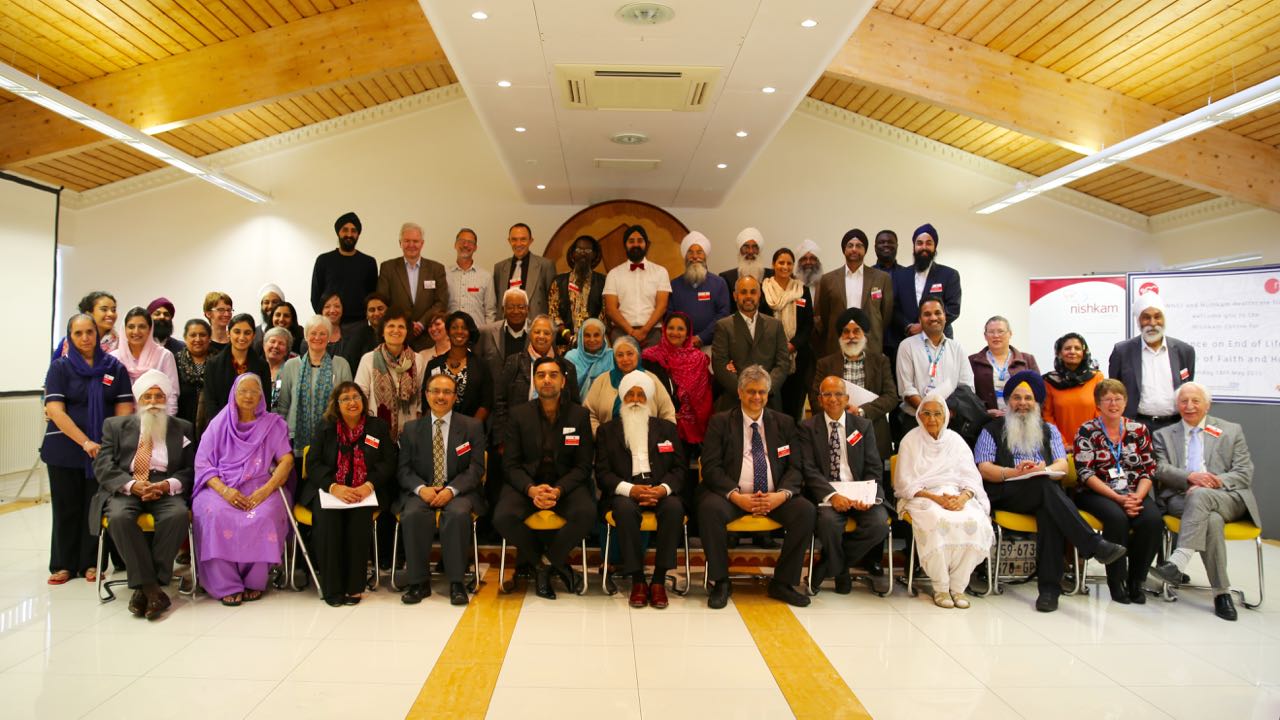
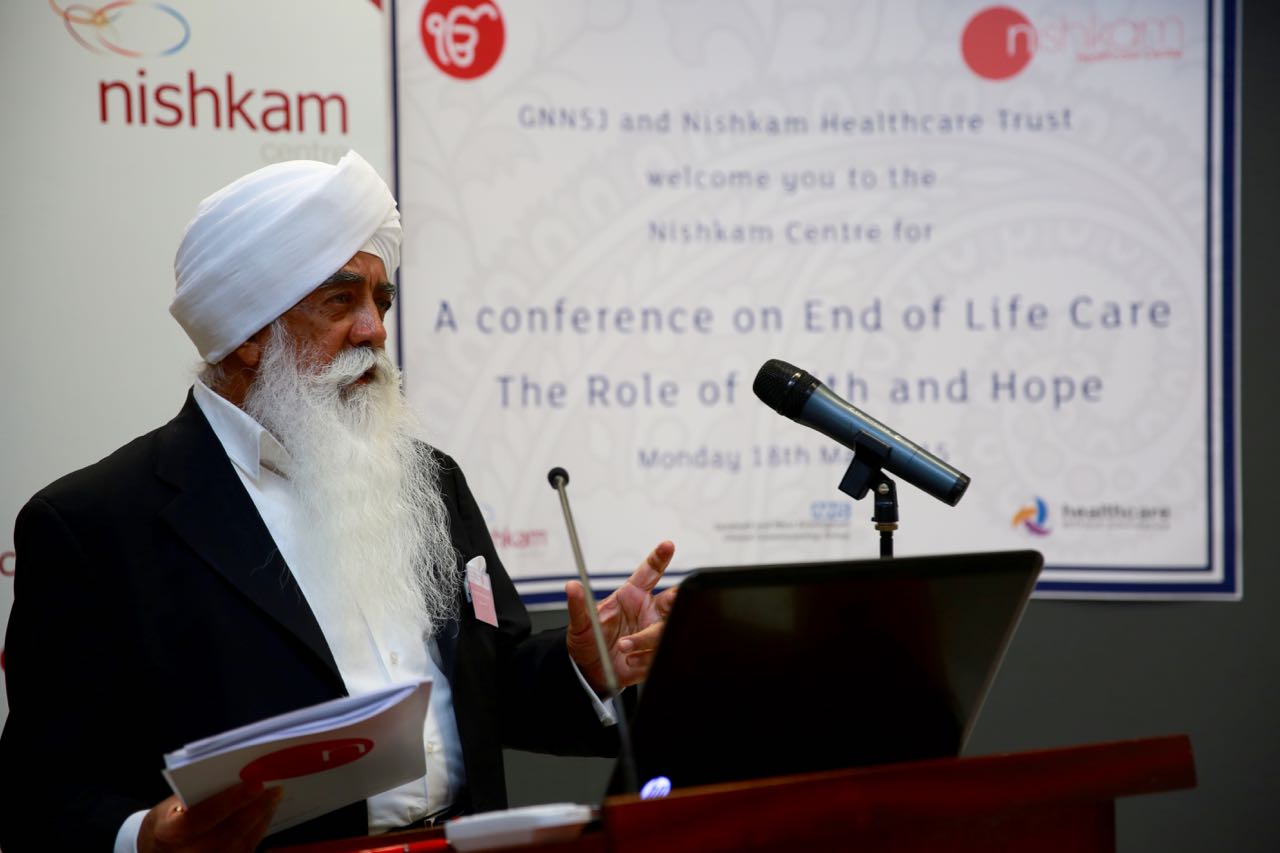
Health experts and faith communities explore the way forward on End of Life Care

GNNSJ (c) 2015 - 25

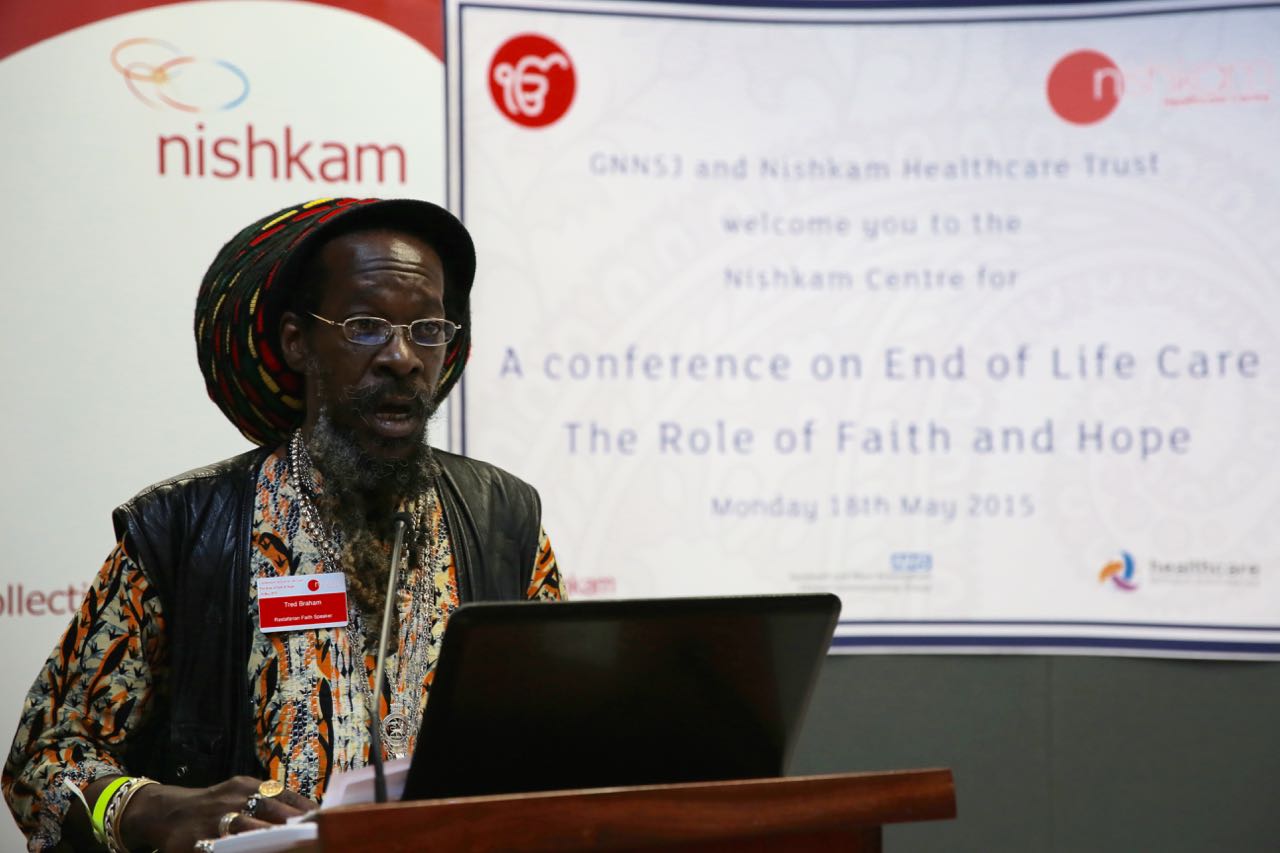
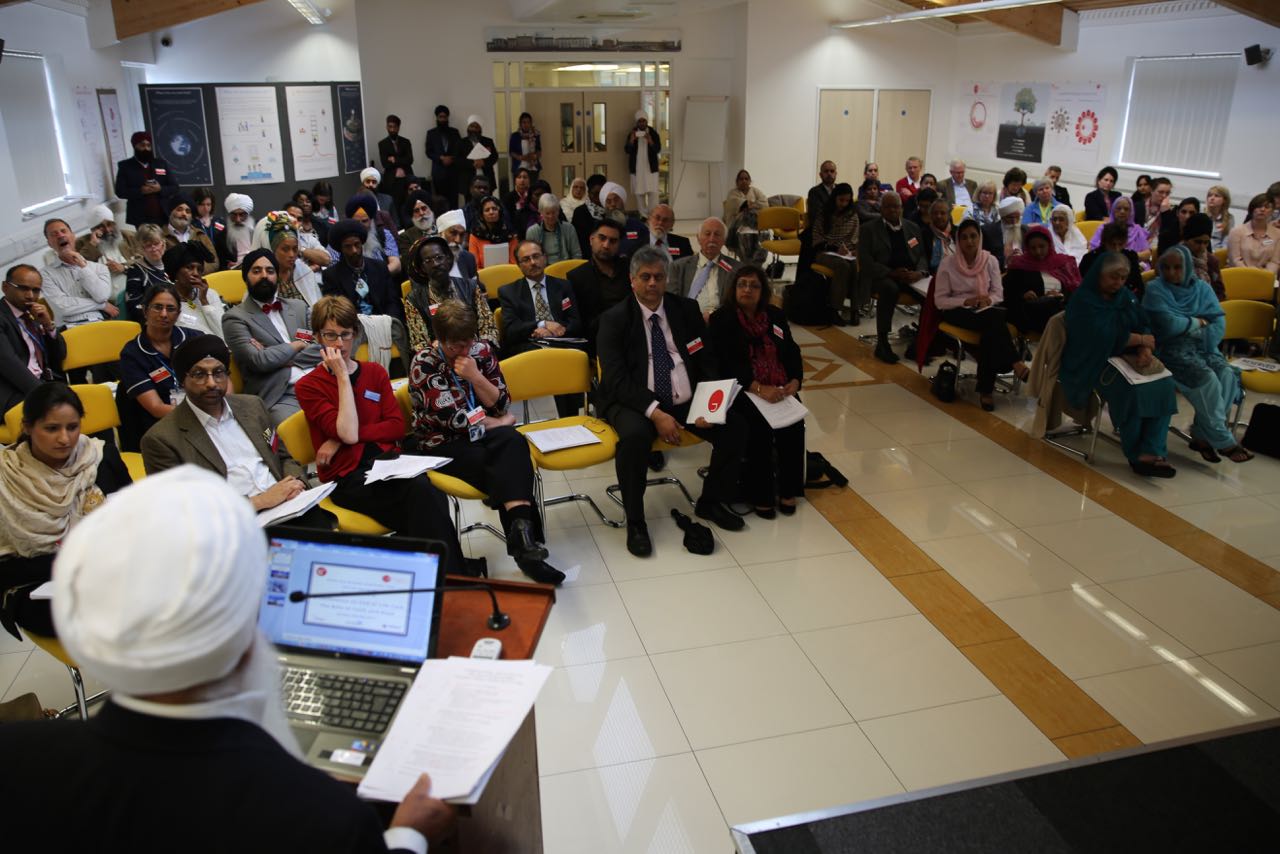
The Nishkam Healthcare Trust held a conference on 18th May on ‘End of life care – the Role of Faith and Hope’. The event was a collaboration with Birmingham healthcare commissioners in order to give voice to community needs at the end of life. Faith communities took to the stage to offer personal experiences and reflections on the role of faith, and the Sandwell and West Birmingham CCG were given the opportunity to engage with the public on their new End of Life Care model.  The conference theme of ‘faith and hope’ was reflected in the keenness to share insights at a human and inter-religious level to further enhance services for End of Life Care.

GNNSJ (c) 2015 - 3The event coincided with the Health Service Ombudsman’s recent announcement concerning end of life care that, “doctors and nurses must involve patients and their families in decisions about their care’’. Transparency was a key theme for the event, presenting the opportunity to inform and involve the public on a new strategy for end of life care.

The conference began with a prayer and reflection.  The opening theme was on ‘what one wishes to know about one’s faith, regarding end of life’. Perspectives from the Muslim, Buddhist, Jewish, Rastafarian, Hindu and Sikh traditions were heard loud and clear, giving a unified voice to the dignity of faith at such a crucial time of end of life.

The theme of ‘a good farewell from a faith perspective’ was by explored by Bhai Sahib (Dr) Mohinder GNNSJ (c) 2015 - 10Singh OBE, who as chair of the Nishkam group of organisations and is both locally and internationally recognised for his faith and interfaith leadership in developing innovative approaches to social provision.  His overriding message that “our prayers can be different, but our tears are the same” offered food for thought to the diverse audience.

Bhai Sahib Mohinder Singh observed also that, in order to bid the last farewell, the three constituents of the human being – mind, body and soul/spirit – need to be considered, and that the role of the spirit as the spark of life becomes clearer at death, when just the mind and body remain.  With respect to spiritual dimension he commented:

“While seeing is believing – for many, believing can also lead to seeing.”

GNNSJ (c) 2015 - 8Finally, Bhai Sahib Mohinder Singh added some thoughts regarding the role of ‘assumption’ and ‘confidence’ in each step we all take in life, from the act of speaking to boarding a plane.  We take it for granted that the brain will activate the necessary neurotransmitters and that the pilot is competent to take us to our destination, otherwise we would not attempt to say anything or to fly.  Similarly, for those who assume and have confidence that God exists and He is kind, the fear of death diminishes.

Medical professional, Dr Ross Bryson, GP from Karis Medical Centre, reiterated the need to look after the soul, especially towards the end of life and opportunities for dialogue in the conference highlighted a number of areas where services could be improved and enhanced.GNNSJ (c) 2015 - 11

With the hope that this initiative would be the first of many between faith communities and the NHS, Dr Manvir Kaur Hayer, Chair of Nishkam Healthcare Trust said, “This conference has begun an important dialogue between the public, faith leaders, and health practitioners, and we look forward to continued collaboration towards delivery of values-led care, especially towards the end of life.”

The conference additionally offered an opportunity for Nishkam Healthcare Trust to highlight its advanced care planning booklets, which help patients review and document their needs at the end of life. The conference team found that advanced care planning booklets offer a useful introduction towards planning for the end of life, but that the process, nevertheless, requires continuous conversation with individuals and their loved ones throughout the journey.
GNNSJ (c) 2015 - 23The event also showcased AnonCare (www.anoncare.com), a faith inspired digital network for community care, which brings together patients, carers and the wider community for the shared management and responsibility for the well-being of others. The system demonstrated the impact faith can have in technology and healthcare.

Following on from the conference, Dr Ayaz Ahmed, Clinical Service Lead for Palliative care in SWBCCG quoted “Nishkam have got a niche into ethnic minority populations that the CCG may not be able to reach”.

To view photos from the event, please click here.

Event documents:

Health experts & faith communities explore the way forward on End of Life Care – Nishkammediacentre.com

Nishkam 5 Centres of Excellence

Lee Stoneking Addresses UN General Assembly

Ross Brysonn – A Christian Perspective on End Of Life Care/ A Jesus Perspective on End Of Life Care

Jasvir Singh Grewal – END OF LIFE

Link to Share Compassion Today video

Dr Ahmed CCG – End of Life Care Services for Sandwell and West Birmingham Population

Anna Lock – Advance Care Planning


Sikh spiritual leader receives OBE for services to interfaith and peace

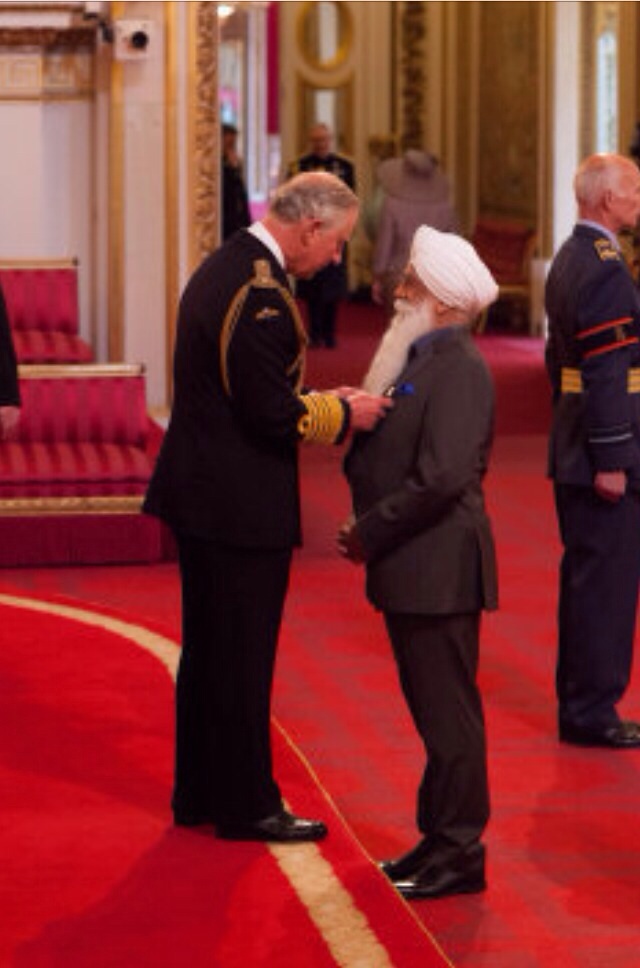
IMG-20150506-WA0006Bhai Sahib Dr. Mohinder Singh, Chairman of the Nishkam group of charitable organisations based in Birmingham today received the Officer of British Empire (OBE) from The Prince of Wales in recognition of his unstinting and inexorable work over forty years to promote peace and coexistence by bringing people of different faiths together to contribute to the common good of humanity.

On receiving the award, Bhai Sahib said “It is a great personal honour to receive this prestigious award from The Prince of Wales. All accolades are attributed to God Almighty who facilitates human puppets to perform. I have accepted this award on behalf of the founders and members of Guru Nanak Nishkam Sewak Jatha (GNNSJ) and the wider communities that I am privileged to serve here in the UK and internationally.”

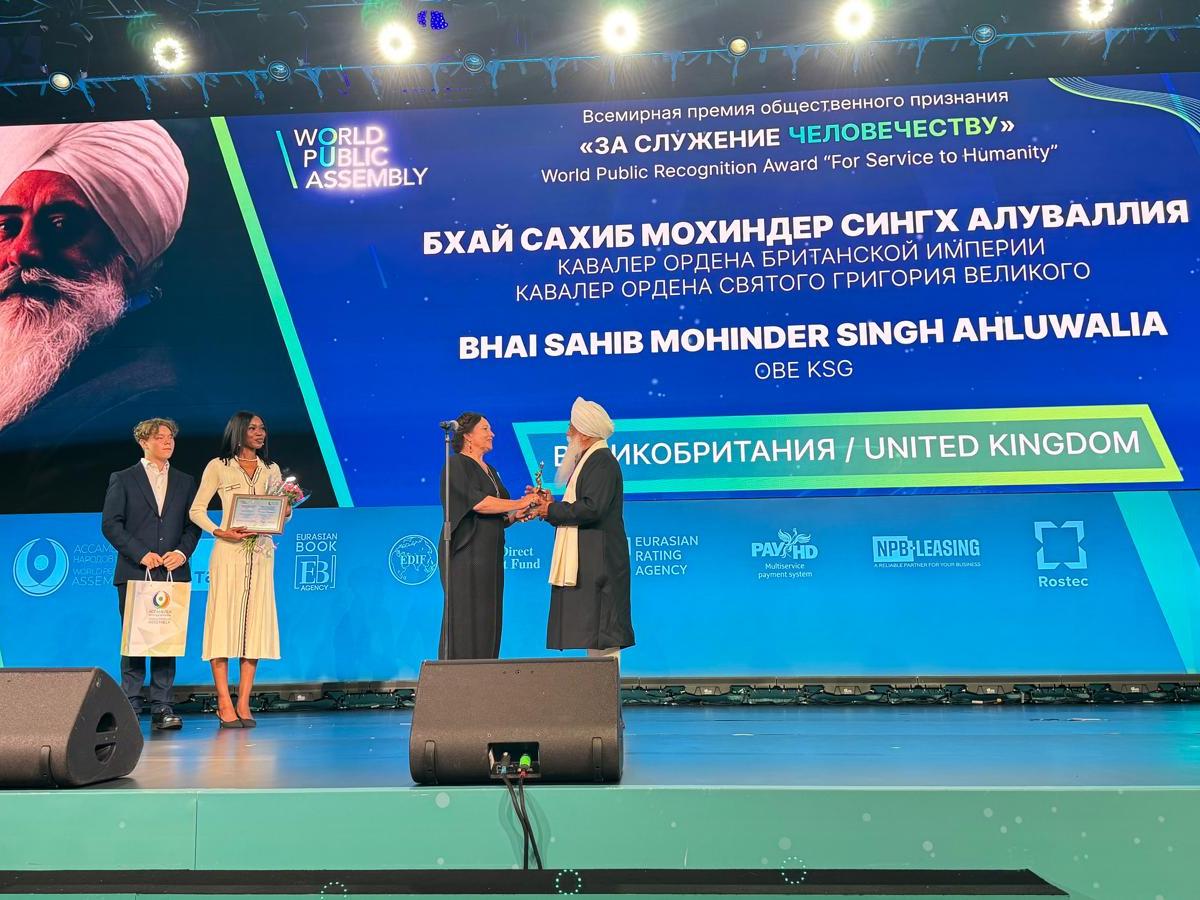
Bhai Sahib is a selfless religious visionary leader propagating peace, serving society through spiritual inspiration, infrastructure creation, heritage conservation, interfaith engagement and promoting values-led education. As chairperson of GNNSJ, one of the UK’s largest Sikh faith registered charities, he is engaged in an astounding range of civic and spiritual initiatives. He is respected as a bridge-builder within communities in the local and global, secular and spiritual, intra and interfaith contexts. In 2013, His Holiness Pope Benedict XVI bestowed a Papal Knighthood of ‘Saint Gregory the Great’ upon Bhai Sahib for his interfaith work in the UK and around the world. In 2014, he was awarded the highly coveted Guru Nanak Interfaith Peace prize by Hofstra University, New York.

He has received Honorary Doctorates from Birmingham City University in 2002, the University of Birmingham in 2006 and the University of Aston in 2014 for services to religious faith propagation, community service, education and research.

Bhai Sahib is Patron of the Nishkam School Trust that has successfully established Nishkam nurseries, primary and secondary schools with a multi-faith ethos in Birmingham, Wolverhampton and London.  Nishkam High School and Sixth Form in Newtown was judged as ‘Outstanding” by OFSTED in its very first inspection in 2014.

His greatest legacies will be the transformation of many lives across faiths; the restoration and conservation of sacred historical Sikh shrines, including Darbar Sahib (Golden Temple) in India; construction and management of outstanding quality Sikh places of worship – Gurudwaras – in England, India, Kenya and Zambia; and the ingenious conservation of listed buildings on Soho Road, in Birmingham, that now house the Nishkam Nursery, Nishkam Primary School and the Nishkam Healthcare Trust.

Under his leadership over the span of some twenty-five years, the Nishkam Group has become a major player in the social and economic development of Handsworth in the city of Birmingham, UK and a number of other cities internationally, investing over £60m. He believes in the policy of “service delayed is a service denied” which demands great speed to complete whatever he undertakes to do.

As a highly respected spiritual and community leader, he propagates the deeper Sikh sacred teachings that demand the practice of values in everyday life such as humility, compassion, selflessness and courage.  As a role model, he generates in others a tremendous capacity for undertaking selfless voluntary service to improve the wellbeing of all communities.

ENDS

For more detailed profile and to arrange an interview, please contact:

Amrick Singh Ubhi

Director

Nishkam Civic Association

Tel: 0121 515 4229

Mob: 07771 817484.

Email: amrick.ubhi@ncauk.org


Sikh spiritual leader honoured in Queen’s New Year list

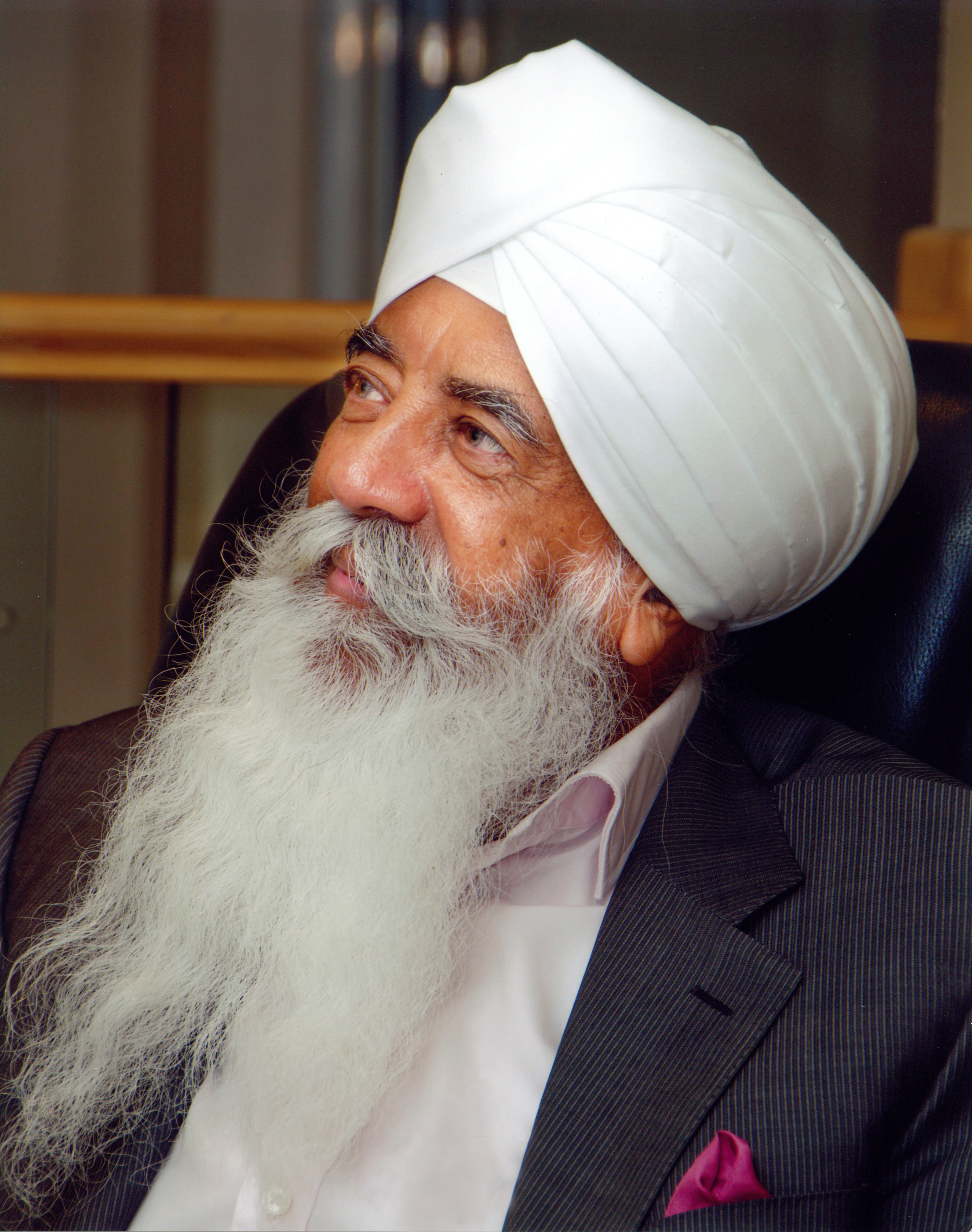
BMS Portait 2 edited smallBhai Sahib Dr. Mohinder Singh, Chairman of the Nishkam group of charitable organisations based in Birmingham has been appointed Officer of British Empire (OBE) in recognition of his unstinting and inexorable work over forty years to promote peace and coexistence by bringing people of different faiths together to contribute to the common good of humanity.

Dr Mohinder Singh is the first British Sikh to receive the official title of “Bhai Sahib” from the highest religious Ministers (Jathedars) of the Sikhs’ spiritual and temporal seats of authority in India. Bhai Sahib means ‘a brotherly leader or one worthy of respect amongst the larger family of Sikhs’.

On the award in the Queen’s 2015 New Year Honours list, Bhai Sahib said, “It is a great personal honour to receive this prestigious award from Her Majesty the Queen, by the grace of God, the Defender of the Faith. All accolades are attributed to God Almighty who facilitates human puppets to perform. I have accepted this appointment on behalf of the founders and members of Guru Nanak Nishkam Sewak Jatha (GNNSJ) and the wider communities that I am privileged to serve here in the UK and internationally.”

Bhai Sahib is a selfless religious visionary leader propagating peace, serving society through spiritual inspiration, infrastructure creation, heritage conservation, interfaith engagement and promoting values-led education. As Chairperson of GNNSJ, one of the UK’s largest Sikh faith registered charities, he is engaged in an astounding range of civic and spiritual initiatives. He is respected as a bridge-builder within communities in the local and global, secular and spiritual, intra and interfaith contexts.

From 1999, Bhai Sahib began to channel his energy into the growing area of global interfaith dialogue and cooperation to pursue the objective of global peace building. He is the founding convener of the proposed international Charter for Forgiveness and Reconciliation, which aims to provide a framework for communities, organisations and Governments to promote forgiveness around the globe. He, along with other prominent international trustees, is actively involved in establishing the unique Museum of World Religions (MWR) in Birmingham, estimated to cost around £60m, to create cohesion amongst people of different faiths and none. The MWR will bring together youth and adults from different faiths to promote mutual respect and peace building. In 2013, His Holiness Pope Benedict XVI bestowed a Papal Knighthood of ‘Saint Gregory the Great’ upon Bhai Sahib for his interfaith work in the UK and around the world.

Bhai Sahib chairs the Boards of the Nishkam Gurudwara, established in 1977; Nishkam Community Cooperative (MSS Manufacturers Ltd) established in 1980; Nishkam Civic Association (NCA), a Centre for personal, community and sustainable development that is open to all communities established in 2006; and the Nishkam Healthcare Centre established in 2012 that provides a range of health care services and advice to hard to reach groups. He has been awarded Honorary Doctorates from Birmingham City University in 2002, the University of Birmingham in 2006 and the University of Aston in 2014 for services to religious faith propagation, community service, education and research.

Bhai Sahib embraces the concepts of values driven education on one hand and interfaith cooperation on the other as tools to forge lasting and sustainable peace. Propelling this forward is the Sikh Gurus’ teaching to consider humanity as one family with the same light of the Creator in all. He is an international trustee of Religions for Peace International (RPI), which works in some 90 countries. He is also one of RPI’s 50 Co-presidents around the world. He is a senior member of the Elijah Board of World Religious Leaders and a Senior Ambassador of the Globalisation for the Common Good Initiative, which in 2014 bestowed upon him the annual award for embracing the concept of education for the common good by building schools and colleges essential for a sustainable world. In 2014, he was also awarded the highly coveted Guru Nanak Interfaith Peace prize by Hofstra University, New York.

Bhai Sahib is Patron of the Nishkam School Trust that has successfully established Nishkam nurseries, primary and secondary schools with a multi-faith ethos in Birmingham, Wolverhampton and London. Nishkam High School and Sixth Form in Newtown was judged as ‘Outstanding’ by OFSTED in its very first inspection in 2014.

His greatest legacies will be the transformation of many lives across faiths; the restoration and conservation of the sacred historical Sikh shrines, including Darbar Sahib (Golden Temple) in India; construction and management of outstanding quality Sikh places of worship – Gurudwaras – in England, India, Kenya and Zambia; and the ingenious conservation of listed buildings on Soho Road in Birmingham that now house the Nishkam Nursery, Nishkam Primary School and the Nishkam Healthcare Centre.

Under his leadership over the span of some twenty-five years, the Nishkam Group has become a major player in the social and economic development of Handsworth in the city of Birmingham, UK and a number of other cities internationally, investing over £50m. He believes in the policy of “service delayed is a service denied” which demands great speed to complete whatever he undertakes to do.

As a highly respected spiritual and community leader, he propagates the deeper Sikh sacred teachings that demand the practice of values in everyday life such as humility, compassion, selflessness and courage. As a role model, he generates in others a tremendous capacity for undertaking selfless voluntary service to improve the wellbeing of all communities.

 ENDS

For more details please contact:

Amrick Singh Ubhi

Director

Nishkam Civic Association.

Tel: 0121 515 4229

Mobile: 07771 817484

Email: amrick.ubhi@ncauk.org