Innovative Book Launch on Values

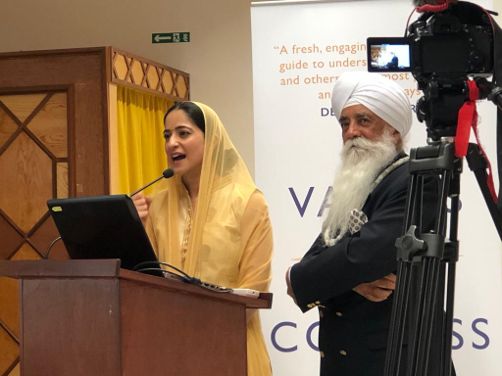
Author Dr. Mandeep Rai & Bhai Sahib Bhai Mohinder Singh

Author Dr. Mandeep Rai & Bhai Sahib Bhai Mohinder Singh

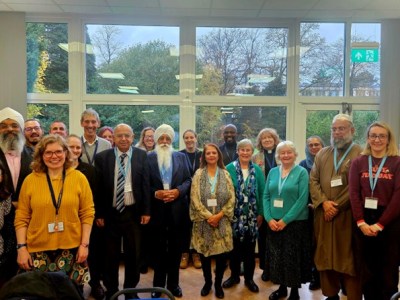
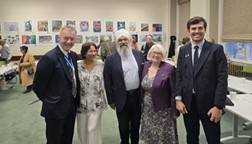
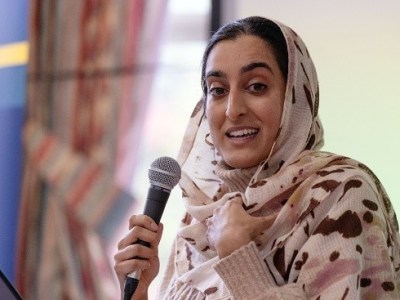
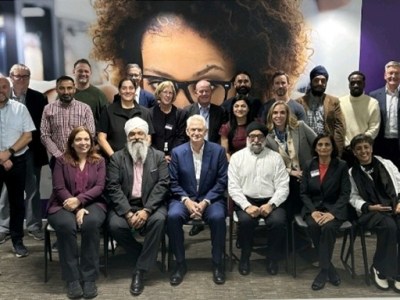
The Nishkam Centre had the pleasure of hosting a launch for the revolutionary book, The Values Compass on the 18th of January, where the author, Dr Mandeep Rai, took the audience on her journey as to how the idea began and flourished into this intuitive manuscript. Bhai Sahib, Bhai Mohinder Singh OBE KSG, one of Mandeep’s main inspirations for writing this book, gave incredible insights into the essence and importance of values. The Nishkam Centre’s core mission is propagating and the practice of values in all aspects of life, and therefore the book launch was befitting. The evening was further uplifted by an inspirational address from a special guest His Royal Highness, Nene Tetteh Ayiku Abordonu IV from Ghana.

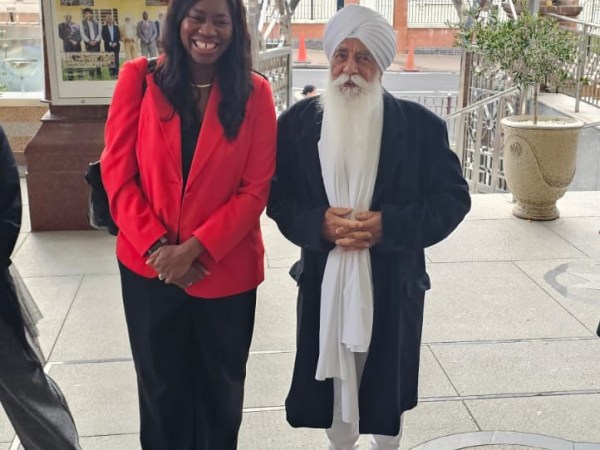
The ambiance in the room was immeasurable when Dr Mandeep Rai walked in with Bhai Sahib Bhai Mohinder Singh and His Royal Highness, Nene Tetteh Ayiku Abordonu IV from Ghana. After a quick introduction from our Centre Director, Amrick Singh, Dr Mandeep Rai delved straight into her journey, outlining her educational and spiritual background,

“When I got the chance to study, I studied Politics, Philosophy & Economics because I was keen to know how does the world work, why are injustices happening?…As I was travelling back through Asian countries through the economic crisis, I saw the resilience and the respect in Japan, there was so much beauty in all of these places, but then I realised that we have these gems within us.”

Mandeep outlined her biggest supports, inspirations and how every moment could simply be a coincidence, or a pivotal point in one’s life.

“I spent a year in India as a BBC reporter…I was reporting on the deep injustices… I went to pick up some rice, and I saw another hand coming to pick up the rice and I looked up and I saw Bhai Sahib Ji. This was the first time I met Bhai Sahib Ji, even though we were both from Birmingham, this was 17 years ago…so we got talking and they really ignited a fire, and really brought context to all of these values I was seeing across the world.”

Mandeep went on to share that from this initial meeting Bhai Sahib Ji was always her “Values Compass”, every time she came to a junction in her life. She spoke about her work at Harvard Business School, and how the first Sikh became Dean, because of his work with values, proving that the world is actually hungry for values to be included in all aspects of life. Mandeep introduced His Royal Highness from Ghana in an incredibly loving way;

“Here we have leaders from Ghana…the value from Ghana is ‘Hope’ in the book…and the first thing I noticed as I greeted them were the beads they are wearing on their wrists, and these beads represent things like hope or fertility, and basically every change or transition you have in your life are represented by these beads. So these beads have such significance, just like the Sikh Kara we wear on our wrist.”

The aim of the book, Mandeep specified; “the things that you admire are your values, right now as we start this new decade, during Guru Nanak Dev Ji’s 550th birth anniversary, we can think about what is truly important, and be clear of the core values that will make us the person we want to be in 6 years or 1 year, and aim to embody these, and work for something much greater than ourselves.”
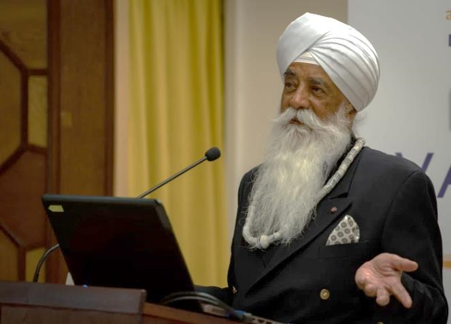
Bhai Sahib Bhai Mohinder Singh then followed Mandeep’s lovely words with their own, outlining how they both met, and delved deeper into the essence of values.

“All 200 people sitting here are all divine sparks of the almighty…the soul is the most important ingredient…I believe when you hear the saying Let There Be Light, you can kindle this divine spark with values, you can ignite the soul with love and forgiveness, otherwise it slumbers”.

Bhai Sahib Bhai Mohinder Singh specified that all values belong to God, because all goodness emanates from God. “We have five basic values, Humility, Compassion, Truthfulness, Contentment (to accept God’s will), and love, and likewise we have five vices, Lust, Revenge, Greed, Attachment, Ego. Whatever we are given credit for; it should actually go to the Almighty, because He is controlling the divine spark. When we get disconnected with the Almighty, we become disconnected with all of Creation. The challenge is to connect, and He is the source of all values and virtues. Values are the ornaments of humanity, without them we are lost.”
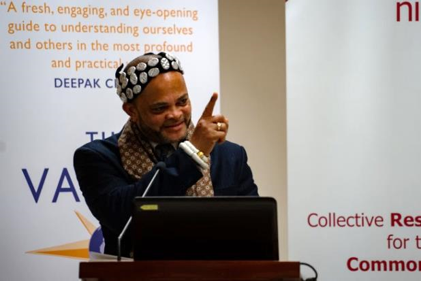
HRH, Nene Tetteh Ayiku Abordonu IV from Ghana

HRH, Nene Tetteh Ayiku Abordonu IV from Ghana

He then went through some of the journey with Mandeep, the times that she came to them for guidance. Faith in God means trust, trust means hope; if you don’t have trust then there is no hope and the situation is hopeless. There is one God for all the divine spark; we are all interconnected and interdependent. There is a big connection with this book, values are a common human heritage, and they belong to all of us, across every country…we need to sacrifice for each other, going beyond self and help one another.” Bhai Sahib also told the audience that for the first time, Faith Leaders have been invited to the World Economic Forum in Davos to see how there can be cohesion – a major step for the forum, and potentially shows that Faith and values are needed across every aspect of the world.

The audience were then invited to ask questions of the Author and Bhai Sahib Ji. We saw economics was again touched up on. The special guest, HRH Nene Tetteh Ayiku Abordonu IV of Ghana had a chance to speak about when there is no faith or values in economics, and subsequently Africa is affected and exploited by this.

“Faith should be integrated into economics, we have to give love to humanity, we need to renegotiate and know that if we have borrowed from this continent, we should give something back. Without love nothing is possible.” The evening came to a close,    with Author Dr Mandeep Rai signing copies of the book.

END

Copies of the book are available to purchase on Amazon http://tiny.cc/f17xiz

The Nishkam Centre has done workshops with SACRE (Standing Advisory Council for Religious Education) and the Nishkam School Trust around the 24 Dispositions in Birmingham. For more information click here https://www.faithmakesadifference.co.uk/dispositions.  Virtues education is central to all of school life, whether it is in the informal curriculum, how we speak and conduct ourselves or through acts of regular service. Nishkam Schools focus on 50 core virtues below as described more fully in the Nishkam passport. https://www.nishkamschooltrust.org/page/?title=Virtue+Learning&pid=12
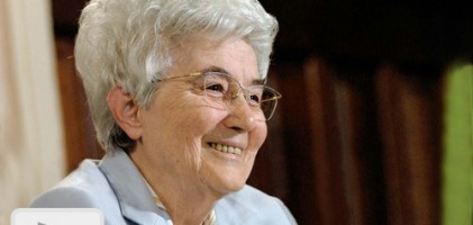
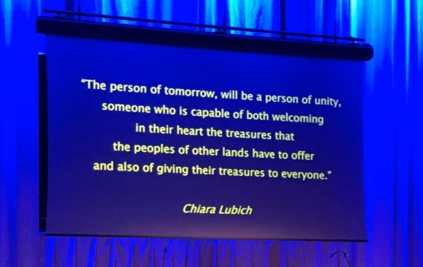
Journeying in Dialogue; 100th Anniversary of Chiara Lubich’s Birth

Chiara Lubich

Chiara Lubich

A celebration marking the 100th Anniversary of Chiara Lubich’s birth was held on Saturday the 18th January at the Elgar Hall, University of Birmingham (UOB). Chiara Lubich was the founder of Focolare, and the Movement has now moved beyond its origins in the Roman Catholic Church and now involved Christians of many churches, followers of all the great world religions and people of goodwill. Local, national and international contributors shared experiences of building unity, inspired by the spirituality of the Focolare Movement.

One hundred years ago, Chiara Lubich was born into a world that was to be ripped apart by war. She and her friends began to put their Christian faith into practice by loving each neighbour, whoever that was, and transforming the community around them.

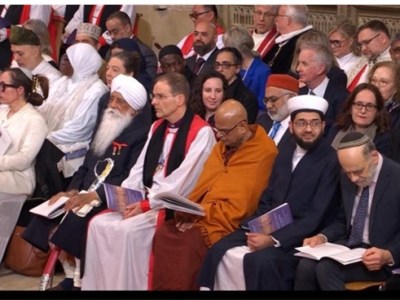
Guest speakers at the event included Reverend Bernard Longley, Catholic Archbishop of Birmingham, Sheikh Dr Mohammad Ali Shomali, Director of the International Institute for Islamic Studies, Bhai Sahib Bhai Mohinder Singh OBE KSG, Spiritual Leader of the Guru Nanak Nishkam Sewak Jatha (GNNSJ) and Chairman of Nishkam Group of Organisations.Guest speakers at the event included Reverend Bernard Longley, Catholic Archbishop of Birmingham, Sheikh Dr Mohammad Ali Shomali, Director of the International Institute for Islamic Studies, Bhai Sahib Bhai Mohinder Singh OBE KSG, Spiritual Leader of the Guru Nanak Nishkam Sewak Jatha (GNNSJ) and Chairman of Nishkam Group of Organisations.

Today we find our world fracturing under the strain of political division, economic inequality and climate emergency. Many want to work for unity, justice and peace, but where to start? The spirit of Chiara Lubich’s vision has been taken up across the world, through various faith leaders, bringing change through social action, political dialogue and unity amongst communities of faith.

There have been great forward strides in recent years of including faith dialogue in social and economic discussions, for the first time in history Faith Leaders have been invited to attend and participate in the World Economic Forum in Davos. Topics discussed included ‘The Role of Faith for a Cohesive and Sustainable World’ and the ‘Religious Leaders’ Role in Safeguarding Communities’.

At the UOB event Archbishop Bernard Longley gave a very warm welcome to all at the event and recalled meeting Chiara Lubich with her ‘mix of gentleness and passion’; one could clearly feel the very presence of a charism at work. Dialogue requires willing hearts; it calls for a generous response.” The Archbishop recalled many accounts of engagement including reference to the great community work done by Bhai Sahib, Bhai Mohinder Singh and he also passionately spoke about late Mr Sewa Singh Mandla OBE contribution to community relations.

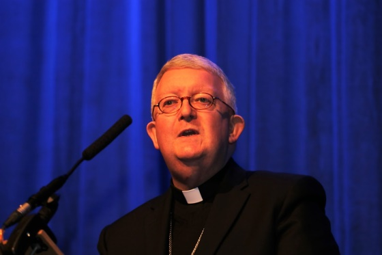
Archbishop Bernard Longley

Archbishop Bernard Longley

Dr Mohammad Ali Shomali stated that “Chiara Lubich belongs to the whole community and this is the time of collective sainthood.”

Chiara is still asking us what she was asking in London 2004; How can we look at each other through the Father’s eyes? How can we go beyond tolerance and transform a multi-faith, multicultural society into an interfaith, intercultural society where we learn from each other?

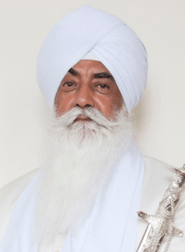
Bhai Sahib, Bhai Mohinder Singh lovingly said; “For me, Chiara Lubich was a saint, a blessed soul. I could feel the vibrations at her presence. She was welcoming and warm and you could talk to her freely.” Bhai Sahib Ji also underlined that, “dialogue is the first step to get close to people to resolve conflicts. Nishkam means selfless – we must serve with this in our hearts and mind. As people of faith we need to have humility, contentment, and an abundance of love.”

Bhai Sahib Ji recalled, Pope Francis spoke about peace; “Peace requires work, it is not merely absence of war but a tireless commitment. Until there is friendship, until everyone finds the solution for the problems of their land, their family.”

“We need to learn to open our hearts to one another”. The meaning of Chiara Lubich’s message is to engage with the heart and not just our minds.

Bhai Sahib Ji, accompanied by Kiran Kaur and Amrick Singh, Nishkam Centre Director were all warmly welcomed to

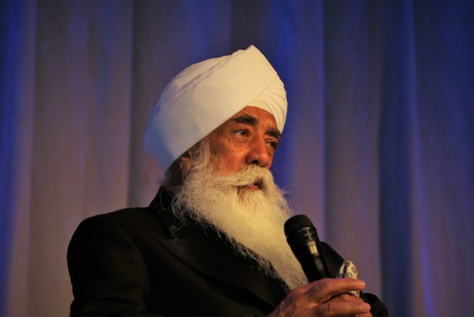
Bhai Sahib Bhai Mohinder Singh

Bhai Sahib Bhai Mohinder Singh

the event by Pat Whitney and Bill Ozzane on arrival.  Amrick Singh later said, “The event was very moving, although we could only stay for the morning session, it was a magical atmosphere. Everyone present seemed to be full of positive energy and vibes, this was further displayed by the speakers and performers on the stage.”

“It was truly inspiring to see that Chiara’s message is embedded and lived rather than empty rhetoric. The life examples people gave of how they practice compassion and love in their daily lives was refreshing. As Sikhs we are informed that there is no stranger or enemy; we are all one family of humanity, divine sparks created by God – these eternal messages were vibrating throughout the event.”

“The work Bhai Sahib Ji is doing on the Peace Charter for Forgiveness and Reconciliation, and also the Museum of Worlds’ Religions, will be a phenomenal achievement to support the vision and work of Focolare and Chiara’s legacy for generations to come.”

End

Notes

  1. The Nishkam Group or Organisations has been working with Focolare for many years. Students from Nishkam High School have performed multiple times with the Gen Verde, a band whose members are part of the Focolare Movement, using various instruments across different Faiths. The musical styles reflected 13 different nationalities, and celebrated hope and shared commitment to build a better society through religious principles. https://nishkammediacentre.co.uk/2015/11/30/students-host-exciting-interfaith-concert/
  2. World Economic Forum 2020 – ‘The Role of Faith for a Cohesive and Sustainable World’https://www.weforum.org/events/world-economic-forum-annual-meeting-2020/sessions/the-role-of-faith-for-a-cohesive-and-sustainable-world
  3. World Economic Forum 2020 – The ‘Religious Leaders’ Role in Safeguarding Communities’https://www.weforum.org/events/world-economic-forum-annual-meeting-2020/sessions/religious-leaders-role-in-safeguarding-communities
  4. Museum of Worlds’ Religions –  https://nishkammediacentre.co.uk/2014/11/05/museum-of-world-religions-agm-and-project-development-meeting-hosted-in-birmingham/
  5. Peace Charter for Forgiveness and Reconciliation https://www.charterforforgiveness.org/, https://nishkammediacentre.co.uk/2019/08/25/peace-charter-for-forgiveness-and-reconciliation-adopted-by-10th-world-assembly-of-religions-for-peace-in-lindau-germany/

For more articles like the above please visit www.nishkammediacentre.com

Nishkam Centre reaffirms commitment to prestigious Investor in Volunteers Standard

At the last Nishkam Civic Association Board Meeting of 2019 the Chairman and Board were presented with the prestigious certificate. The Nishkam Centre had been put through its paces by an assessor from Investing in Volunteers (IiV) who tested the organisation against nine indicators to confirm continued adherence to the IiV Standard. The Centre provides innovative support via group work activities that is creative, responsive and sensitive to the needs of many diverse communities. The ethos of the Nishkam Centre is based upon a framework which provides a pathway to community integration, empowerment, involvement and cohesion. As Nishkam means ‘selfless service’ the underpinning and cutting-edge differentiator is voluntary service. Our commitment towards the IiV standard demonstrates our commitment to volunteering.

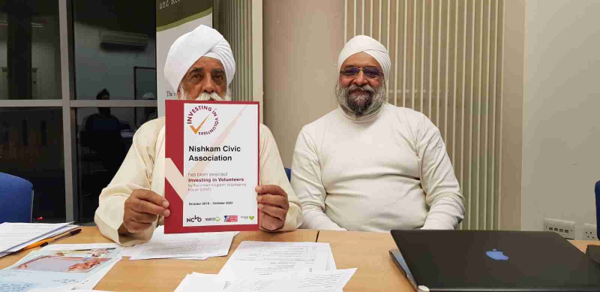
Bhai Sahib, Bhai Mohinder Singh, Chairman of Nishkam Group of Organisations with Prof Upkar Singh Pardesi, Vice Chairman of Nishkam Centre presented with IiV Certificate

Bhai Sahib, Bhai Mohinder Singh, Chairman of Nishkam Group of Organisations with Prof Upkar Singh Pardesi, Vice Chairman of Nishkam Centre presented with IiV Certificate

The Nishkam Centre provides many services to enable civic engagement and involvement. These services incorporate built-in progressions, enabling clients to improve coping strategies and work towards sustainable mental health recovery, increasing social networks and opportunities for training, volunteering, employment and community integration. The Investing in Volunteers website states, ‘Investing in Volunteers (IiV) is the UK quality standard for good practice in volunteer management. The benefits of doing so are claimed to be; ‘enhancing volunteers’ experience and increasing their motivation; strengthen the organisational reputation and encourage more people to volunteer; minimises risk, maintains knowledge, and plans for the future’.

Bhai Sahib, Bhai (Dr) Mohinder Singh OBE KSG, Chairman of the Nishkam Group of Organisations said, ‘The Nishkam volunteers are our organisations’ cutting-edge. It is only possible for our organisations to deliver what they do because of the dedication of selfless volunteers who are inspired by their faith values to help others and give something back to the community. We are committed to supporting and developing our volunteers and the award is recognition of the importance we place on them. Volunteers bring real added value, the experience and skills they bring to the campus is truly inspirational. Many people do not realise that the Nishkam Group is a small independent charity that relies heavily on its volunteers to provide a lifeline of support for all the projects we undertake. We are delighted that we have again been assessed as providing best practice in the experience and support we provide for our volunteers”.

The Nishkam Team’s volunteers are more and more reflective of the communities served, helping to build deeper

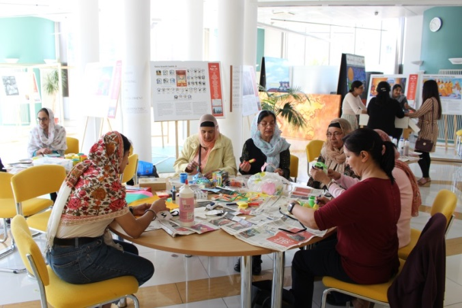
Creative Healing Workshop delivered by Mental Health Professionals

Creative Healing Workshop delivered by Mental Health Professionals

understanding and cohesion as it is located in one of the most diverse neighbourhoods in Birmingham and the UK.

Last year the Nishkam Centre was supported by 50 regular volunteers and many more occasional volunteers who offered support on an informal basis. The volunteers offer a very wide range of support to the centre ranging from strategy and governance, business development, teaching, centre support, administration, welfare services, wellbeing services, maintenance and many more. Due to the wide range of activities and roles the Centre is able to connect individuals wishing to volunteer and can offer more opportunities for their personal development.

The Nishkam volunteers have grown in confidence, had fun, transformed their own and other lives, boosted their career opportunities, benefited from a variety of training, gained a sense of community spirit and involvement, feeling of having made a difference to someone’s life, made friends and had an overall improvement in their health and wellbeing.

Ajit Singh, Nishkam Centre Contracts Manager said, “It is an absolute pleasure and privilege to work with and support our volunteers. Our volunteers are our best ambassadors, who selflessly volunteer to support others in the community whilst developing themselves along the way. For many, volunteering has been a life-changing experience supporting the individual’s general wellbeing in so many ways. We have coined the phrase ‘measureless measures of volunteering’. Whilst there are many tangible benefits of volunteering there are so many more intangible benefits which are very difficult to measure due to their very nature. The Nishkam Centre’s ongoing success and ability to flourish further is aligned with how we work with our selfless volunteers and recruit more. Further to our IiV assessment, we will be piloting our ‘Measureless Measures of Volunteering’ template to capture the actual, perceived and intangible benefits of volunteering as well as the volunteering journey.

It would be impossible to provide many of the services the Centre provides without the volunteers who contribute their time willingly. Based on a conservative calculation it is estimated that the volunteers give some 17,000 hours on an annual basis and one could quite easily put a figure of £230,000 against that.

Amrick Singh, Nishkam Centre Director, said, “It is amazing to have been assessed against the Standard for the third time and to be told by the assessor that we were better than last time. We applaud and recognise the enormous value our volunteers add on a daily basis. Volunteering provides an excellent mutual benefit to the volunteer and us as an organisation. We are able to do more great work and offer services that might otherwise not be possible. The volunteer is able to get priceless experience and exposure. For some it is a genuine desire to give back, to serve, to help and to develop new skills. For others it may be an escape from isolation, depression, loneliness or even a sense of guilt that they are not putting their skills to use to help others.

“The award sets a benchmark of high standards, good practice and quality in respect of volunteering, this is a great accolade for all concerned. The Nishkam Centre has yet again demonstrated its commitment towards, and appreciation of, its volunteers. I would encourage all organisations to look at the standard and see how they can support volunteers and encourage them to contribute and grow.”


Volunteer journey case study

One of Nishkam’s volunteers, we will call Mrs A, was a new arrival into the UK. Her husband was struggling to find work and came to the Centre for help with his welfare benefits application. He spoke very little English and on the day of the workshop for their welfare benefits application, he was unable to attend and sent his wife, Mrs A.

Mrs A showed great aptitude and was supported to complete her own application form. Mrs A was encouraged to volunteer and given training to gain more knowledge in welfare benefits. Mrs A is now a regular volunteer who supports the IAG team to run and deliver workshops, administration work and supports others to be self-sufficient.

Within less than a year Mrs A has grown in self-esteem, knowledge and able to support others. Mrs A is able to speak four languages, which is a vital asset in the diverse local demographic, which she uses to support others. She often confides how the dynamics and her status within her home have also improved due to her newfound self-esteem and confidence.


ENDS

Notes to Editors:

For more information visit Investing in Volunteers – https://iiv.investinginvolunteers.org.uk

Saïd Business School shares ground-breaking art exhibition on interfaith dialogue

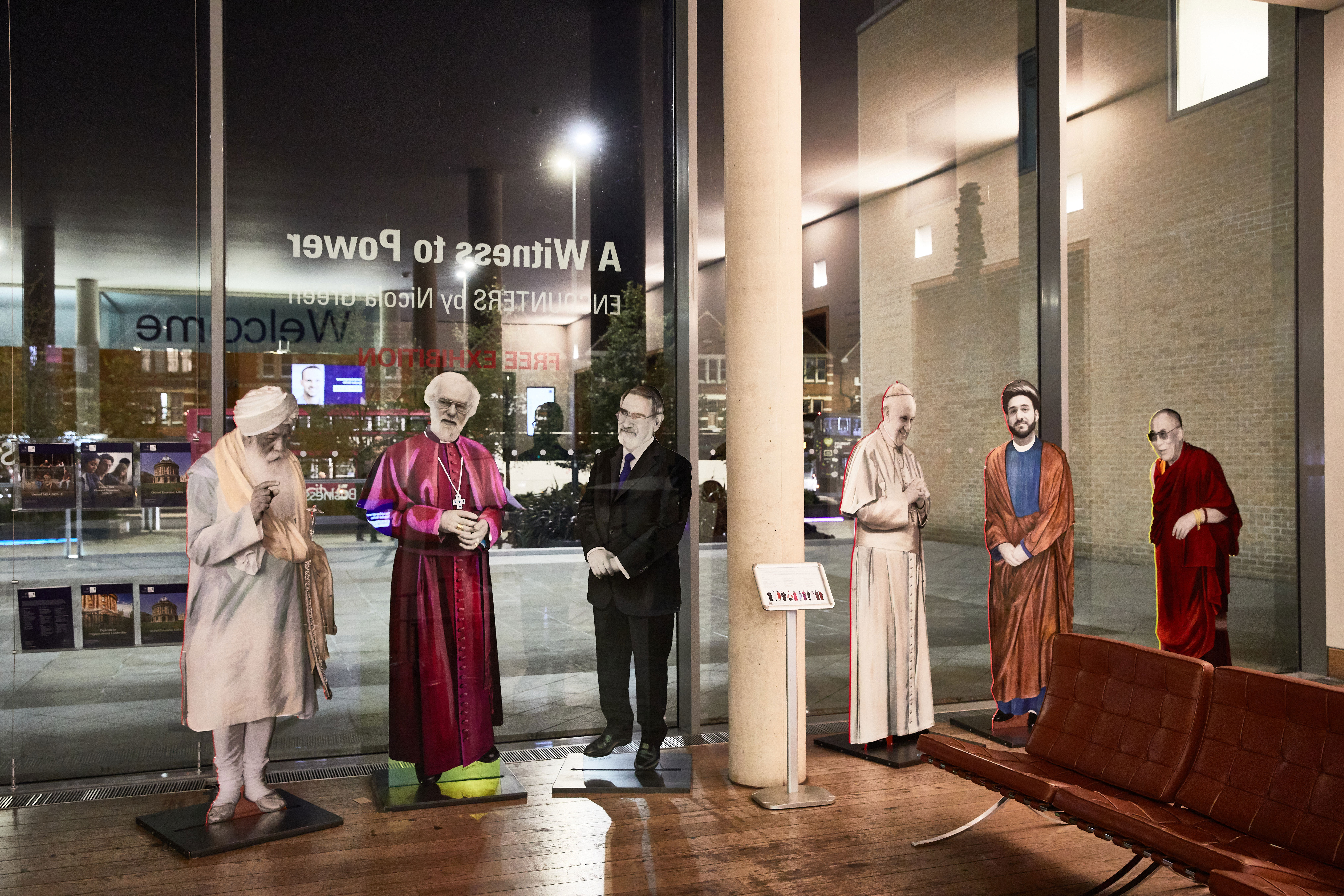
Life size portraits of faith leaders design by Nicola Green, at the entrance of Saïd Business School.

Life size portraits of faith leaders design by Nicola Green, at the entrance of Saïd Business School.

Saïd Business School, University of Oxford hosted a thought-provoking exhibition that celebrated and gave insight into interfaith dialogue and solidarity. Titled ‘A Witness to Power’ the exhibition combined two striking series of works by the artist and social historian Nicola Green to eloquently depict the messages of unity and strength in diversity; a message very much needed in the current times.

In Seven Days (2010) and Encounters (2018) was designed to draw on Nicola’s experiences observing and shadowing the world’s pre-eminent religious leaders, including Pope Francis, the Dalai Lama, Bhai Sahib, Bhai (Dr) Mohinder Singh Ji OBE KSG, Desmond Tutu. The exhibition also included two bodies of work the artist created during her remarkable access to President Barack Obama during his 2008 presidential campaign.

To create this work Nicola spent 10 years travelling the world attending interfaith meetings, from intimate private meetings, to global summits where she met leaders of the world’s major faiths.

In both The Encounter and The Light Series showcased the rich diversity and inclusivity of the faiths represented. These included:

  • 12 Christians (4 Anglican, 3 Orthodox, 3 Catholic, 1 Assyrian, 1 Coptic)
    Nicola Green discussing 'The Light Series’, exhibited at Saïd Business School, University of Oxford.

    Nicola Green discussing ‘The Light Series’, exhibited at Saïd Business School, University of Oxford.

  • 5 Muslims (2 Sunni, 2 Shi’a, 1 Sufi)
  • 4 Hindus (1 Sri Vaishnava Sampradaya, 1 Lingayat, 1 Dvaita, 1 Ramakrishna)
  • 4 Jews (2 Orthodox, 1 Sephardic Orthodox, 1 Reform)
  • 2 Buddhists (1 Tibetan, 1 Fo Guang Shang Humanist)
  • 2 African Traditional (1 Ifa and Yoruba, 1 Benin Kingdom)
  • 1 Baha’i
  • 1 Confucian
  • 1 Jain
  • 1 Sikh
  • 1 Shinto
  • 1 Zoroastrian

The Light Series included portraits painted on Giclée (a fine art digital printing process combining pigment based inks with high-quality archival quality paper to achieve an inkjet print of superior archival quality, light fastness and stability) with hand applied 24k gold, silver copper leaf and diamond dust. It has been suggested by visitors that this is the first artwork in history to depict all the world’s major religions together in a shared space, and of equal status.

Speaking on the exhibition Nicola Green commented, “My intention with Encounters is to reach people of all faiths (and none) in particular those that don’t often see themselves represented.

“I was really delighted to see how the work resonated with everyone and to hear stories from people that were so excited to see themselves or their faith portrayed in the artworks.”

Jyotveer Singh poses with a portrait of his faith leader Bhai Sahib Bhai (Dr) Mohinder Singh Ji OBE KBE.

Jyotveer Singh, Head of Web Development at Saïd Business School and attendee of the exhibition said: “The exhibition is a celebration of interfaith solidarity and cross-cultural dialogue. Saïd Business School is a global village of diverse communities who come together to solve world-scale problems which I feel is reflected in the art. Nicola Green creatively demonstrates a rich tapestry of interdependent people, practicing shared values for the good of others; whilst honouring uniqueness and the dignity of difference.

“I was deeply inspired to see international interfaith ambassador, Bhai Sahib Bhai Mohinder Singh Ji depicted in the artwork, who continues to drive the agenda of peace and unity through projects. Namely, the Peace Charter (Charter for Forgiveness and Reconciliation) and the Museum of World’s Religions, this work by Nicola Green is most welcome and timely.”

The exhibition is available to the public at Saïd Business School, University of Oxford until 20th December.

Ends

Historic visit to Pakistan and India to mark 550th Birth Anniversary of Guru Nanak Dev Ji

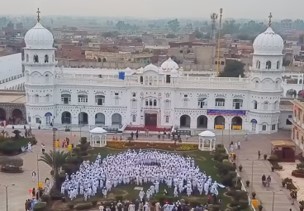
A group photo outside Nankana Sahib Gurudwara

A group photo outside Nankana Sahib Gurudwara

On Friday 1st November 2019 Bhai Sahib Bhai Mohinder Singh OBE KSG, accompanied by an internationl cohort of 650 members of the Guru Nanak Nishkam Sewak Jatha decended on Lahore, Pakistan and made history. Never before had a group from so many countries, forming a single group, visited Pakistan with the sole purpose being to pay homage and obeisance to the blessed land where Guru Nanak Dev Ji (1469 – 1539) had frequented centuries earlier.

Guru Nanak Dev Ji travelled far and wide, teaching people the message of one God, who dwells in every one of His creations and constitutes the eternal Truth.

“It was an honour and a humbling privilege to visit the holy, sacred shrines that we were able to in Pakistan and later in India. I would like to congratulate the whole of humanity on the 550th Birth Anniversary of Sri Guru Nanak Dev Ji Maharaj. We applaud the actions of the Indian and Pakistan Governments in the fantastic work done to establish the Kartarpur Corridor. I was honoured to be there for the formal opening on the 9th November 2019.”

“We should remember that all sacred shrines are precious. The sanctity of places of worship and the sacred revered

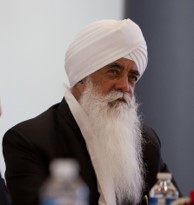
Bhai Sahib Bhai Mohinder Singh OBE KSG, continually works for more faith solidarity and better interfaith relations

Bhai Sahib Bhai Mohinder Singh OBE KSG, continually works for more faith solidarity and better interfaith relations

text of each faith are the responsibility of all faiths. We should respect and preserve the rich heritage of all faith traditions in the World. We have a duty of care for looking after each other – we cannot love God if we cannot love his creation.”

“The Sikh’s tenth Guru, Guru Gobind Singh Ji clearly and emphatically stated that ‘saach keho sun laeho sabhay, jin prem keeo tin hee prabh paaeyo’ – ‘I speak the truth, listen everyone: Only the one who is absorbed in True Love shall attain the Lord’. Human beings must preserve the sanctity and sacredness of ALL religious texts. When we look around the world we see the desecreation of sacred shrines and this must stop. This cannot be in the name of faith or religion – these are barbaric acts of violence.” Recalled Bhai Sahib, Bhai Mohinder Singh.

Local sangat welcomed the Guru Nanak Nishkam Sewak Jatha (GNNSJ) pilgrims from around the world; U.K, Kenya, Botswana, India, U.S.A, Canada and beyond who had made the journey to Pakistan to partake in the celebrations.

Amrick Singh, Nishkam Centre Director, said how privileged he felt to have been on this sacred pilgrimage. “I remember the ecstatically warm, friendly, family welcome all the 650 guests got – it was like a home-coming as one of our Pakistan brothers put it. We could not have imagined the warmth that was portrayed toward the Sikh community right across the country. The passion that the local people had for greater faith solidarity was moving. You would continuously hear ‘may Allah bless you all and provide peace to us all’.”

“We must thank the Evacuee Trust Property Board (ETPB), the Pakistan Sikh Gurdwara Parbandhak Committee (PSGPC), Interior Minister and of course Prime Minister Imran Khan, for facilitating the possibility of such a large group to visit Pakistan. When you think of the logistics of a convoy of 16 coaches and two mini-buses being escorted from Gurudwara to Gurudwara and then returning to the hotel every evening, the magnitude of the task becomes apparent. A special vote of thanks must also go to the Pakistan Consul General, Ismail Ahmar, his team in Birmingham and Mr Ibrar at Gerry’s for the unrelenting support given to secure Pakistan Visas for the whole group. On the Indian side, Dr Aman Puri, Indian Consul General, Birmingham and his team were a great support, they facilitated the smooth issuance of the relevant documents to enable the congregation to move freely.”

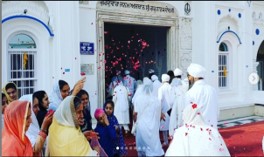
Local community welcome the pilgrims with flowers

Local community welcome the pilgrims with flowers

The Sikh tradition informs us that the foundation of any faith is daya, which can be translated as compassion.  Our very existence on the planet is supported by daya, the bedrock of faith. Daya is not simply an obligation but an inherent quality of being. It is a powerful force that unfolds when we see the universal light of God in all creation. As humans, we walk upon the same earth, breathe the same air; share the same basic hopes and joys, whilst enduring the same suffering and pain. This acknowledgement demands a responsibility to share. Theses messages were epitomised by Guru Nanak Dev Ji and during this blessed anniversary period we should all take a long look within ourselves and calibrate our behaviour and conduct accordingly.

Bhai Sahib Bhai Mohinder Singh reiterated, “We are all part of the Lord’s infinite plan, creation and design, it is important that we understand each other. We all have multiple identities as individuals. We are mothers, sisters, fathers, brothers, sons and daughters, we belong to certain professions and our passports are reminders that we have certain national identities.  Our absolute identity however, is that of a human being.  We must remember that we are here on earth as mere travellers, this is not our permanent domicile. Remembering this, will encourage us to change the way in which we engage with the world and think about life in general.  Sri Guru Granth Sahib Ji (the Sikh’s Eternal Guru) reminds us that the temple of Mecca is within your soul, if you try to realise it.”

“Finally there is an increasing recognition that faith constitutes a vital part of our vibrant communities and that there is no singular secularism in our global world. The family of faiths, who are the backbone of civil society, must seriously reflect on their own traditions and collaborate with others to jointly harness spirituality and empower the mortal individual to achieve success in attaining a greater understanding of ‘the other’.

It would appear that despite Guru Nanak Dev Ji’s message to all humanity, we are facing a crisis of selfishness and spiritual poverty in the collective human psyche. Our secular efforts to achieve anything will remain impoverished until we harness the spiritual power that remains latent within us. Together, the spiritual and the secular are the beacons that will ensure that we can serve the Creator and creation, making this a better world for all.

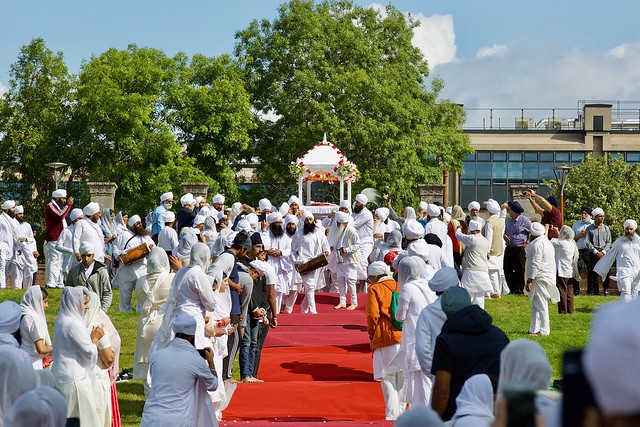
After visiting many of the sacred shrines across Pakistan, the group then crossed the border into India, and carried on sacred anniversary celebrations in Sultanpur Lodhi, where Guru Nanak Dev Ji spent many years with his family. The group were able to take part in Langar Sewa and serve food to the many Sikhs and visitors that were travelling to blessed location from across India and the world. It was in Sultanpur Lodhi where Guru Nanak Dev Ji first conveyed the message of ‘Ik Onkar’ (One God) to the rest of the world.

END

For more information:

  1. Visit to Nankana Sahib, Guru Nanak Dev Ji’s Birthplace: https://www.youtube.com/watch?v=iQjveqFfgB8
  2. University Of Birmingham Mega Event for Guru Nanak Dev Ji’s 550th Birth Anniversary: https://nishkammediacentre.com/2019/08/11/the-university-of-birmingham-to-celebrates-a-mega-event-in-sikh-history/


Birmingham Sikhs convey personal message of gratitude and thanks to Honourable Imran Khan, Prime Minister of Pakistan

With the Almighty Waheguru Ji’s blessing having enabled group of 650 members of the congregation of Guru Nanak Nishkam Sewak Jatha (GNNSJ) to travel together to Pakistan, Bhai Sahib Mohinder Singh OBE KSG personally met with Prime Minister Khan to convey sincere heartfelt thanks. The yatree (pilgrims), of all ages from across the globe, travelled together for the sacred trip to Pakistan and India to mark the 550th Birth Anniversary of Sri Guru Nanak Dev Ji.

A delegation led by Bhai Sahib Bhai (Dr) Mohinder Singh Ahluwalia OBE KSG, Chairman Nishkam Group of Charitable Organizations, met with Pakistan Prime Minister Imran Khan and the Special Assistant to the Prime Minister for Overseas Pakistanis, Syed Zulfiqar Ali Bukhari. Both of whom must be applauded for his support and assistance proffered to the Sikh community during this the 550th Birth anniversary year of Guru Nanak Dev Ji.  Thanks must go to the Evacuee Trust Property Board (ETPB), the Pakistan Sikh Gurdwara Parbandhak Committee (PSGPC), and the Interior Minister for facilitating the possibility of such a large group to visit Pakistan. When you think of the logistics of a convoy of 16 coaches and two mini-buses being escorted from Gurudwara to Gurudwara and then returning to the hotel every evening, the magnitude of the task becomes aparent.

Bhai Sahib Bhai Mohinder Singh thanked Prime Minister Imran Khan for the landmark decision of the Government of Pakistan to work with the India Government to open the Kartarpur Corridor and facilitate the Sikh community across the world in visiting their holy places. The opening of Corridor has made a 70-year-old dream of Sikhs globally come true to offer prayers by visiting the Gurudwara Kartarpur Sahib instead of getting a glimpse through binoculars from across the border.

During the conversation the possibility of further sewa for Sikh diaspora by way of infrastructure development projects, especially beautification of the sacred shrine, building rest houses in Nankana Sahib and Kartarpur Corridor were also discussed. Prime Minister, Imran Khan welcomed the interest from the delegation. It is said the Kartarpur corridor would prove to be a milestone in promoting brotherhood and peace amongst Sikh community and the local nationals.

The fourteen-day pilgrimage of 650 individuals, of which seven days were spent in Pakistan and seven days in India, was planned, coordinated and meticulously carried out, respecting  and honouring the host nations whilst ensuring a message of unity and peace, as proclaimed by Guru Nanak Dev Ji was demonstrated throughout. For many the event started several months earlier as it required numerous visits to Pakistan to organise travel logistics, accommodation, step-by-step itineraries, seeking appropriate authorisations and paperwork, meeting high ranking officials and local Sikhs. In the UK, with out the support of the appropriate Consular services, India and Pakistan, the trip could not have been organised so smoothly.  A special vote of thanks must go to the Pakistan Consul General, Ismail Ahmar, his team in Birmingham and Mr Ibrar and the whole team at Gerry’s for the unrelenting support proffered to the securing of Visas for the whole group.

Guru Nanak Dev Ji, seen by many as a spiritual guide, social reformer and educationist – was born in 1469. His transformational attitude and messages were evident from a very early age. Traveling extensively he quietly went about his life’s mission of teaching and guiding people to be better human beings and to remember the creator at all times. The shabad (hymn) which came to many minds during the trip was:

Awal Allah noor upaya

Kudrat ke sab bandey

Ek noor te sab jag upjaya

Kaun bhale ko mande

‘First of all, God created light;

Mother Nature created all human beings equal;

from that one Light the entire world came into being;

so how do we differentiate that one is better that the other?’

During this auspicious period, HRH Prince Charles also visited India for the celebrations.  He was bestowed a ‘Siropa’, a robe of honour, and was given a warm welcome by Delhi Sikh Gurdwara Management Committee (DSGMC). He paid obeisance at the Gurudwara and interacted with the Sikhs at Gurudwara Bangla Sahib in Delhi.

The visit by the 650 strong group was a clear message from all that we are part of a much bigger community, we are all united regardless of faith, race, colour, gender whatever it may be is all secondary. The first thing is we are all human beings and this whole planet is a blessed sacred space that has been entrusted to us.  The messages from the Pakistan / Indian hosts and all those on the visit clearly enunciated the need for unity, peace, forgiveness, compassion and humility. The need for faith solidarity and the need for a better appreciation and acceptance has never been greater.

Declaration of the 10th World Assembly of Religions for Peace

Preamble

We – 900 women, men, and youth – have gathered in Lindau, Germany, coming from 125 countries for the 10th World Assembly of Religions for Peace. We are grateful for 49 years of determined focus on building peace and on speaking for those most in need. We are an alliance of care, of compassion, of love. We represent a far greater, ever growing, and ever-radiating alliance of “common action” that Religions for Peace gladly serves. In that light we acknowledge with sorrow the ways – subtle and gross – that we and our religious communities have fallen-short. Our hearts grieve over the misuse of our faiths, especially the ways they have been twisted to fuel violence and hate. Our alliance honors our religious differences, even as it serves the peace for which the human heart hungers. We gather in hope, convinced that the sacred calls all humanity into shared responsibility for our common good, care for one another, the earth, and its entire web of life.

The burdens of the human family are well-known to us. We know too well war, how it kills, maims, and destroys the lives of the innocent. We know the crushing weight of extreme poverty, how it stunts, humiliates, and plunders. Ten percent of our human family is desperately poor. We know that more than 70 million of us no longer find shelter in the sanctuary of their homes. They are refugees, internally displaced, and persons forced to be on the move. We know we have entered a terrifying new arms race, one that includes modernizing nuclear arms, weaponizing space and artificial intelligence, and new energy weapons. These burdens are profoundly exacerbated by the cataclysmic heating of the earth, decimation of the rainforests, poisoning of the seas, and choking of the web of life.

We are also experiencing what we call a “meta-crisis” of our modern order, which lies behind the United Nations and the agreements our states have made on human rights, the rule of law, and international trade. Freedoms of all kinds, the protections of minorities, and the fabric of our connection have come under attack around the world. On the economic front, a meager handful of the richest persons have more wealth than four billion persons. Adding to the political and economic dimensions of this meta-crisis of modern order, there is today a “meta-crisis” of truth, which challenges the notion of “truth,” while “fake news” is tailored for political or commercial gain. Today, we are buffeted between inconvenient truths and convenient fabrications. The hour is late: we are called to urgent action.

Caring for our Common Future: Advancing Shared Well-Being

Our heart’s inner-most experiences of the sacred and our outer-most social lives cry out to be connected in a state of positive peace that Religions for Peace calls, “shared well-being.” Our different experiences of the sacred make clear that we are, at root, relational: radically related to the sacred and to all that is caused or embraced by the sacred. As fundamentally relational, our

well-being is intrinsically shared. Helping the other, we are helped; injuring the other, we wound ourselves. We fully acknowledge the invaluable roles of women and youth among us and will continually mainstream their irreplaceable contributions. Our different traditions make clear that the sacred establishes us as both responsible for and dependent upon each other and the earth that sustains us. Shared well-being calls us to commit to all the ways the modern order supports our human dignity. It also calls us to offer in a constructive spirit any complementary contributions from our religions. We affirm the modern order’s recognition of the foundational importance of freedom. At the same time, we are called to show by example the sacred grounding of freedom. It leads through the despair of nihilism, rejects the narcissism of mindless consumerism, and expresses itself as radical care for all.

To our commitment to the importance of human rights, we add our foundational concern for the cultivation of virtues, those habitual orientations to value that sculpt our human potentials. These include our potentials for the most elevated states of mercy, compassion, and love. For us, the labor to become virtuous is not a solitary act; rather, it is an act of “solidarity;” one that can only be achieved by generosity and mutual love. The cultivation of virtue tackles the ignorance, individual egoism, and group egoism that mutilate authentic community.

Shared well-being also calls for a robust notion of the “common good” that can serve all of us in our efforts to virtuously unfold our rights-protected human dignity. The supreme good for us is the sacred, even as we understand it differently. The common good includes the earth with its air, water, soil, and web of life. The common good also includes just institutions that help each to develop her or his human dignity. These call all of us to a shared and grateful responsibility. Each person is to draw from the common good; each is to help build it up.

Advancing shared well-being is concrete. We commit to advancing shared well-being by preventing and transforming violent conflicts, promoting just and harmonious societies, nurturing sustainable and integral human development, and protecting the earth.

Preventing and Transforming Violent Conflicts

We commit to preventing violent conflicts by advancing peace education – from early childhood to adults across our religious communities – focusing on shared values, religious literacy, and narratives of peace. We will build skills in conflict management that address the drivers of conflicts non-violently. Our commitments to transforming violent conflicts are actualized in our Assembly by the religious leaders from Myanmar, the Democratic Republic of Congo, the Central African Republic, Nigeria, and South Sudan. Our commitment is also expressed in the religious women represented by those from the Middle East and North African Region in the Assembly plenary. Here, also, religious persons from North and South Korea have worked to construct conditions for peace on the Korean Peninsula. These religious leaders have convened privately in the Assembly to strengthen one another as partners, peacemakers, and healers. We commit to supporting their efforts in their respective countries and regions. We adopt The Peace Charter for Forgiveness and Reconciliation, convinced that transforming violent conflicts requires the healing of historical wounds and painful memories, forgiveness, and reconciliation. We commit to integrating efforts for healing into all our conflict resolution work.

To renew our commitment to nuclear disarmament, we pledge to be a full partner of the International Campaign to Abolish Nuclear Weapons. We condemn the existence of nuclear weapons, affirm our support for the Treaty on the Prohibition of Nuclear Weapons, and will educate, mobilize, and engage religious communities toward these ends. We also call for immediate steps toward general disarmament including all weapons of destruction – conventional, nuclear, chemical, biological, and those newly emerging.

Promoting Just and Harmonious Societies

We take heart that multi-religious actors and institutions are working to build just and harmonious societies with a vibrant spirit of care and commitment to justice. We commit to continued common action to tackle injustices, including the large scale displacement of persons, and resulting challenges from the migration crises – both for refugees and migrants and the societies where they settle. We will make the global forced migration crisis a priority for action. We will lead by example in “welcoming the other.” We commit to instilling the respect, mutuality, and solidarity that are essential to promote, build, and sustain just, harmonious, and diverse communities. A cross-cutting commitment can be education, including religious literacy, from early childhood to adults, that focuses on shared civic virtues and appreciation for social diversity. We will develop an Alliance of Virtue based on a declaration of virtues widely shared across religious traditions and other virtue heritages.

We pledge to protect children, vulnerable individuals and communities and advocate for their human rights and well-being in the face of grave suffering. We will speak up forcefully and take action against corruption and for good governance. We commit ourselves to caring and determined effort to address the causes and reality of widespread abuses and violence, especially against women and children. We also commit to common efforts within our communities, with civil society partners and governments to ensure principled freedom of religion worldwide. We, persons of faith, yearn to protect holy sites and feel safe within them. We will preserve and protect holy sites against violence and desecration, partnering with the United Nations Alliance of Civilizations to form living rings for peace around them.

Sustainable and Integral Human Development and Protecting the Earth

We commit to human development as set forth in the Sustainable Development Goals (SDGs). We will foster sustainable and integral human development by promoting the justice, inclusive citizenship, and equal opportunities interwoven through the SDGs. We will champion personal accountability for sustainable consumption, the dignity of labor, and equitable distribution of wealth. We will honor the insights of science and steward progress in digital technology toward the good of all. We will advance universal access to education. We will continue to promote the role of women and youth in society and their leadership in institutions at the local, national, regional, and global levels.

We commit to urgent action against the climate crisis. We will mobilize religious communities to protect the earth – including the promotion of “green congregations.” Leaders and partners in the fight against environmental degradation, our Indigenous brothers and sisters remind us, “when

Mother Earth suffers, human beings suffer; when human beings suffer, Mother Earth suffers.” We, guardians and caretakers of earth, endorse the Faiths for Forests Declaration. We commit to raise awareness about tropical deforestation and to educate our religious communities about the dire spiritual and sustainability crisis. We will take action to live ecologically balanced and sustainable lifestyles and advocate for government policies to protect rainforests, defend the rights of Indigenous peoples, and fulfill their pledges to the Paris Agreement on climate change.

Call-To-Common-Action

Guided by the principles of our own religious traditions, and respectful of religious differences, we personally commit to fostering positive peace as shared well-being. We will be partners with sincere believers of other religions and all women and men of goodwill to:

  • produce positive peace materials and workshops for multi-religious contexts with the Institute for Economics and Peace;
  • develop tools and training on the positive roles of women in preventing and transforming conflicts, and on the issue of violence against them;
  • acknowledge past hurts – including across religious traditions – and foster public acts of forgiveness and reconciliation;
  • work for the well-being of refugees and migrants and develop programs of accompaniment and support;
  • urge religious communities to invest their resources in alignment with achieving the SDGs;
  • raise public awareness about deforestation with the Interfaith Rainforest Initiative and through the acceptance and promotion of the Faith for Forests Declaration, take action against climate change in general, and advocate for policies that protect the earth;
  • advance reconciliation as a vital dimension of positive Peace within persons and among communities and nations as per The Peace Charter for Forgiveness and Reconciliation;
  • commit to being a full-partner to support the International Campaign to Abolish Nuclear Weapons;
  • forge an Alliance of Virtue based on a declaration of virtues widely shared across religious traditions and other virtue heritages.

We speak with humility, asking for support and blessings.

Peace Charter for Forgiveness and Reconciliation adopted by 10th World Assembly of Religions for Peace in Lindau, Germany

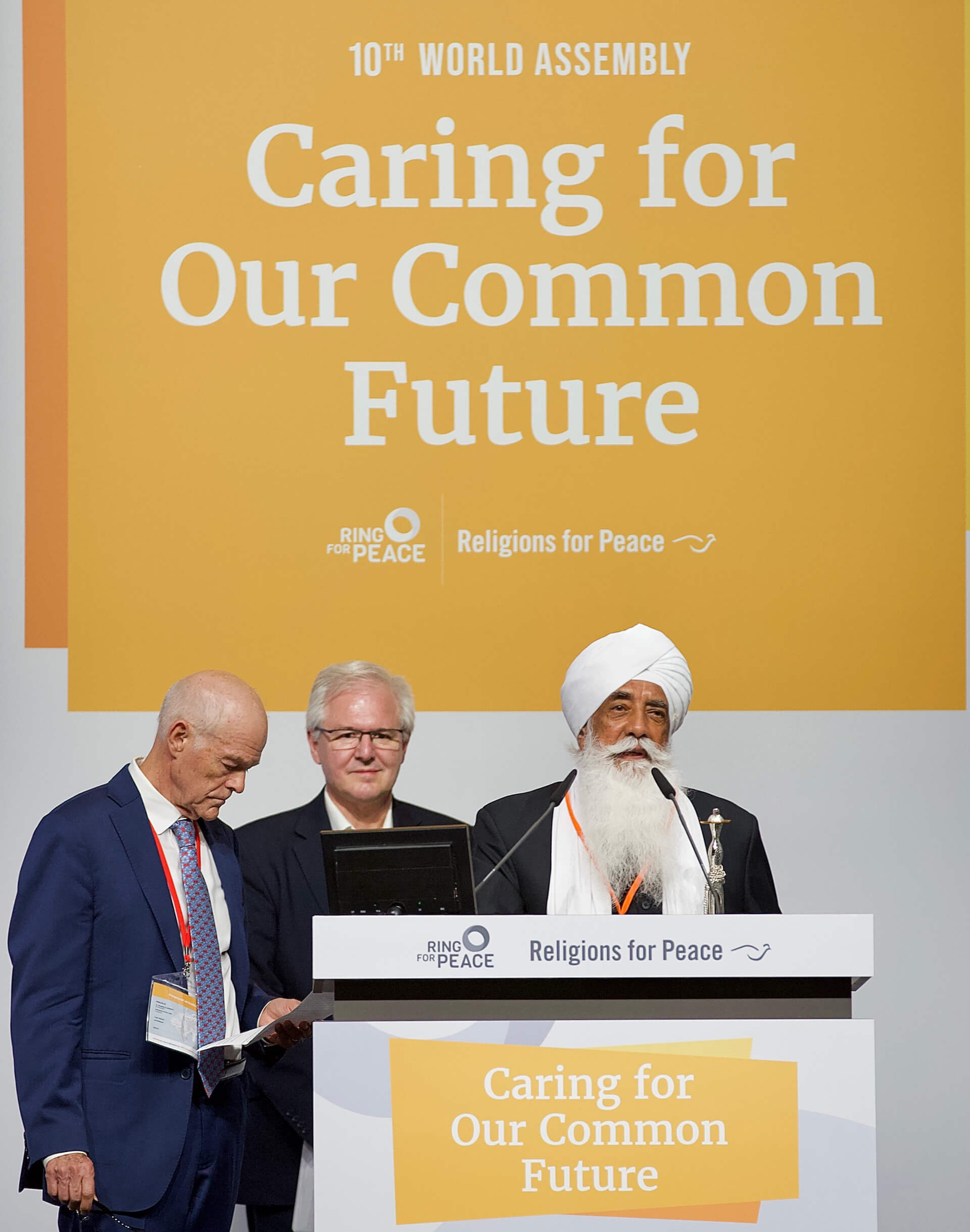
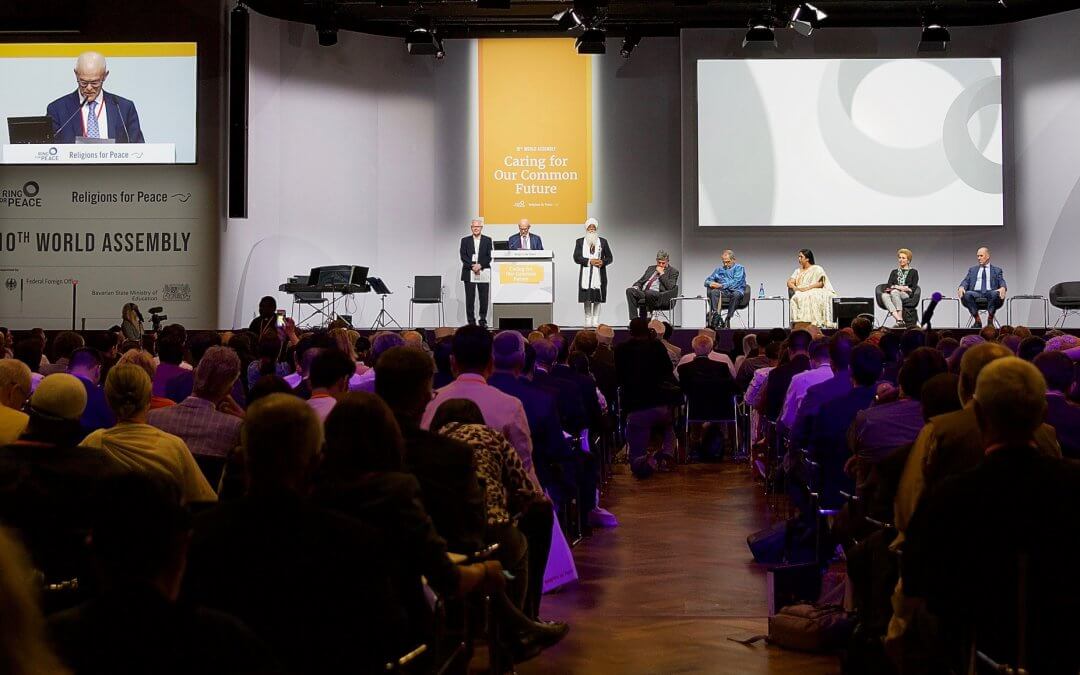
The Peace Charter for Forgiveness and Reconciliation was adopted by the 10th World Assembly of Religions for Peace(RfP) which convened from 20-23 August 2019 in Lindau, Germany. The World Assembly, opened by the President of Germany, Frank-Walter Steinmeier on 20 August 2019, was
attended by some 900 global religious leaders and delegates. Religions for Peace International is the world’s largest and most representative coalition of religious and indigenous communities and operates in over 90 countries.

The concluding declaration of the World Assembly stated, “We are grateful for 49 years of determined focus on building peace and on speaking for those most in need. We are an alliance of care, of compassion, of love … We adopt The Peace Charter for Forgiveness and Reconciliation, convinced that transforming violent conflicts requires the healing of historical wounds and painful memories, forgiveness, and reconciliation. We commit to integrating efforts for healing into all our conflict resolution work.” The Peace Charter was presented to the 10th World Assembly by the co-convenors Bhai Sahib Bhai Mohinder Singh Ahluwalia (Chairman of Guru Nanak Nishkam Sewak Jatha, UK, and Co-President of Religions for Peace) and Dr William F. Vendley (outgoing Secretary-General of Religions for Peace), and by the Peace Charter’s Director Dr Josef Boehle (University of Birmingham, UK). The Peace
Charter’s organisational development began in 2011 and has received support from a wide range of religious, political, academic and civil society leaders.

The Guerrand-Hermes Foundation for Peace (UK), the Fetzer Institute (USA), Religions for Peace International, the Guru Nanak Nishkam Sewak Jatha (GNNSJ), UK, and the Nishkam Centre, Birmingham (UK) were amongst the early core group of supporting organisations.

The Preamble of the Peace Charter begins with the following introduction:

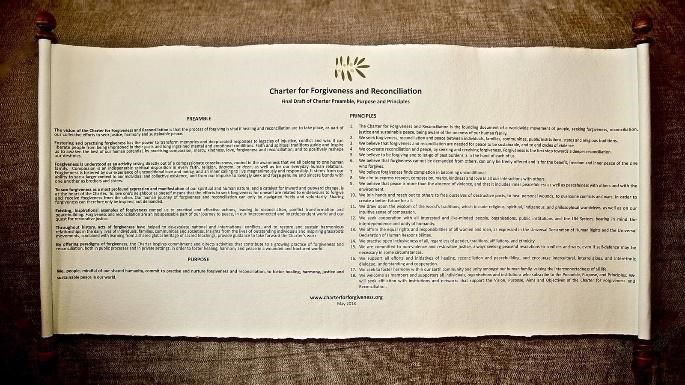
“The vision of the Peace Charter for Forgiveness and Reconciliation is that the process of forgiving is vital if healing and reconciliation are to take place, as part of our collective efforts to seek justice, harmony and sustainable peace. Fostering and practising forgiveness has the power to transform memories and deep-seated responses to legacies of injustice, conflict and war. It can liberate people from being imprisoned in their pasts and long ingrained mental and emotional conditions. Faith and spiritual traditions guide and inspire us to awaken the best of our human potential, by practising compassion, mercy, kindness, love, forgiveness and reconciliation, and to positively reshape our
destinies.”

Ends

For more information please visit:

Peace Charter for Forgiveness and Reconciliation
Religions for Peace International

University of Birmingham Celebrates a Mega Event in Sikh History

An estimated 25,000 people joined in the celebration of the 550th birth anniversary of Guru Nanak Dev Ji, the founder of the Sikh Dharam (Faith), at the University of Birmingham. Five continuous days of activities were arranged for all communities to reflect upon the inclusive, transformative human-values propagated by Guru Nanak Dev Ji – the founder of the Sikh Dharam (faith).

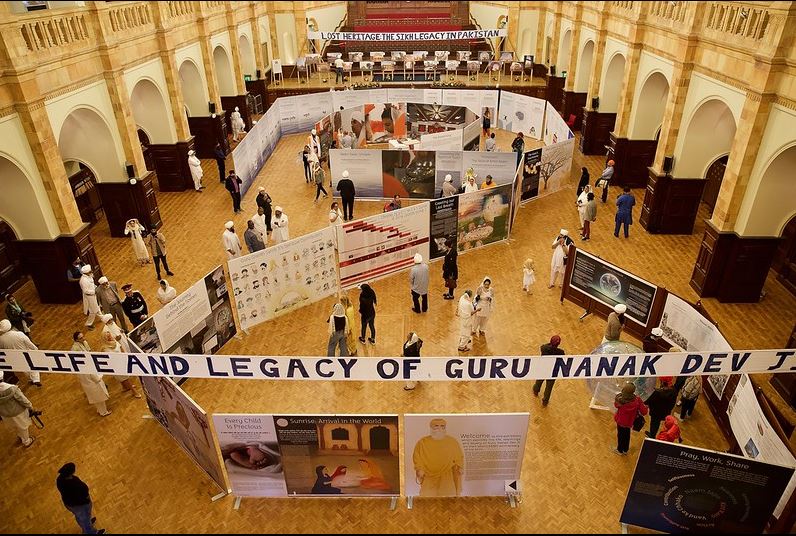
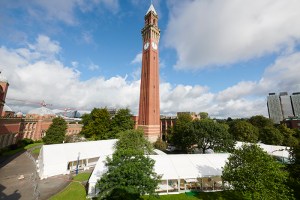
Located around the University’s iconic clock tower at its Edgbaston campus, the event titled ‘Celebrating and Learning from the Life and Legacy of Guru Nanak Dev Ji‘ was hosted in collaboration with Guru Nanak Nishkam Sewak Jatha (GNNSJ) who provided a rich variety of activities, including continuous prayer recital, educational symposia, three exhibitions, interfaith dialogue and over 35 educational seminars for adults and children.

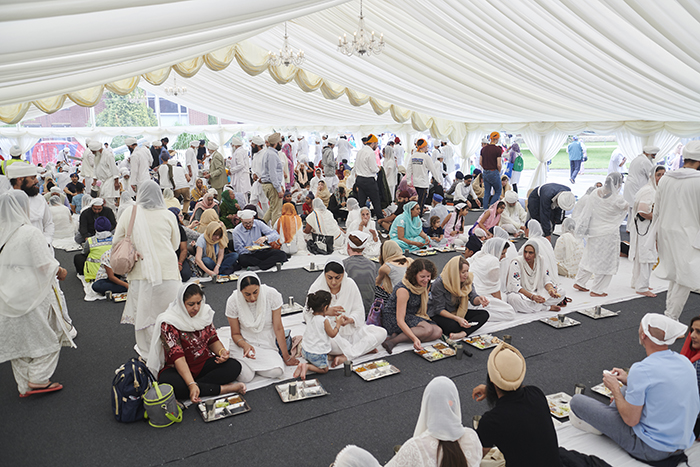
Three beautiful marquees were specifically commissioned and erected for this landmark event. One for the Sri Akhand Paath Sahib (48 hours of continuous reading from Sri Guru Granth Sahib Ji – the Sikh’s Eternal and Revered Guru) which was held from 8th to 10th August, one for Keertan (singing of sacred hymns to music) and one for the Langar area. All visitors throughout the duration of the event were provided Langar (free vegetarian food for all from the Guru’s kitchen), a process started by Guru Nanak Dev Ji which daily feeds millions of people around the word and upholds the Sikh principles of selfless service and egalitarianism. The event epitomised what the Sikh Dharam (faith) and Birmingham was all about; service to humanity, cohesion, celebrating diversity, recognising and acepting all, multi-faith, no faith, young and old.

A unique and historic Civic Reception to honour the launch of the 550th Anniversary Celebrations marking Guru Nanak Dev Ji’s coming to the world took place in the prestigious Great Hall, University of Birmingham. The Civic Reception captured the hearts and minds of all attending, setting the tone of the messages for all humanity. The event, venue and distinguished speakers and guests provided a befitting setting to mark and bless the launch of an historical event in the UK, if not the World.

Wednesday 7th August 2019 saw history being made right here in Birmingham with a Civic Ceremony to celebrate the contribution and legacy of the Sikh’s first Guru, Guru Nanak Dev Ji. The Civic Reception centred around the key messages of Guru Nanak Dev Ji that were shared by prominent speakers and also physically manifested in the days after the reception at the University of Birmingham. This manifestation was via services to humanity; Langar (free vegetarian, blessed food from the Guru’s kitchen) was served to all who attended the five-day program at the University. Attendees were able to participate in sewa – serving others / volunteering – in all guises from stewarding, guiding people around, washing dishes, serving food, sweeping, involvement in media team, first–aiding, attending and participating in prayer services, listening to Kirtan (spiritual hymns recited to sacred music) to mention but a few.

The Civic Reception was an opportunity to share Guru Nanak’s messages with the diverse audience and to inspire them to visit the Darbar Sahib (Prayer hall), listen to the Kirtan, attend the seminars and workshops to hear / discuss the key messages and the relevance of those messages in the 21st Century. The audience included the Sikh diaspora from around the world and all over the UK. The visitors were from India, Kenya, Canada, America, Scotland, Singapore and Australian. The 350 plus attendees included dignitaries, leaders from faith, education, business and the public and voluntary sectors from around the globe. The comments on social media by those who attended have confirmed that this historic event has touched the lives of so many people with Guru Nanak’s core message of peace, forgiveness, reconciliation, social justice, equality and love for all of God’s creation.

Raaj Shamji as the Master of Ceremonies welcomed everyone to the auspicious evening. This was followed by a heart-warming overview of the international Guru Nanak’s 550th birth anniversary celebratory event and programme of activities by Dr Gopinder Kaur Sagoo. The Lord Mayor of Birmingham, Councillor Mohammed Azim shared a beautiful m

essage of congratulations to the Sikh and broader community and the respect afforded to Guru Nanak Dev Ji by other communities. Other speakers included Preet Kaur MP for Edgbaston who spoke on Guru Nanak’s unique teaching on the role of women in society. Other speakers included Councillor John Cotton, Cabinet Member for Social Inclusion, Community Safety and Equalities, Birmingham City Council and Dr. Neslyn Watson-Druée CBE, Professional International Public Speakers and Executive Coach at Beacon Organisation for Development Ltd.  Professor Robin Mason, Pro-Vice-Chancellor (International) at the University set the scene by outlining the importance and significance of community engagement from a widening participation and internationalisation perspective.

The reception evening saw in attendance many distinguished and honourable guests including:

  • The Lord Mayor of Birmingham, Councillor Mohammed Azim,
  • The High Sheriff for the West Midlands
  • Many Deputy Lieutenants in their personal capacity
  • Professor Robin Mason, Pro-Vice-Chancellor (International), University of Birmingham
  • Interfaith representatives and faith leaders
  • CEO of Birmingham City Council, Dawn Baxendale
  • Chairman of the Birmingham Commonwealth Association and President of the Birmingham Consular Assoc and President of the Greater Birmingham Commonwealth Chamber of Commerce – Keith Stokes-Smith
  • CEO of Acorns, Toby Porter
  • Director of the Albion Foundation, Rob Lake
  • Members of the diverse communities
  • Academics and diplomatic representatives from several countries

Amrick Singh, Nishkam Centre Director, during the ‘Vote of Thanks’ highlighted the vast array of talent and networks in the Great Hall, all keen and striving to create a better world. He encouraged all to reach-out and network, to link up with others in the room to make a lasting difference. He spoke about transforming oneself and then working on one’s environment.

The University of Birmingham was a fitting location for the 550th birth celebrations of one of the greatest religious innovators of all time, who at a turbulent time upheld the principles of truth, gender equality and universal responsibility. The university’s ethos of spreading ideas to help transform the world are reflective of the progressive values of Guru Nanak Dev Ji. Throughout the five-day event, over a thousand volunteers worked tireles

sly to ensure that all visitors were able to learn, reflect and be inspired in a safe and secure campus environment. International academic experts, faith executives from the public and private sectors led discussions and workshops on a variety of contemporary issues ranging from Guru Nanak Dev Ji’s message for humanity, values-led education, equality and diversity, climate change and social and civic responsibility. All seminars were held in the Universities seminar rooms and auditorium.

The Chairman of GNNSJ, Bhai Sahib, Bhai (Dr) Mohinder Singh Ahluwalia OBE KSG who also holds an Honorary Doctorate from the University of Birmingham stated: “The 550th anniversary celebrations has illuminated many dimensions of Guru Nanak Dev Ji’s teachings, life and legacy. The event has proven to be a historic opportunity to rediscover and apply Guru Nanak’s teachings, to generate new possibilities for transforming our personal and collective lives and the lives of future generations. The event has been made possible by the dedicated and enthusiastic Nishkam Sewa (selfless service) by over 1,000 volunteers from around the UK, India, USA, Canada and Australia.”

Ends

Notes for Editors

For more information please visit www.uk550.co.uk

Please view case study from the University of Birmingham here.

Please see UOB article here.

Notes to editors:

  • Guru Nanak Dev Ji, the founder of the Sikh Dharam (faith), was born in November 1469 in Talwandi, Punjab, India (now known as Nankana Sahib, Punjab, Pakistan).
  • Guru Nanak Nishkam Sewak Jatha (GNNSJ) serves the Gurudwara, which is based on Soho Road in Handsworth. The work of GNNSJ has resulted in the development of the Nishkam Group of Organisations. This group includes a civic centre, educational institutions (such as Nishkam Nursery, Primary and Secondary Schools, as part of the wider Nishkam Schools Trust), and the Nishkam Healthcare Centre. The aim of the Nishkam Group is to embed virtues and values within all areas of society.
  • The University of Birmingham is ranked amongst the world’s top 100 institutions, its work brings people from across the world to Birmingham, including researchers and teachers and more than 6,500 international students from over 150 countries.
  • The University established its India Institute in January 2018. The Institute brings Birmingham and India closer together to deliver impactful research, create innovative education initiatives and extend the University’s influence across the globe.
  • The University’s relationship with India began in 1909 with the first cohort of Indian students attending the University to study for degrees in Mining and Commerce. Since then, the University has provided education to many outstanding Indian alumni.

Creating a Movement for a Peaceful World

A Seminar on the Charter for Forgiveness and Reconciliation was held on the 2nd November 2018 at the Metro Toronto Convention Centre, Canada

TORONTO, ON (November 1, 2018) – The Parliament of the World’s Religions (PWR) – the single largest interfaith gathering in the world – commenced its seven-day programme today in Toronto, drawing an enthusiastic audience interested in learning more about interreligious harmony. It was created to cultivate harmony among the world’s religious and spiritual communities and foster their engagement with the world and its guiding institutions to achieve a just, peaceful and sustainable world. The themes for this year’s Parliament are: The Promise of Inclusion, the Power of Love: Pursuing Global Understanding, Reconciliation and Change.

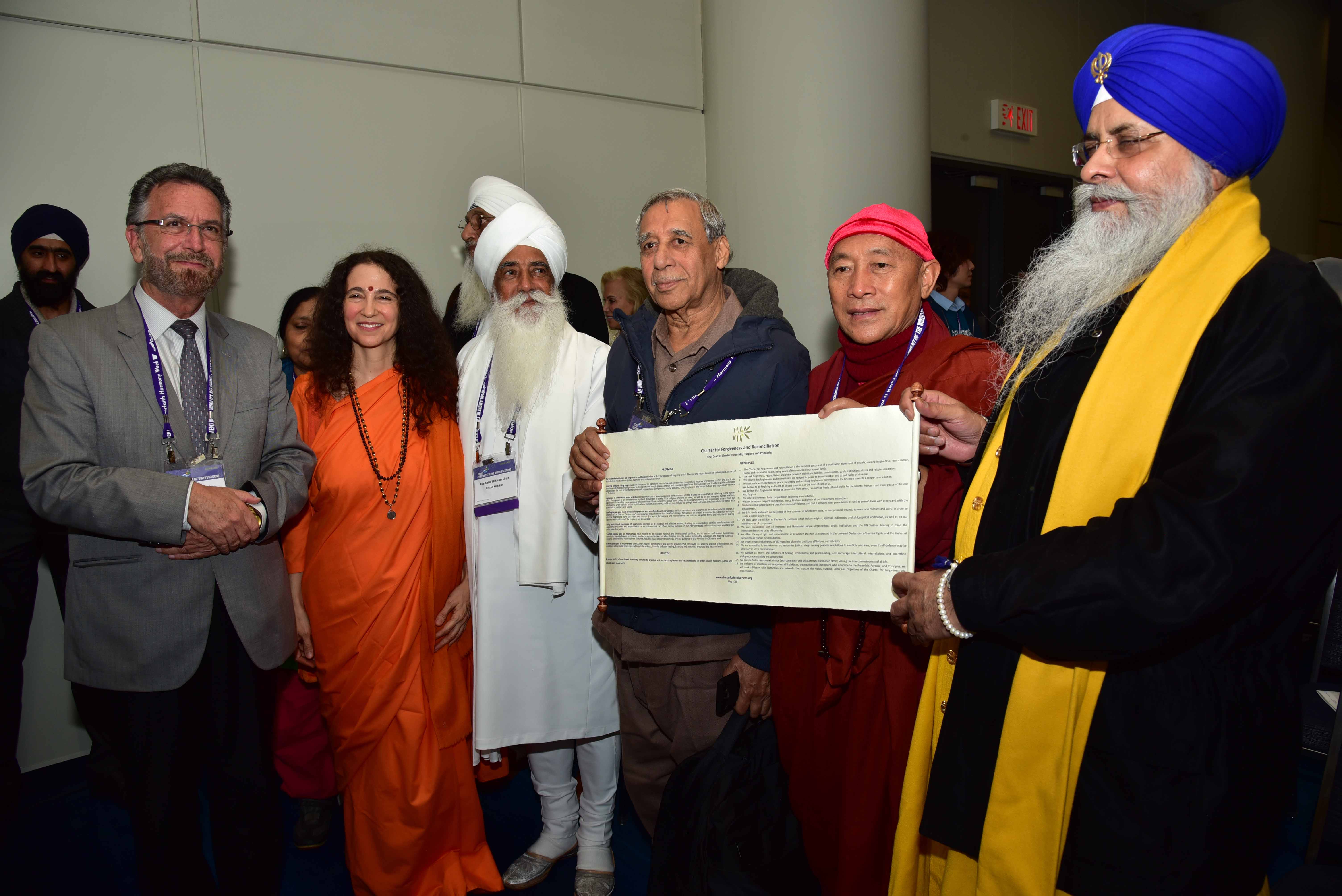
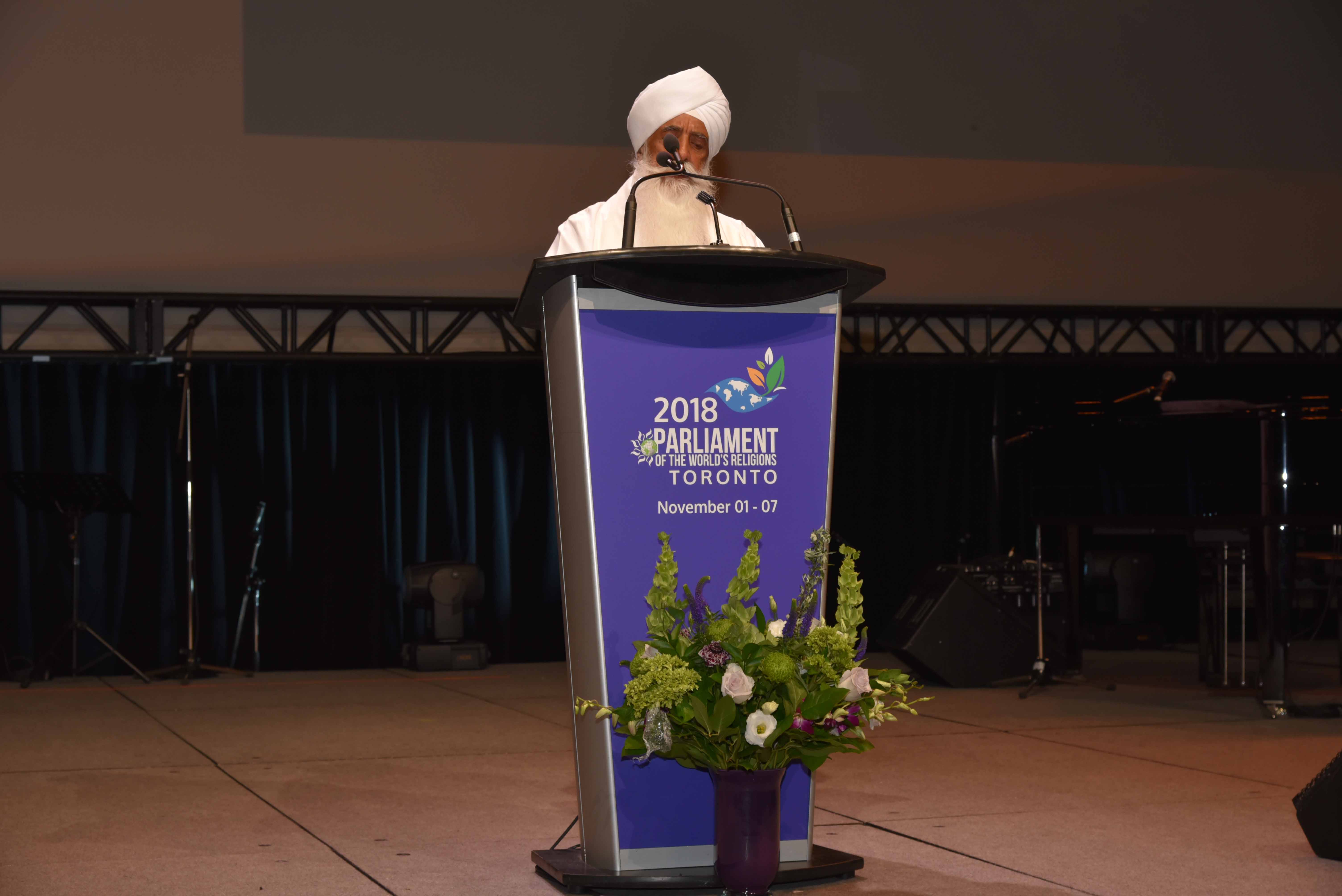
Bhai Sahib Bhai Mohinder Singh OBE KSG, the Co-convenor and Co-chair of the Charter for Forgiveness and Reconciliation addressed the opening plenary at the Parliament. He reflected: “Humanity’s journey with the interfaith movement has been long and arduous. The world is still in agony and the learning continues. Peace eludes us.”

He expressed continuing support of his organisation, Guru Nanak Nishkam Sewak Jatha (UK), for the work of the Parliament. He also highlighted a proposal for advancing and accelerating the work of the interfaith movement, to achieve harmony and peace. “However, before we seek peace outside, we have to generate peace within ourselves. To create and sustain peace, we must reconcile. But to reconcile we must forgive. This is why in a humble effort we are proposing together, with committed friends, a Charter for Forgiveness and Reconciliation. The love in our hearts has to be stronger than the disagreements in our minds.”

Having heard other faith leaders share their commitments to reconciliation, Bhai Sahib finished his address with a prayer for the days ahead, “May the promise of oneness of humanity guide us as this Parliament begins.”

The Preamble of the Charter states:

“The vision of the Charter for Forgiveness and Reconciliation is that the process of forgiving is vital if healing and reconciliation are to take place, as part of our collective efforts to seek justice, harmony and sustainable peace.”

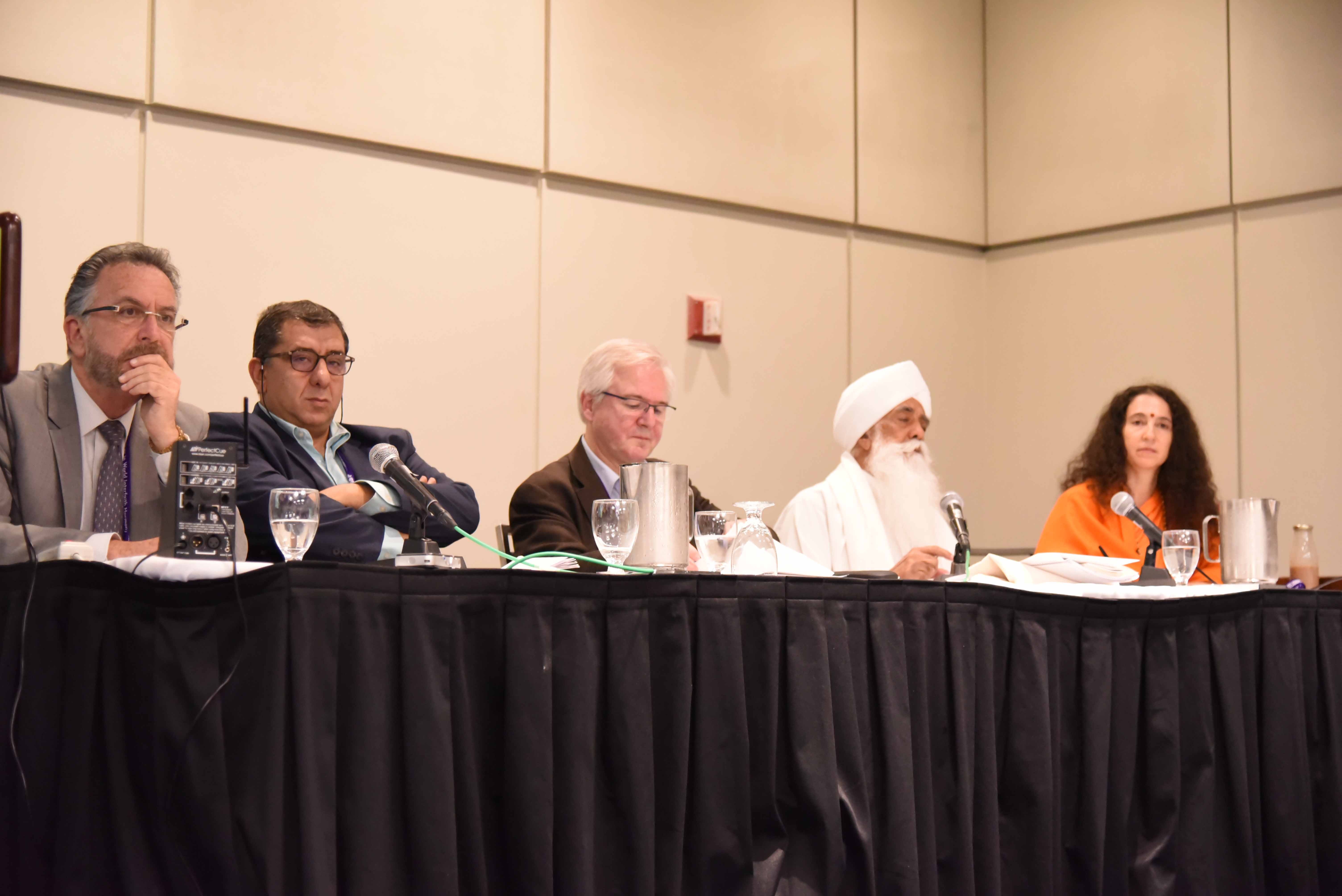
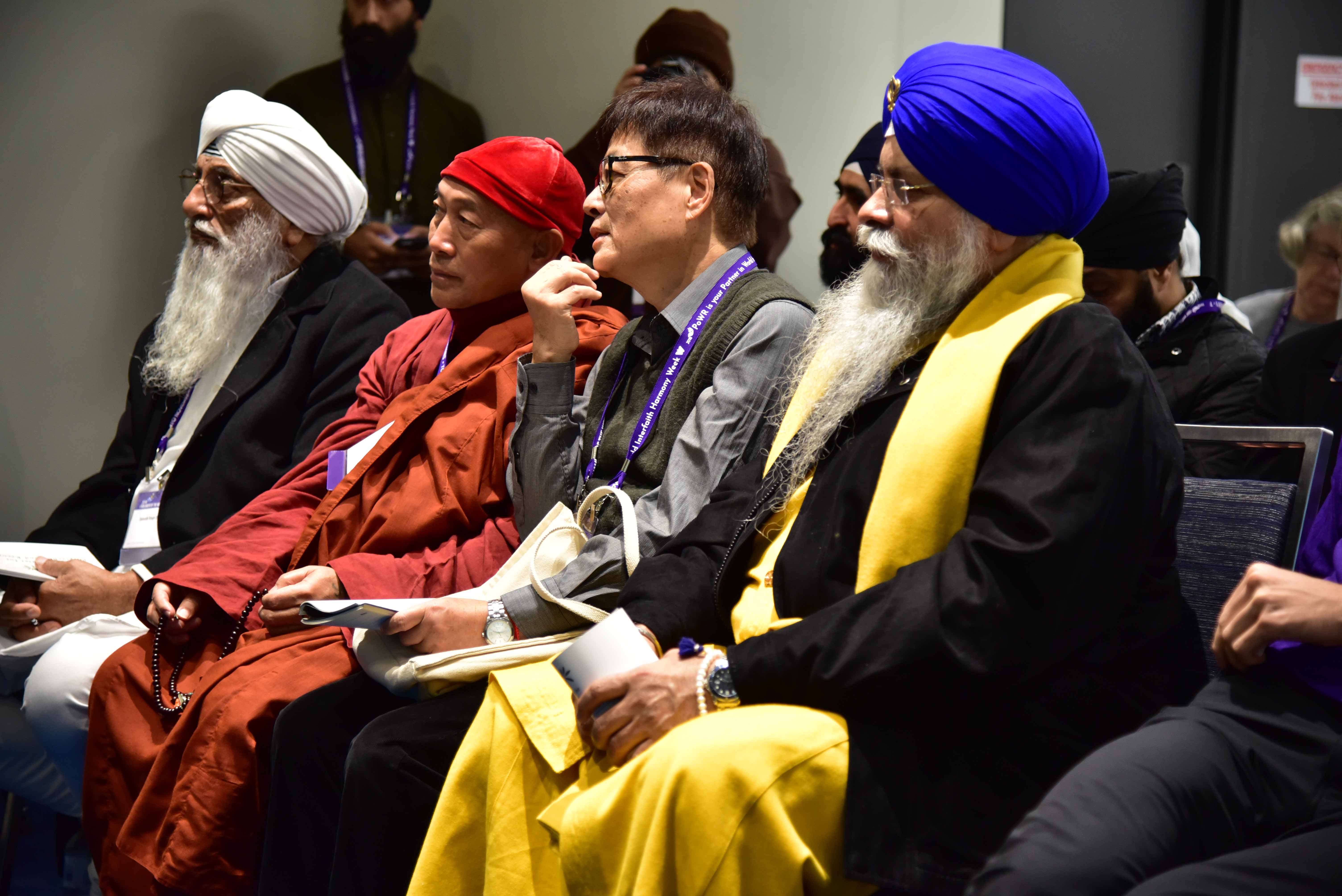
A Seminar on Forgiveness and Reconciliation: Perspectives from the World’s Religions, hosted by the Charter project, took place on 2 November 2018 and was very well attended by 140 participants. They listened to the highly informative presentations of the world class speakers on the panel. Bhai Sahib Bhai Mohinder Singh (Sikh), Rabbi David Rosen (Jewish), Prof Mohammed Abu-Nimer (Muslim) and Sadhvi Bhagawati Saraswati (Hindu) spoke with great passion about forgiveness and reconciliation in the context of their respective faith traditions. The panel was moderated by Dr Josef Boehle, the Director of the Charter for Forgiveness and Reconciliation.

With over 6000 participants attending the Parliament, with dozens of high-profile guest speakers and more than 1000 spiritual programs, lectures, and interactive cultural experiences, the event offers an opportunity to advance interreligious dialogue and cooperation, responding to the critical issues of our times. The initiators of the Charter for Forgiveness and Reconciliation sincerely hope that the Charter will be embraced and acted upon, to foster forgiveness, reconciliation and peacebuilding worldwide.

The Charter for Forgiveness and Reconciliation

For more information about the Charter for Forgiveness and Reconciliation, and a copy of the text please visit: http://www.charterforforgiveness.org

Follow the charter on Twitter: @charterforgive or using the hashtag: #charterforgive #forgiveall

The full opening plenary speech can be viewed at: https://www.youtube.com/watch?v=jfSQIpwLlKg&t=1s

For more information please contact Dr Josef Boehle at: office@charterforforgiveness.org