The Guru Nanak Nishkam Sewak Jatha (GNNSJ) and Nishkam campus on Soho Road, welcomed Miatta Fahnbulleh MP, Parliamentary Under‑Secretary of State for Devolution, Faith and Communities. The visit provided an opportunity to demonstrate how values‑led models of service and community empowerment are delivering measurable social benefit locally, regionally and internationally. A powerful case study of how faith-inspired civic action can transform a neighbourhood and strengthen national cohesion was showcased.

The Nishkam team presented a comprehensive programme of work directly supporting national priorities around devolution, regeneration, faith, community cohesion, economic growth and the ageing population. The opportunity highlighted initiatives rooted in Sikh principles of selfless service, shared humanity and civic responsibility, principles that closely align with Government ambitions for stronger communities and locally driven growth.
The Minister saw pioneering housing projects that support older residents through secure, culturally appropriate accommodation, enabling them to remain close to family, faith and familiar networks. This approach reduces pressure on social care systems, strengthens intergenerational support and frees up larger homes for families. Plans for a second phase of sheltered elderly accommodation demonstrate the organisation’s commitment to sustainable, community‑driven regeneration.
The Minister also received an overview of GNNSJ’s wider regeneration masterplan, focused on revitalising high‑street spaces, improving commercial frontages and transforming long‑neglected areas into vibrant hubs of community life. These efforts support national objectives for Pride in Place Strategy, high‑street renewal, inclusive growth and improved local environments. The minister reflected what Pride in Place aimed to do to help build stronger communities, create thriving places and empower local people; witnessed right here in Handsworth and we needed to somehow bottle it.
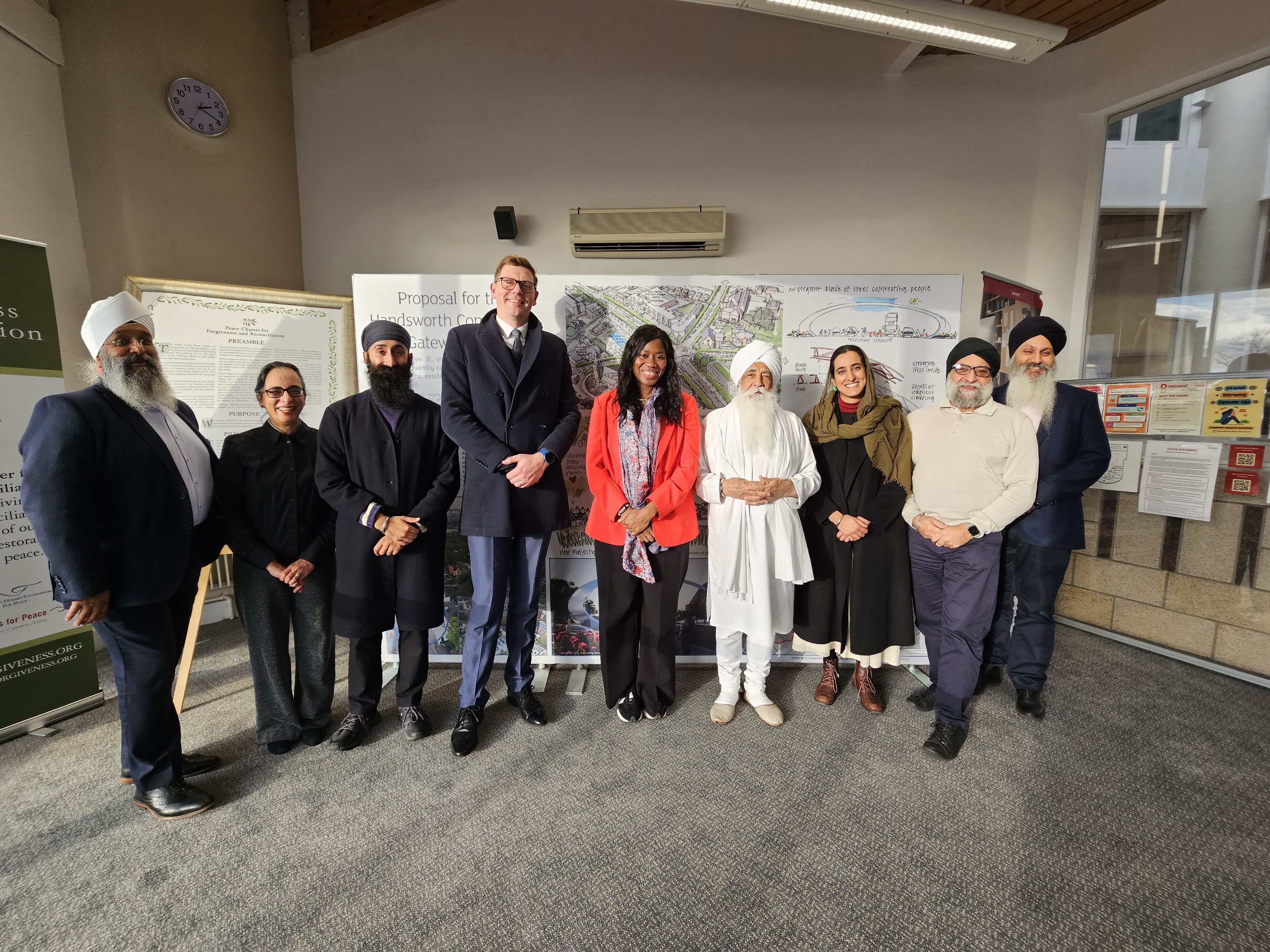
Drawing upon decades of service, Bhai Sahib Ji shared, “The importance of strong leadership in bridging faith-based organisations and wider civil society is crucial, we must have a holistic approach consistent with current Government priorities on race equality, civic participation and building stronger, resilient communities. The case for creating a formal engagement mechanism with faith-based civic organisations to co-design local regeneration and cohesion programmes is paramount.” It was evident that including faith-civic perspectives in any refresh of the national cohesion strategy is crucial, so that lived experience of communities’ shapes policy from the ground up.
The visit highlighted the phenomenal work on educational and early‑years development. Visionary proposals to redevelop derelict and unsafe properties into dedicated educational and community spaces were also shared. These plans respond directly to local need and are consistent with Government commitments to ensuring every child has the best start in life, supported by safe, high‑quality learning environments.
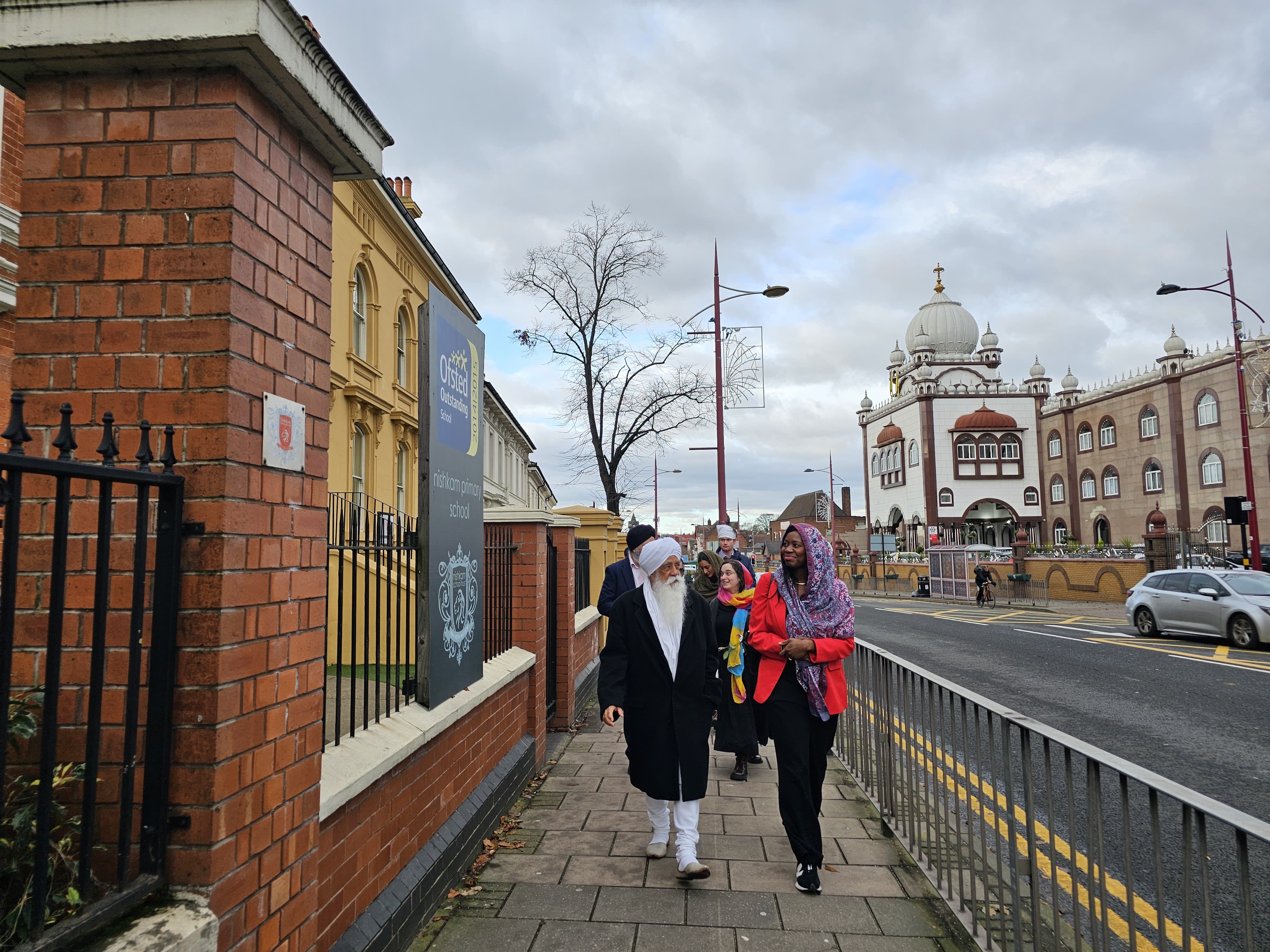
A detailed discussion also explored the Bill House redevelopment, a unique interfaith partnership between GNNSJ and the Church of England. This project aims to transform a long‑vacant and derelict building into much‑needed social housing and elderly accommodation, generating economic activity while strengthening community cohesion. It stands as a model of how faith‑based organisations can contribute to place‑making and civic renewal.
The Minister met with leaders from the Nishkam Health Trust to understand how integrated care models address longstanding health inequalities in inner‑city Birmingham. The Trust’s approach brings together primary care, preventative health, wellbeing activities and community support, reflecting national strategies that emphasise early intervention and neighbourhood‑based healthcare. The Trust team’s efforts were recently recongnised by them being awarded the King’s Award for Voluntary Service.
Following the visit, Amrick Singh, Director of Civic Engagement and Partnerships, commented that, “Effective devolution relies on trusting local communities and valuing the role of faith‑inspired organisations with their long‑term commitment and deep community ties enable sustainable impact. We have seen the work of GNNSJ and the Nishkam Group under the visionary leadership of Bhai Sahib, Prof Mohinder Singh, demonstrate what is possible when faith inspired, civic and public partners come together. This reinforces the importance of collaboration between Government, civic institutions and faith communities to build resilient, inclusive and flourishing neighbourhoods.”
For over 40 years, the Nishkam Group has invested donations in excess of £60m, spanning education, health, civic renewal, interfaith collaboration, and community wellbeing, pioneering a model rooted in the Sikh principles of kar sewa (loving manual labour), selfless service, and an unwavering 250-year commitment to the region. Through this ethos, thousands of local residents, volunteers and partners have helped regenerate key community assets, deliver essential services, and foster trust between diverse communities at a time when the UK faces rising hate crime, division, and social fragility.
ENDS
 Nishkam Media Centre