The Nishkam Centre, team were honoured to participate in a national Interfaith Panel Discussion on End-of-Life Care hosted by the Catholic Bishops’ Conference of England and Wales at St Chad’s Cathedral 26th October 2025. The event was especially arranged to coincide with the marking of the 60th anniversary of Nostra Aetate.
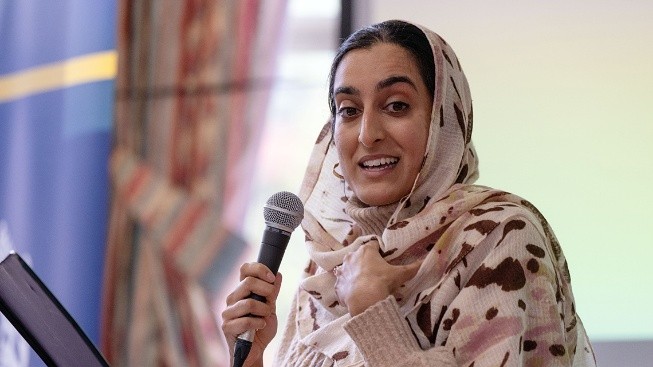
Representing the Sikh faith, Harr-Joht Kaur, a community researcher and Trustee / volunteer at the Nishkam Centre, spoke about how the Sikh dharam (faith) regards life and death as integral parts of the Divine order. She shared the Sikh view on death, dignity, and compassion in a humble and passionate way.
“In the Sikh dharam, death is not something to fear,” said Harr-Joht Kaur. “It is part of Hukam – the natural will of the Creator. Our duty is to live with truth, compassion and remembrance of God until our final breath. End-of-life care should help people do exactly that – live and die with dignity and love.”
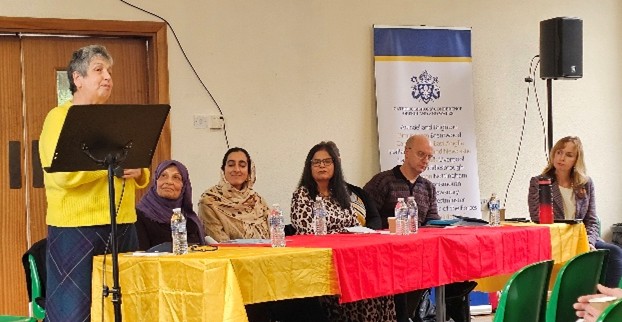
The event formed part of “Dying to Live”, marking the 60th anniversary of Nostra Aetate, the Vatican declaration on inter-religious dialogue. Representatives from six faith traditions – Sikh dharam, Christianity, Judaism, Islam, Hinduism and Buddhism – shared how their beliefs shape end-of-life understanding and care. The panel members offered personal reflections included Ruth Jacobs, Shamim Merali, Shobha Sharma, Simon Romer, Harr-Joht Kaur, and Christina Ronayne.
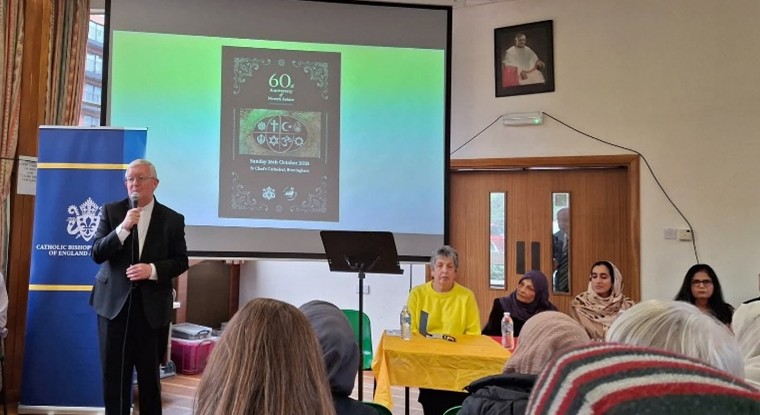
His Grace, the Archbishop of Birmingham, Bernard Longley, reflected on the discussions and thanked the multifaith audience for their attendance and engagement during the questions and answers session with the panel.
After the event, Amrick Singh Ubhi, Director, Civic Engagement & Partnerships, Nishkam Group of Organisations, who was honoured to attend, said: “We believe true care must honour each person’s faith and humanity. Collaboration between communities and health professionals is essential if we are to deliver compassionate, inclusive care for all. Only then can we fulfil ‘sarbat da bhala’ – working for the welfare and wellbeing of everyone.”
The Nishkam Centre continues to promote community wellbeing, interfaith understanding and social responsibility through the Sikh principles of Nishkam Seva (selfless service), Naam Simran (remembrance of God) and Sarbat da Bhala (the welfare and wellbeing of everyone).
Notes to Editors
- The full podcast of Dying to Live is available at: cbcew.org.uk/podcast/interfaith-panel-discussion-on-end-of-life-care
- The Nishkam Centre is a registered charity based on Soho Road, Birmingham – part of the Nishkam Group of Organisations. It works to advance education, health, civic participation and interfaith dialogue inspired by Sikh teachings.
 Nishkam Media Centre